Eftimov Tome, Popovski Gorjan, Petković Matej, Seljak Barbara Koroušić, Kocev Dragi
Computer Systems Department, Jožef Stefan Institute, 1000 Ljubljana, Slovenia.
Jožef Stefan International Postgraduate School, 1000 Ljubljana, Slovenia.
Trends Food Sci Technol. 2020 Oct;104:268-272. doi: 10.1016/j.tifs.2020.08.017. Epub 2020 Sep 2.
The COVID-19 pandemic affects all aspects of human life including their food consumption. The changes in the food production and supply processes introduce changes to the global dietary patterns.
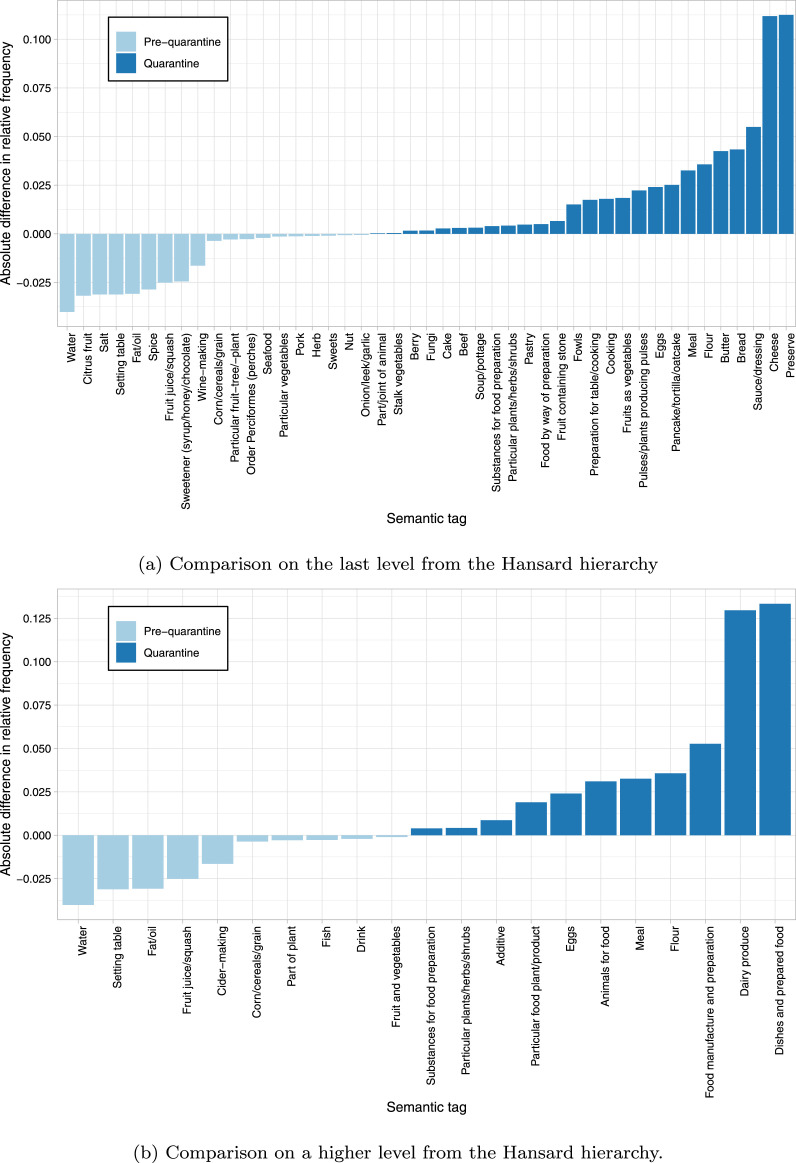
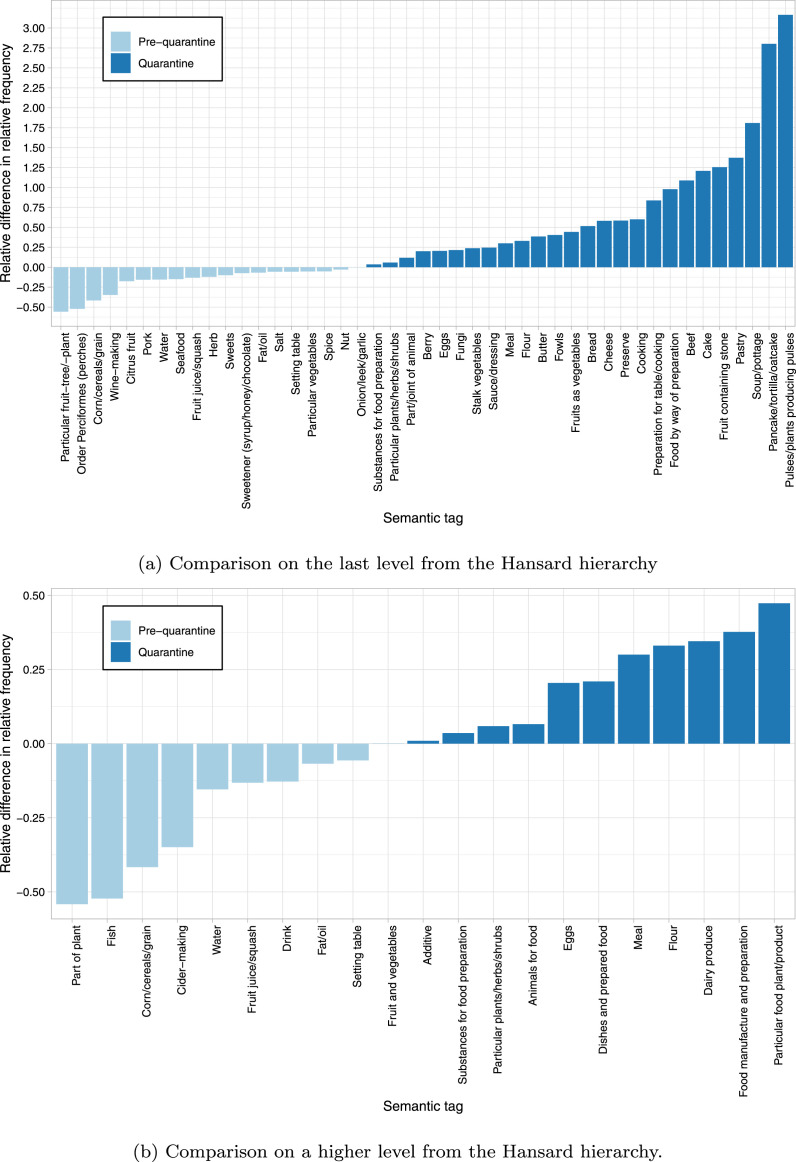
To study the COVID-19 impact on food consumption process, we have analyzed two data sets that consist of food preparation recipes published before (69,444) and during the quarantine (10,009) period. Since working with large data sets is a time-consuming task, we have applied a recently proposed artificial intelligence approach called DietHub. The approach uses the recipe preparation description (i.e. text) and automatically provides a list of main ingredients annotated using the Hansard semantic tags. After extracting the semantic tags of the ingredients for every recipe, we have compared the food consumption patterns between the two data sets by comparing the relative frequency of the ingredients that compose the recipes.
Using the AI methodology, the changes in the food consumption patterns before and during the COVID-19 pandemic are obvious. The highest positive difference in the food consumption can be found in foods such as "Pulses/ plants producing pulses", "Pancake/Tortilla/Outcake", and "Soup/pottage", which increase by 300%, 280%, and 100%, respectively. Conversely, the largest decrease in consumption can be food for food such as "Order Perciformes (type of fish)", "Corn/cereals/grain", and "Wine-making", with a reduction of 50%, 40%, and 30%, respectively. This kind of analysis is valuable in times of crisis and emergencies, which is a very good example of the scientific support that regulators require in order to take quick and appropriate response.
新冠疫情影响着人类生活的方方面面,包括食物消费。食品生产和供应过程的变化导致全球饮食模式发生改变。
为研究新冠疫情对食物消费过程的影响,我们分析了两个数据集,其中一个包含疫情前发布的食物制备食谱(69444份),另一个包含隔离期间发布的食谱(10009份)。由于处理大型数据集是一项耗时的任务,我们应用了一种最近提出的名为DietHub的人工智能方法。该方法利用食谱制备描述(即文本),并自动提供一份使用汉萨德语义标签标注的主要食材清单。在提取每个食谱中食材的语义标签后,我们通过比较构成食谱的食材相对频率,对比了两个数据集之间的食物消费模式。
使用人工智能方法可以明显看出,新冠疫情前后食物消费模式发生了变化。食物消费中增幅最大的是“豆类/产豆植物”、“薄煎饼/玉米饼/外饼”和“汤/浓汤”等食品,分别增长了300%、280%和100%。相反,消费量降幅最大的食物是“鲈形目鱼类(一种鱼类)”、“玉米/谷物/粮食”和“酿酒”相关食物,分别减少了50%、40%和30%。这种分析在危机和紧急情况下很有价值,是监管机构为迅速做出适当反应所需科学支持的一个很好例子。