Priyadarshi Manish, Kumar Sanjiv
Department of Public Health, International Institute of Health Management Research, New Delhi, India.
Indian J Community Med. 2020 Apr-Jun;45(2):125-129. doi: 10.4103/ijcm.IJCM_224_19. Epub 2020 Jun 2.
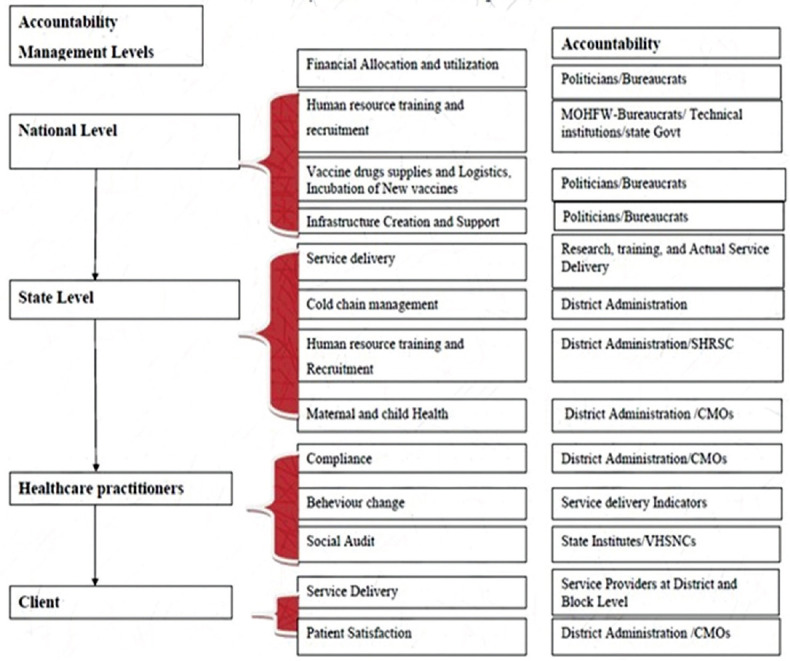
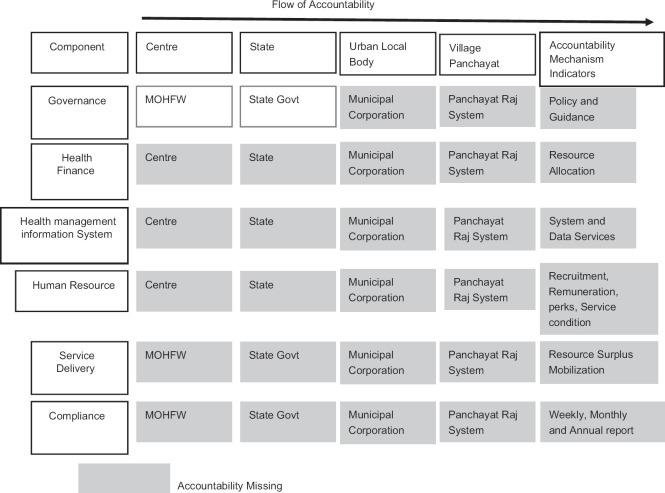
Today, health is a human right in India, and the government is working hard for universalization of health services provision till the grassroots. Health without accountability is a challenging task in hand, and recently, state governments drafted a bill toward public health system to move in the strengthened direction of accountability mechanism. Accountability is the quality or state of being accountable, and it is an important component of the health-care reforms in India. This article provides more nuanced understanding of accountability which includes the specification of accountability, conceptual framework of accountability, and its potential approaches for how accountability is viewed today in India with reference to the Central, State, District, and other stakeholders. It examines the role of accountability in making accountable health plans, and its relationship governance/ownership structures as a key component of health-care reforms as improved accountability is a major element in improving the health system performance. The article elaborates on the definition of accountability in terms of answerability and sanctions and distinguishes the three types of accountability, namely financial, performance, and political/democratic. The article describes three accountability-enhancing strategies, namely reducing the pilferage, assuring acquiescence with procedures and standards, and improved learning from the past experience. The recent events in Indian health care put forward a serious issue on how accountability can be fixed if health mishaps happened and how we can make our health plans accountable to the needs and aspiration for the people of India. Overall, the accountability is discouraging and more needs to be done to enhance the accountability compliance in India.
如今,在印度,健康是一项人权,政府正在努力实现医疗服务普及至基层。在缺乏问责制的情况下保障健康是一项艰巨的任务,最近,各邦政府起草了一项关于公共卫生系统的法案,以朝着强化问责机制的方向迈进。问责制是指有责任的性质或状态,它是印度医疗改革的一个重要组成部分。本文对问责制进行了更细致入微的解读,包括问责制的具体内容、问责制的概念框架,以及参照中央、邦、地区和其他利益相关者,当今印度对问责制的潜在看法。它探讨了问责制在制定可问责的健康计划中的作用,以及其作为医疗改革关键组成部分的关系治理/所有权结构,因为加强问责制是提高医疗系统绩效的一个主要因素。本文从可答辩性和制裁方面阐述了问责制的定义,并区分了三种问责制,即财务问责制、绩效问责制和政治/民主问责制。本文描述了三种加强问责制的策略,即减少挪用、确保遵守程序和标准,以及从过去的经验中更好地学习。印度医疗保健领域最近发生的事件提出了一个严重问题:如果发生医疗事故,如何确定问责制,以及我们如何使我们的健康计划对印度人民的需求和期望负责。总体而言,问责制令人沮丧,在印度还需要做更多工作来提高问责制的合规性。