Laboratory of Cell Biology, National Heart Lung Blood Institute National Institutes of Health, Bethesda, MD 20892, USA.
Koch Institute for Integrative Cancer Research, Depart Biol., Howard Hughes Medical Institute, MIT Cambridge, MA 02139, USA.
Int J Mol Sci. 2020 Sep 7;21(18):6536. doi: 10.3390/ijms21186536.
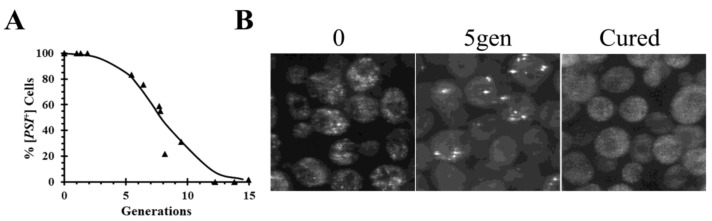
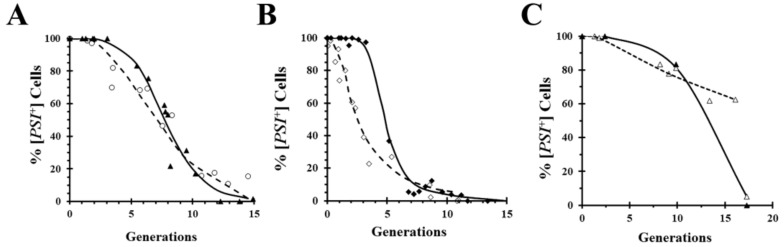
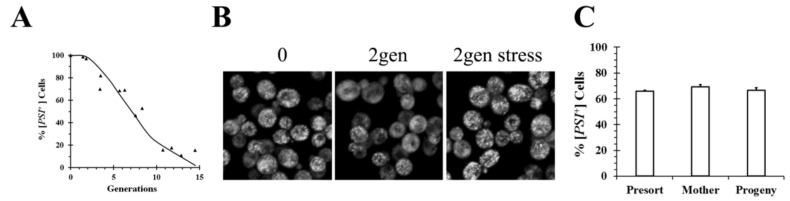
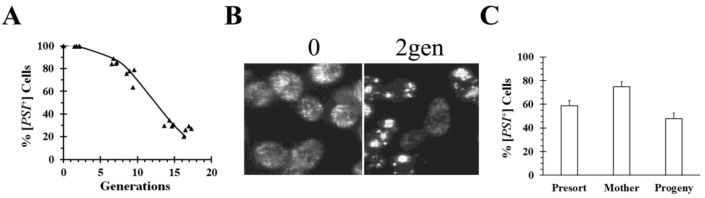
Prions are infectious proteins that self-propagate by changing from their normal folded conformation to a misfolded conformation. The misfolded conformation, which is typically rich in β-sheet, serves as a template to convert the prion protein into its misfolded conformation. In yeast, the misfolded prion proteins are assembled into amyloid fibers or seeds, which are constantly severed and transmitted to daughter cells. To cure prions in yeast, it is necessary to eliminate all the prion seeds. Multiple mechanisms of curing have been found including inhibiting severing of the prion seeds, gradual dissolution of the prion seeds, asymmetric segregation of the prion seeds between mother and daughter cells during cell division, and degradation of the prion seeds. These mechanisms, achieved by using different protein quality control machinery, are not mutually exclusive; depending on conditions, multiple mechanisms may work simultaneously to achieve curing. This review discusses the various methods that have been used to differentiate between these mechanisms of curing.
朊病毒是一种传染性蛋白质,通过从正常折叠构象转变为错误折叠构象来自我复制。错误折叠的构象富含β-折叠,充当模板将朊病毒蛋白转化为错误折叠构象。在酵母中,错误折叠的朊病毒蛋白会组装成淀粉样纤维或种子,这些纤维或种子不断被切断并传递到子细胞中。为了在酵母中治愈朊病毒,有必要消除所有的朊病毒种子。已经发现了多种治愈机制,包括抑制朊病毒种子的切断、朊病毒种子的逐渐溶解、细胞分裂过程中母细胞和子细胞之间朊病毒种子的不对称分离,以及朊病毒种子的降解。这些机制通过使用不同的蛋白质质量控制机制来实现,并不相互排斥;根据条件的不同,多种机制可能同时发挥作用以实现治愈。本文讨论了用于区分这些治愈机制的各种方法。