The Joseph Sagol Neuroscience Center, Sheba Medical Center, 52621, Tel Hashomer, Ramat Gan, Israel.
Sackler Faculty of Medicine, Tel-Aviv University, Tel Aviv, Israel.
J Neuroinflammation. 2020 Sep 9;17(1):267. doi: 10.1186/s12974-020-01927-w.
Excessive inflammation might activate and injure the blood-brain barrier (BBB), a common feature of many central nervous system (CNS) disorders. We previously developed an in vitro BBB injury model in which the organophosphate paraoxon (PX) affects the BBB endothelium by attenuating junctional protein expression leading to weakened barrier integrity. The objective of this study was to investigate the inflammatory cellular response at the BBB to elucidate critical pathways that might lead to effective treatment in CNS pathologies in which the BBB is compromised. We hypothesized that caspase-1, a core component of the inflammasome complex, might have important role in BBB function since accumulating evidence indicates its involvement in brain inflammation and pathophysiology.
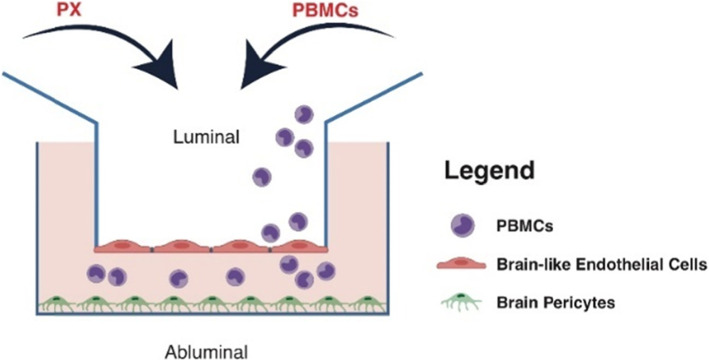
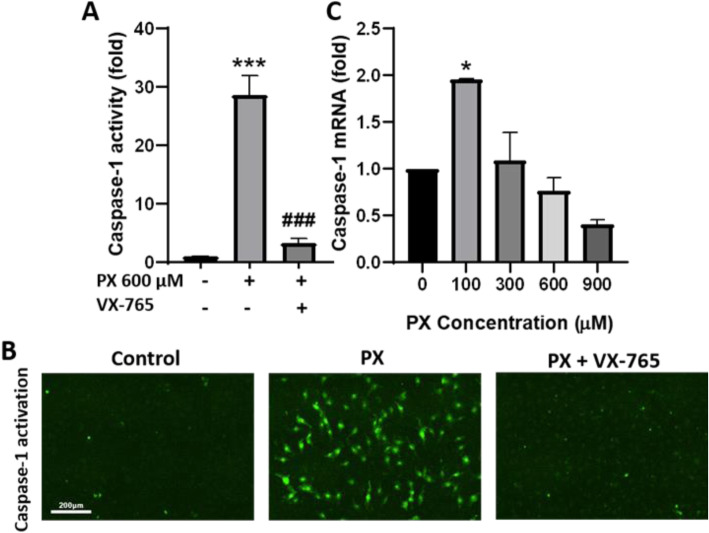
An in vitro human BBB model was employed to investigate BBB functions related to inflammation, primarily adhesion and transmigration of peripheral blood mononuclear cells (PBMCs). Caspase-1 pathway was studied by measurements of its activation state and its role in PBMCs adhesion, transmigration, and BBB permeability were investigated using the specific caspase-1 inhibitor, VX-765. Expression level of adhesion and junctional molecules and the secretion of pro-inflammatory cytokines were measured in vitro and in vivo at the BBB endothelium after exposure to PX. The potential repair effect of blocking caspase-1 and downstream molecules was evaluated by immunocytochemistry, ELISA, and Nanostring technology.
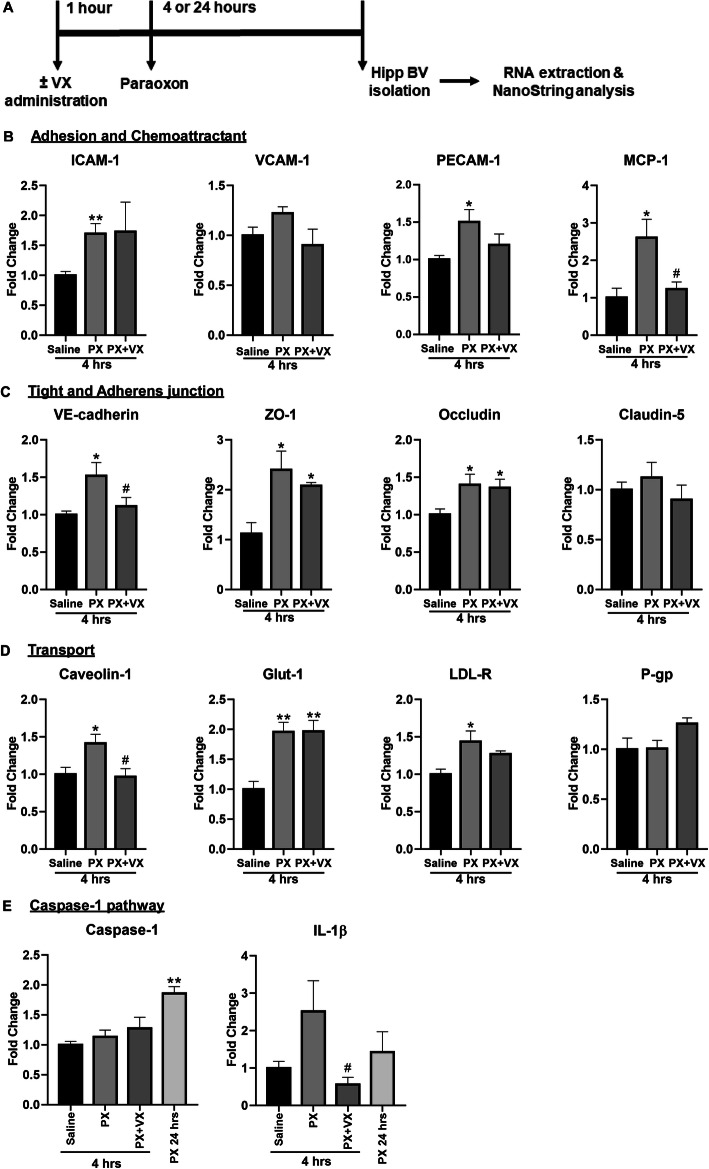
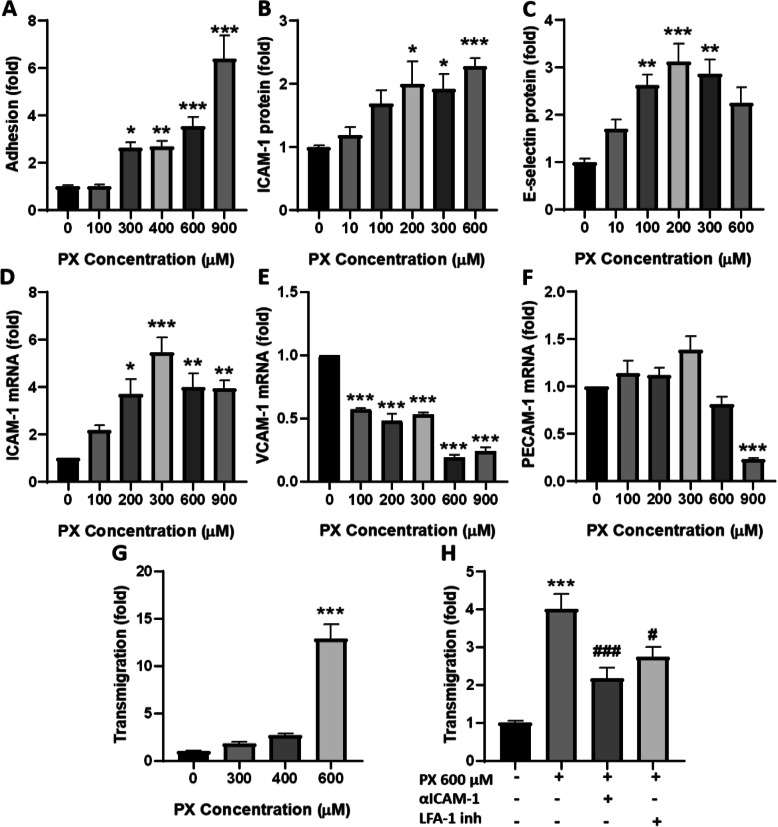
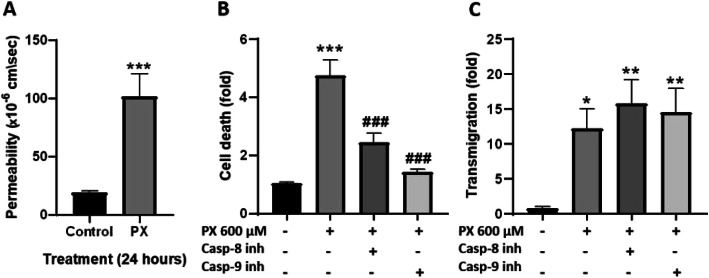
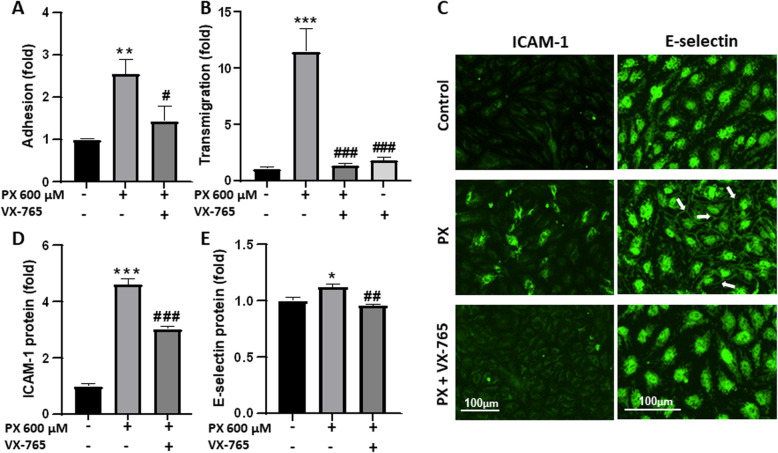
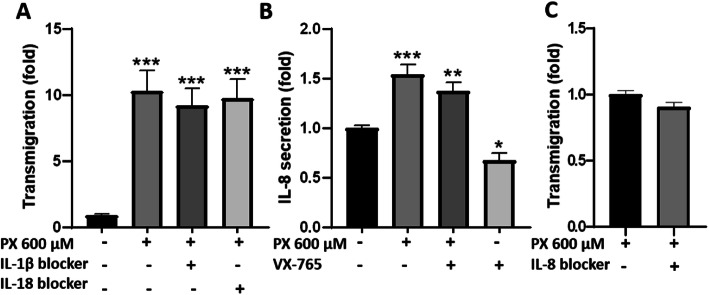
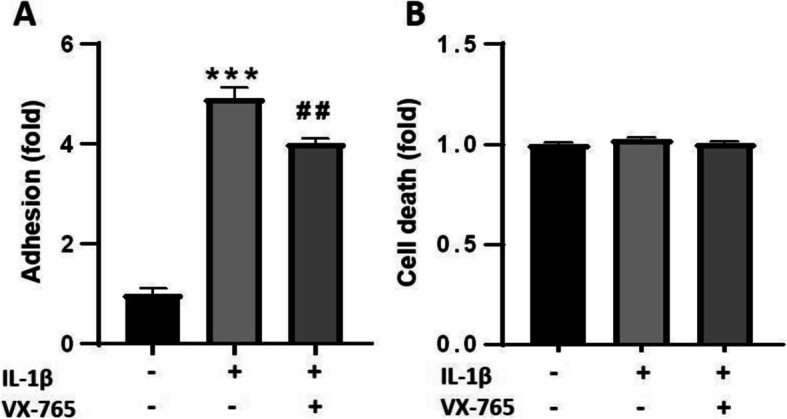
PX affected the BBB in vitro by elevating the expression of the adhesion molecules E-selectin and ICAM-1 leading to increased adhesion of PBMCs to endothelial monolayer, followed by elevated transendothelial-migration which was ICAM-1 and LFA-1 dependent. Blocking caspase-8 and 9 rescued the viability of the endothelial cells but not the elevated transmigration of PBMCs. Inhibition of caspase-1, on the other hand, robustly restored all of barrier insults tested including PBMCs adhesion and transmigration, permeability, and VE-cadherin protein levels. The in vitro inflammatory response induced by PX and the role of caspase-1 in BBB injury were corroborated in vivo in isolated blood vessels from hippocampi of mice exposed to PX and treated with VX-765.
These results shed light on the important role of caspase-1 in BBB insult in general and specifically in the inflamed endothelium, and suggest therapeutic potential for various CNS disorders, by targeting caspase-1 in the injured BBB.
过度的炎症可能会激活和损伤血脑屏障(BBB),这是许多中枢神经系统(CNS)疾病的共同特征。我们之前开发了一种体外 BBB 损伤模型,其中有机磷对氧磷(PX)通过减弱连接蛋白的表达来影响 BBB 内皮细胞,从而导致屏障完整性减弱。本研究的目的是研究 BBB 处的炎症细胞反应,以阐明可能导致 BBB 受损的 CNS 病理中有效治疗的关键途径。我们假设半胱天冬酶-1(caspase-1)作为炎症小体复合物的核心组成部分,可能在 BBB 功能中发挥重要作用,因为越来越多的证据表明其参与了脑炎症和病理生理学。
采用体外人 BBB 模型研究与炎症相关的 BBB 功能,主要是外周血单核细胞(PBMCs)的粘附和迁移。通过测量其激活状态来研究 caspase-1 途径,并用特异性 caspase-1 抑制剂 VX-765 研究其在 PBMCs 粘附、迁移和 BBB 通透性中的作用。在体外和体内,用 PX 处理后,测量 BBB 内皮细胞中粘附和连接分子的表达水平以及促炎细胞因子的分泌。通过免疫细胞化学、ELISA 和 Nanostring 技术评估阻断 caspase-1 和下游分子的潜在修复作用。
PX 通过上调粘附分子 E-选择素和 ICAM-1 的表达来影响体外 BBB,导致 PBMCs 与内皮单层的粘附增加,随后 ICAM-1 和 LFA-1 依赖性的跨内皮迁移增加。阻断 caspase-8 和 9 可挽救内皮细胞的活力,但不能挽救 PBMC 迁移的增加。另一方面,caspase-1 的抑制可强烈恢复所有测试的屏障损伤,包括 PBMCs 的粘附和迁移、通透性和 VE-钙粘蛋白蛋白水平。在体内,在海马分离血管中,用 PX 处理并用 VX-765 治疗的小鼠中,PX 诱导的炎症反应和 caspase-1 在 BBB 损伤中的作用得到了证实。
这些结果揭示了 caspase-1 在一般 BBB 损伤中的重要作用,特别是在炎症内皮细胞中的作用,并通过靶向损伤 BBB 中的 caspase-1,为各种 CNS 疾病提供了治疗潜力。