Nalecz Institute of Biocybernetics and Biomedical Engineering, Polish Academy of Sciences, Trojdena 4, 02-109, Warsaw, Poland.
Department of Physical Therapy and Rehabilitation, Medical University of Lublin, Lublin, Poland.
Sci Rep. 2020 Sep 9;10(1):14809. doi: 10.1038/s41598-020-71830-0.
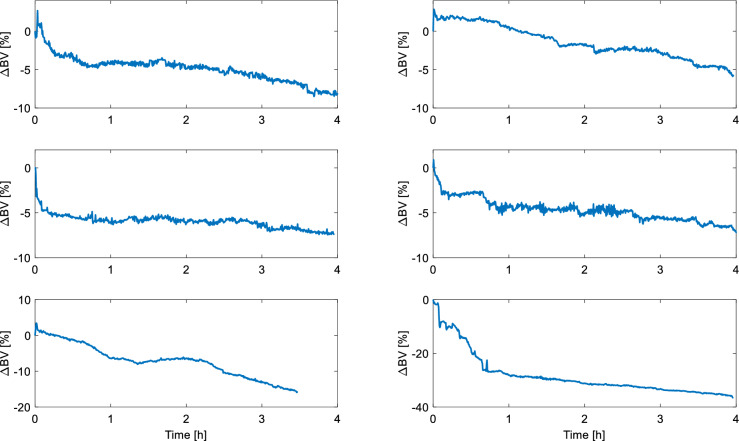
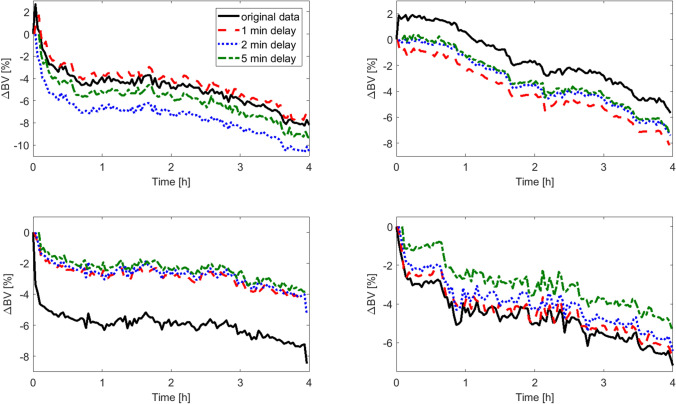
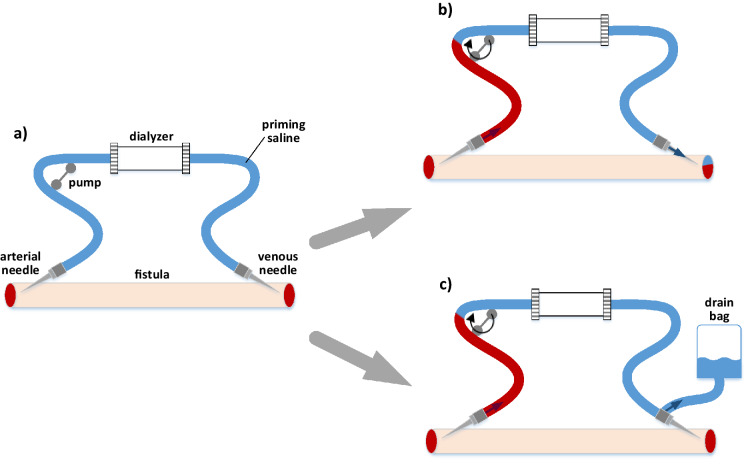
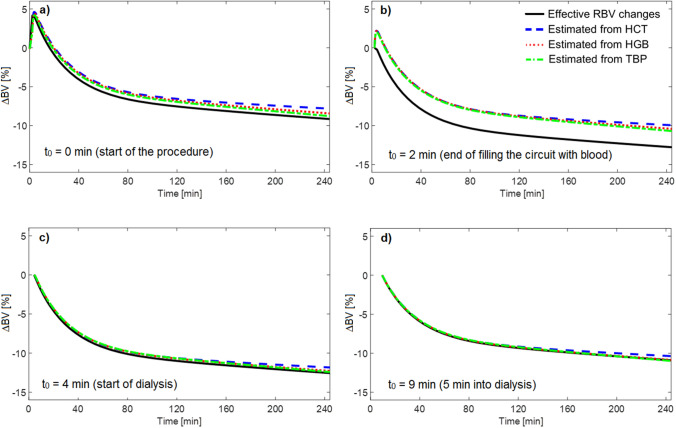
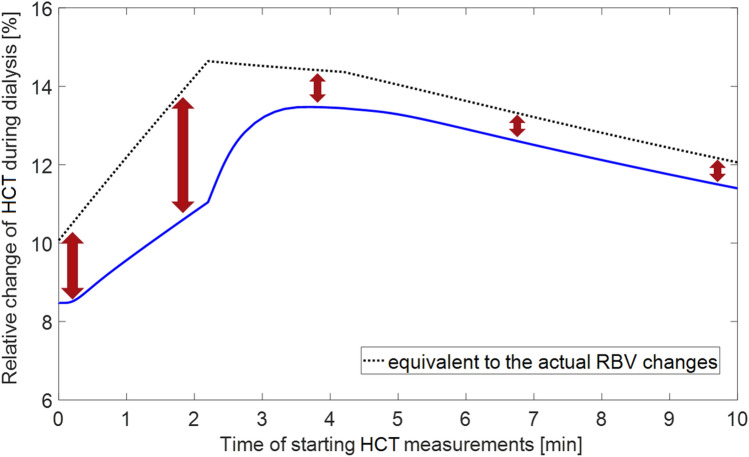
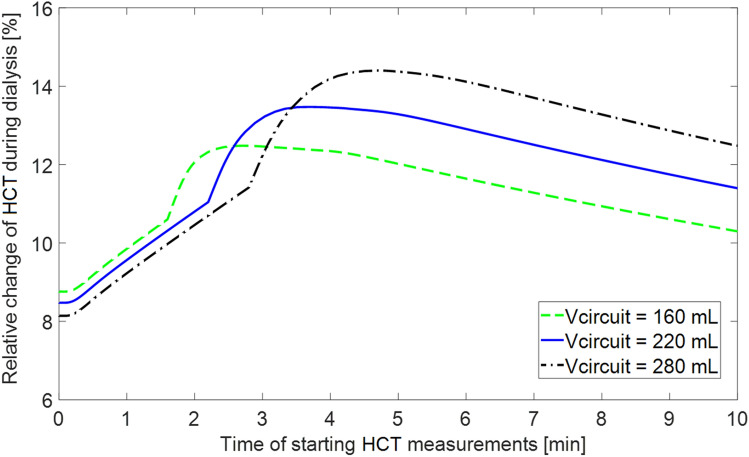
Relative blood volume (RBV) monitoring is frequently used in haemodialysis patients to help guide fluid management and improve cardiovascular stability. RBV changes are typically estimated based on online measurements of certain haemoconcentration markers, such as haematocrit (HCT), haemoglobin (HGB) or total blood protein concentration (TBP). The beginning of a haemodialysis procedure, i.e. filling the extracorporeal circuit with the patient's blood (with the priming saline being infused to the patient or discarded) may be associated with relatively dynamic changes in the circulation, and hence the observed RBV changes may depend on the exact moment of starting the measurements. The aim of this study was to use a mathematical model to assess this issue quantitatively. The model-based simulations indicate that when the priming saline is not discarded but infused to the patient, a few-minute difference in the moment of starting RBV tracking through measurements of HCT, HGB or TBP may substantially affect the RBV changes observed throughout the dialysis session, especially with large priming volumes. A possible overestimation of the actual RBV changes is the highest when the measurements are started within a couple of minutes after the infusion of priming saline is completed.
相对血容量 (RBV) 监测常用于血液透析患者,以帮助指导液体管理并提高心血管稳定性。RBV 的变化通常基于对某些血液浓缩标志物的在线测量来估计,例如血细胞比容 (HCT)、血红蛋白 (HGB) 或总血蛋白浓度 (TBP)。血液透析过程的开始,即通过向患者输注生理盐水来填充体外循环 (或将生理盐水注入患者体内或丢弃),可能与循环中相对动态的变化有关,因此观察到的 RBV 变化可能取决于开始测量的确切时间。本研究的目的是使用数学模型对此问题进行定量评估。基于模型的模拟表明,当不丢弃而是将预充液注入患者体内时,通过测量 HCT、HGB 或 TBP 来跟踪 RBV 时,开始时间相差几分钟可能会显著影响整个透析过程中观察到的 RBV 变化,尤其是在预充液体积较大的情况下。当在完成预充液输注后的几分钟内开始测量时,对实际 RBV 变化的高估最大。