Department of Molecular Biology, Princeton University, Princeton, NJ, USA.
LSI Genomics, Princeton University, Princeton, NJ, USA.
Nature. 2020 Oct;586(7829):445-451. doi: 10.1038/s41586-020-2699-5. Epub 2020 Sep 9.
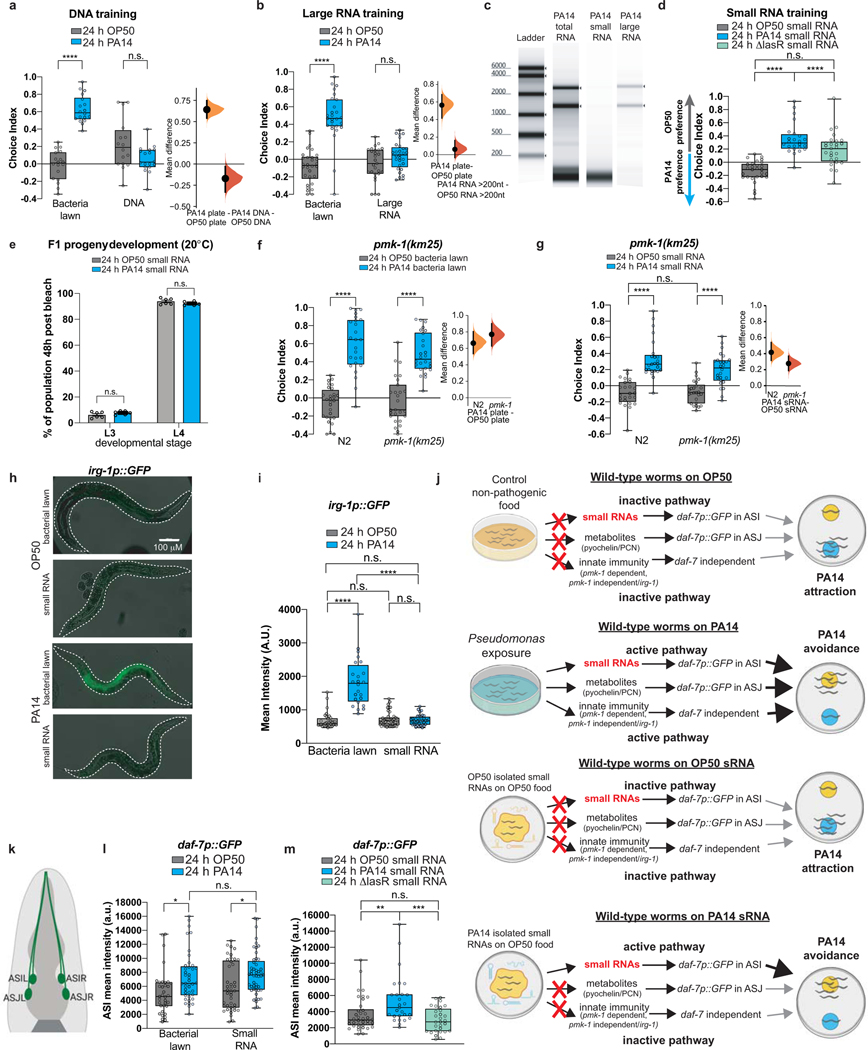
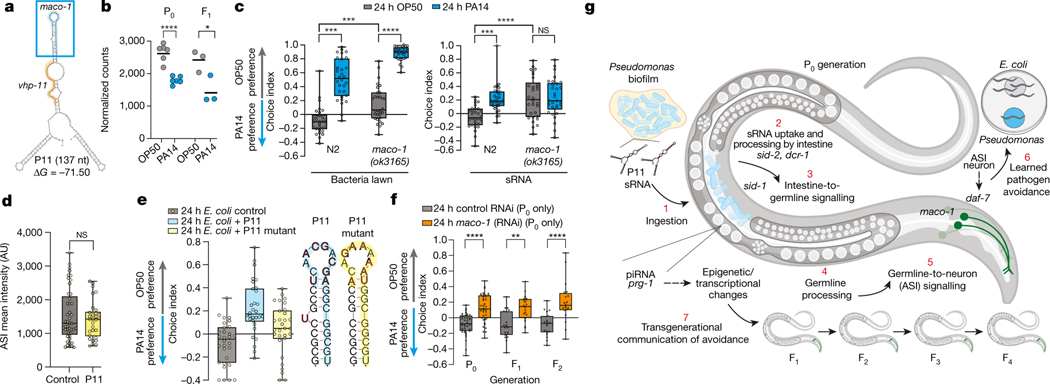
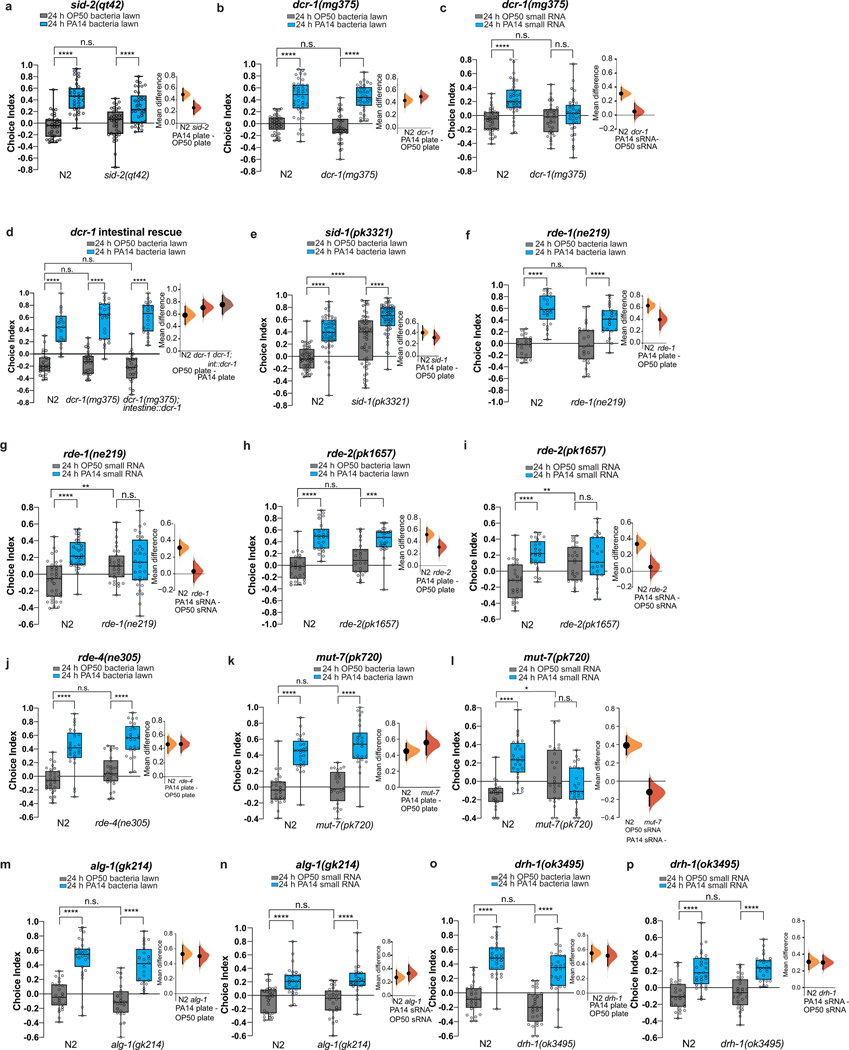
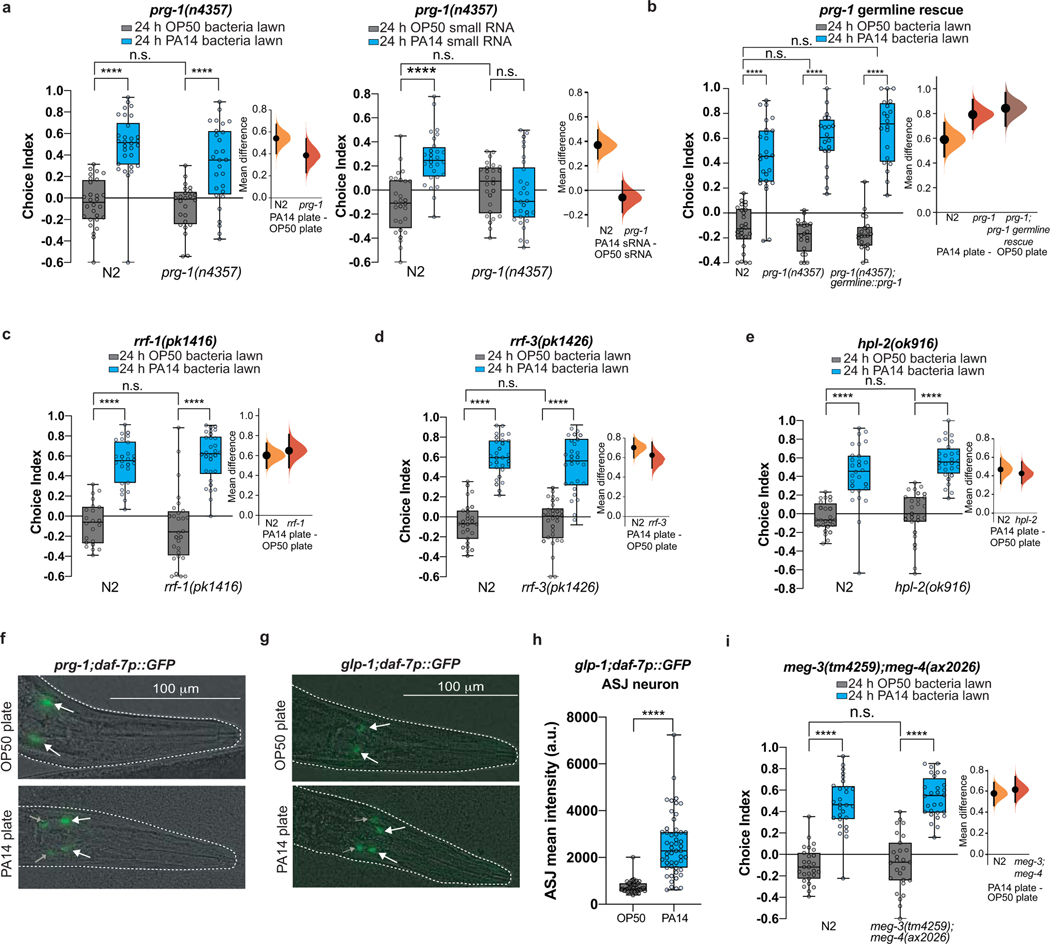
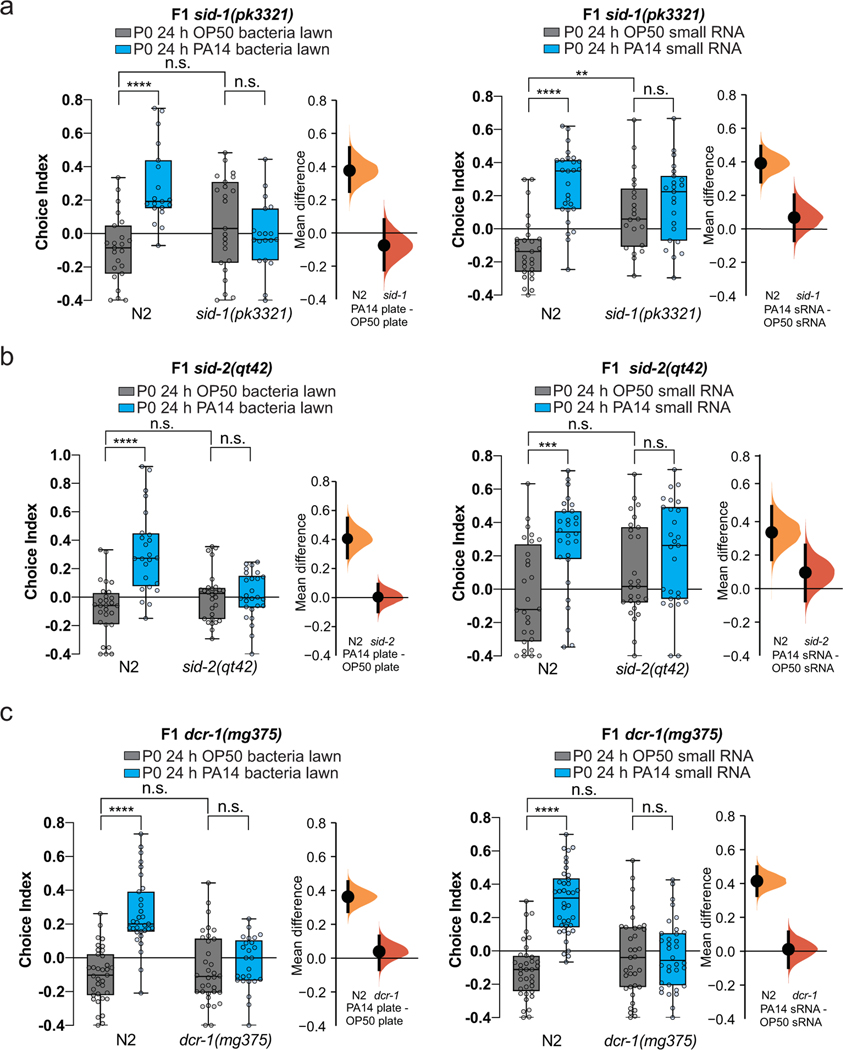
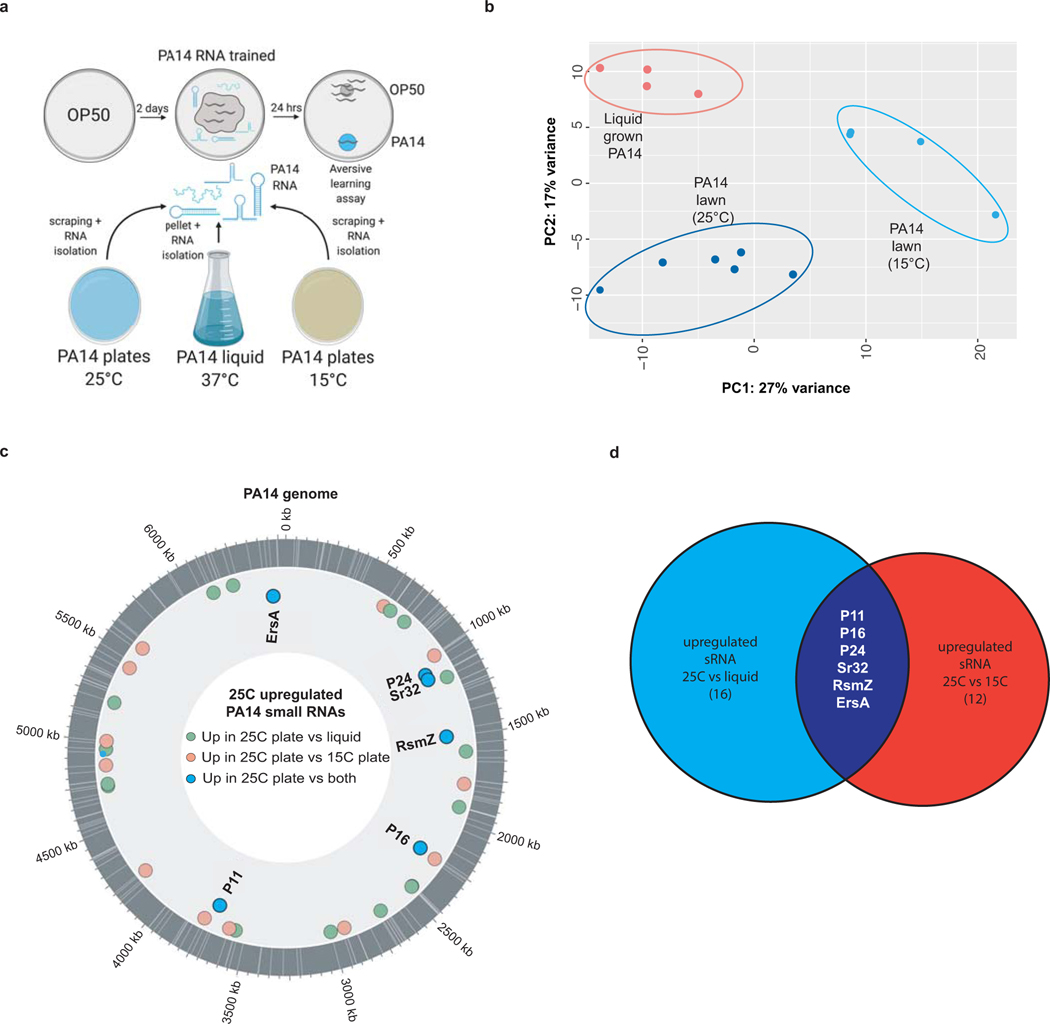
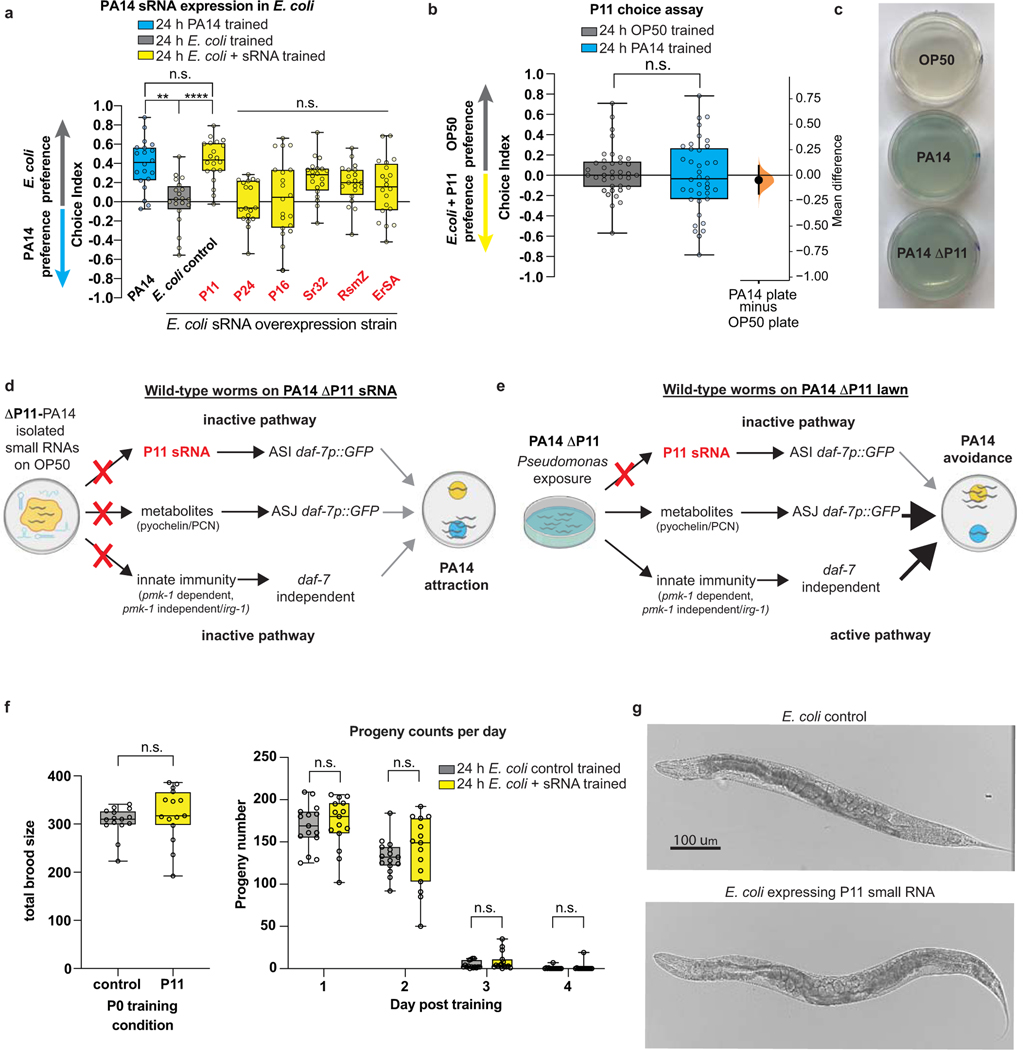
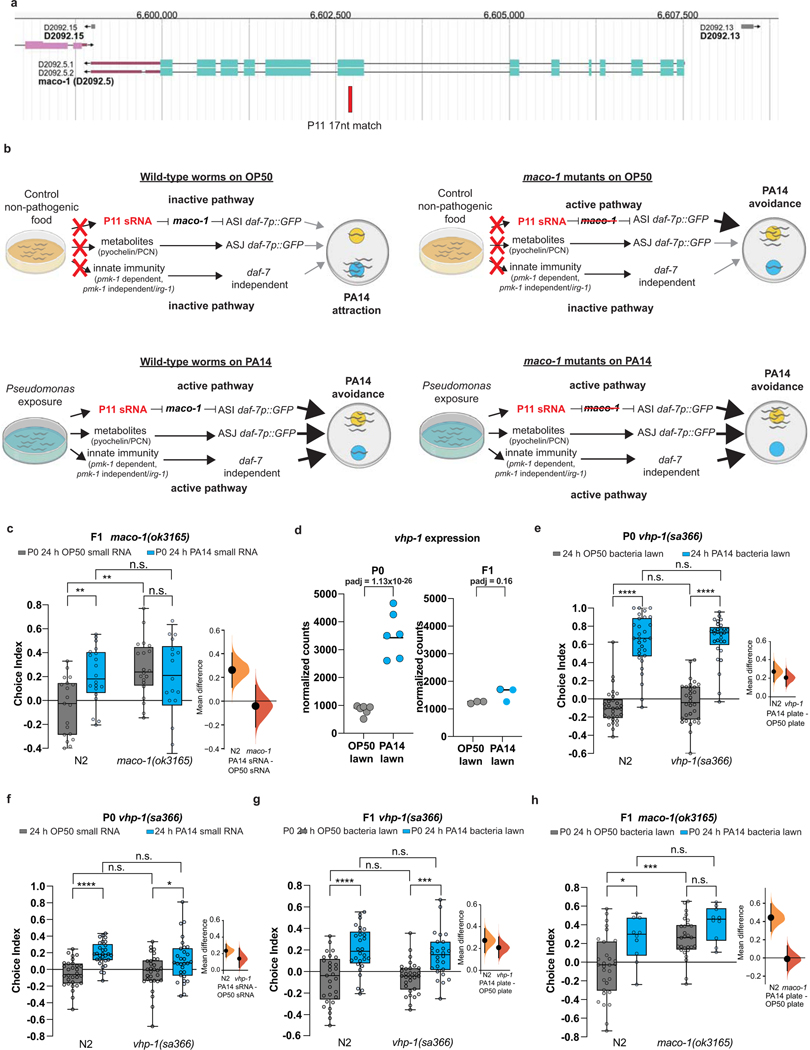
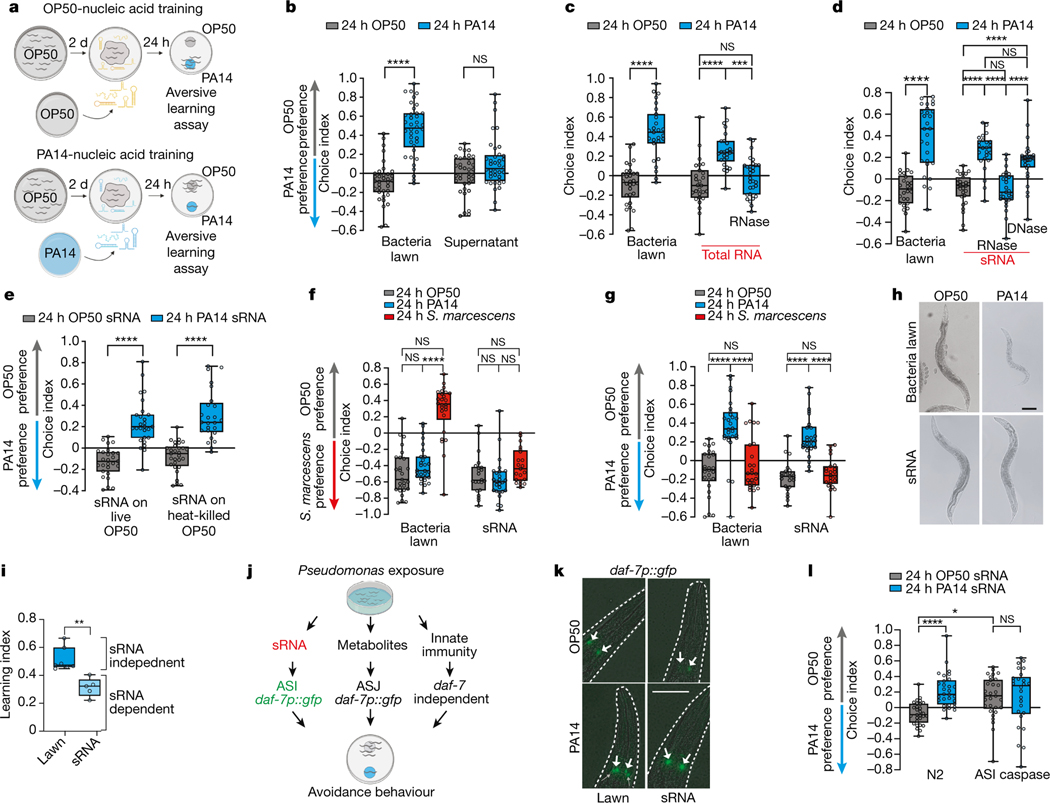
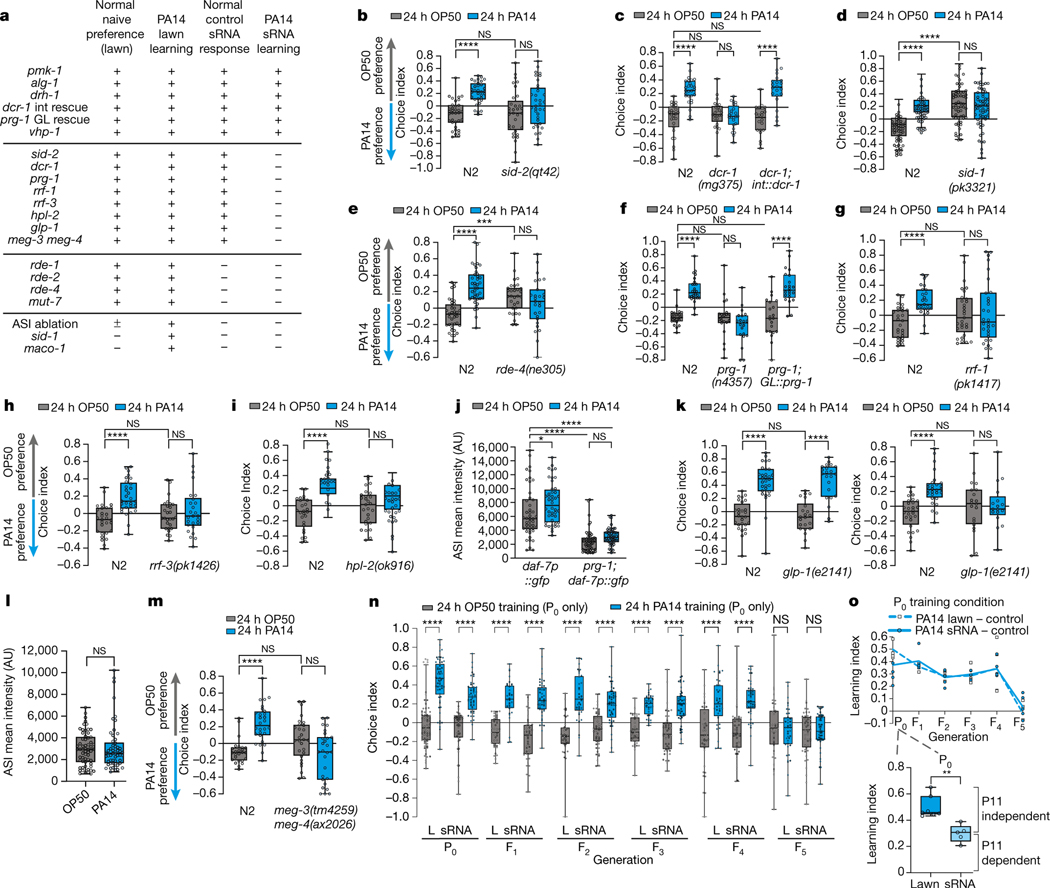
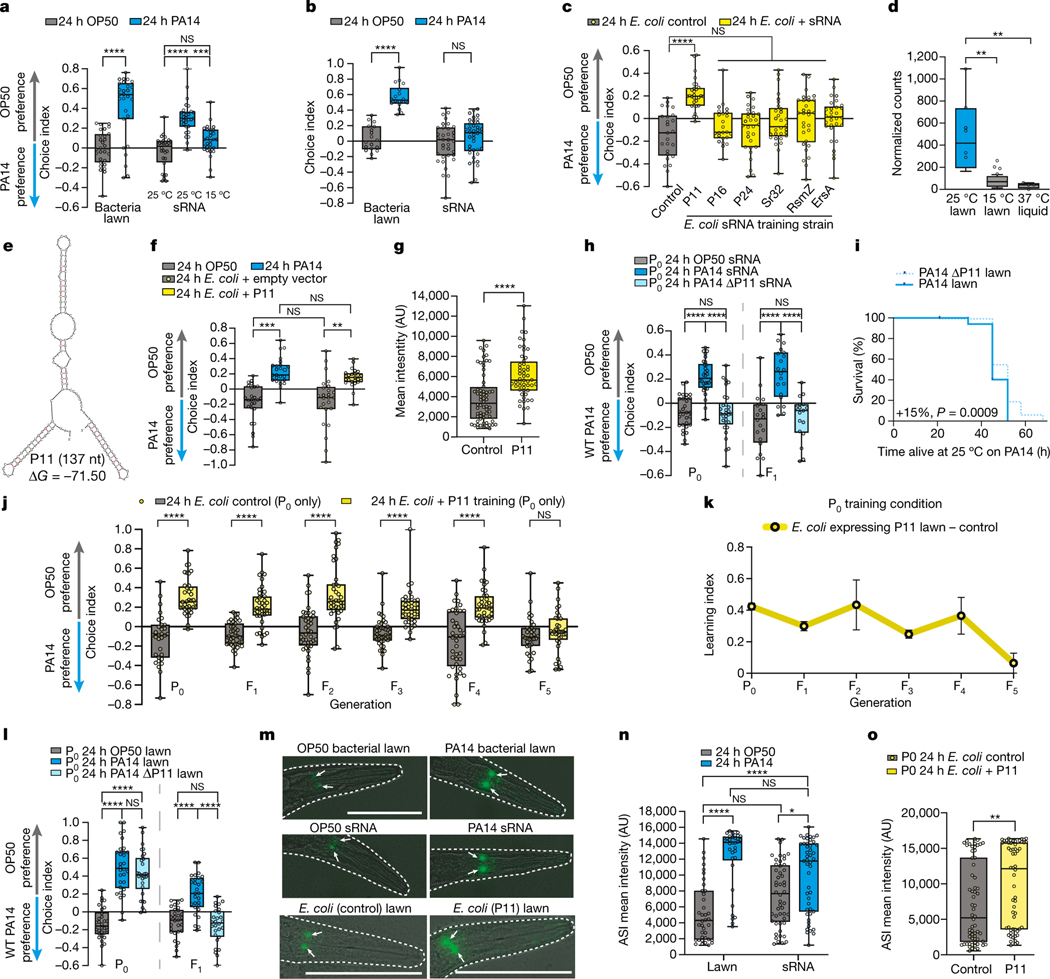
Caenorhabditis elegans must distinguish pathogens from nutritious food sources among the many bacteria to which it is exposed in its environment. Here we show that a single exposure to purified small RNAs isolated from pathogenic Pseudomonas aeruginosa (PA14) is sufficient to induce pathogen avoidance in the treated worms and in four subsequent generations of progeny. The RNA interference (RNAi) and PIWI-interacting RNA (piRNA) pathways, the germline and the ASI neuron are all required for avoidance behaviour induced by bacterial small RNAs, and for the transgenerational inheritance of this behaviour. A single P. aeruginosa non-coding RNA, P11, is both necessary and sufficient to convey learned avoidance of PA14, and its C. elegans target, maco-1, is required for avoidance. Our results suggest that this non-coding-RNA-dependent mechanism evolved to survey the microbial environment of the worm, use this information to make appropriate behavioural decisions and pass this information on to its progeny.
秀丽隐杆线虫必须在其环境中接触到的众多细菌中区分病原体和有营养的食物来源。在这里,我们表明,单次暴露于从致病性铜绿假单胞菌 (PA14) 中分离出的纯化小 RNA 足以诱导处理过的蠕虫及其随后的四代后代产生病原体回避行为。RNA 干扰 (RNAi) 和 PIWI 相互作用 RNA (piRNA) 途径、生殖系和 ASI 神经元均需要细菌小 RNA 诱导的回避行为,以及这种行为的跨代遗传。单个铜绿假单胞菌非编码 RNA P11 既是传达对 PA14 回避的必要条件,也是充分条件,其秀丽隐杆线虫靶标 maco-1 也是回避所必需的。我们的研究结果表明,这种依赖非编码 RNA 的机制进化来检测线虫的微生物环境,利用这些信息做出适当的行为决策,并将这些信息传递给后代。