Department of Neurology, Zhejiang Hospital, Hangzhou, Zhejiang 310013, China.
Department of Neurology, The Second Affiliated Hospital and Yuying Children's Hospital of Wenzhou Medical University, Wenzhou, China.
Oxid Med Cell Longev. 2020 Aug 25;2020:6752876. doi: 10.1155/2020/6752876. eCollection 2020.
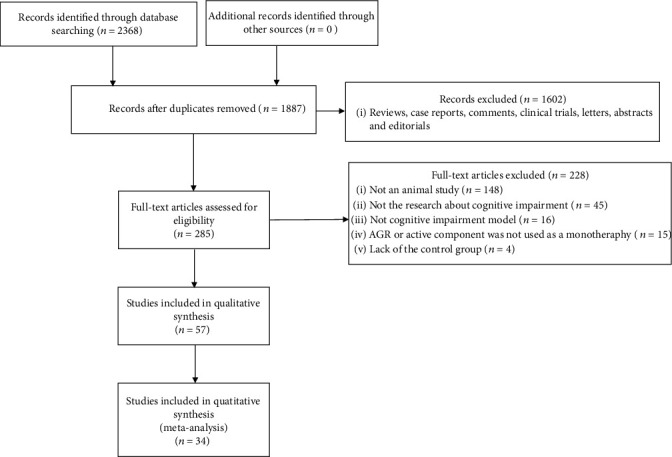
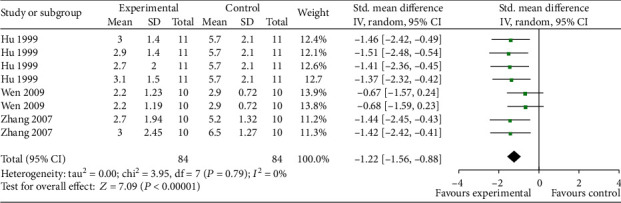
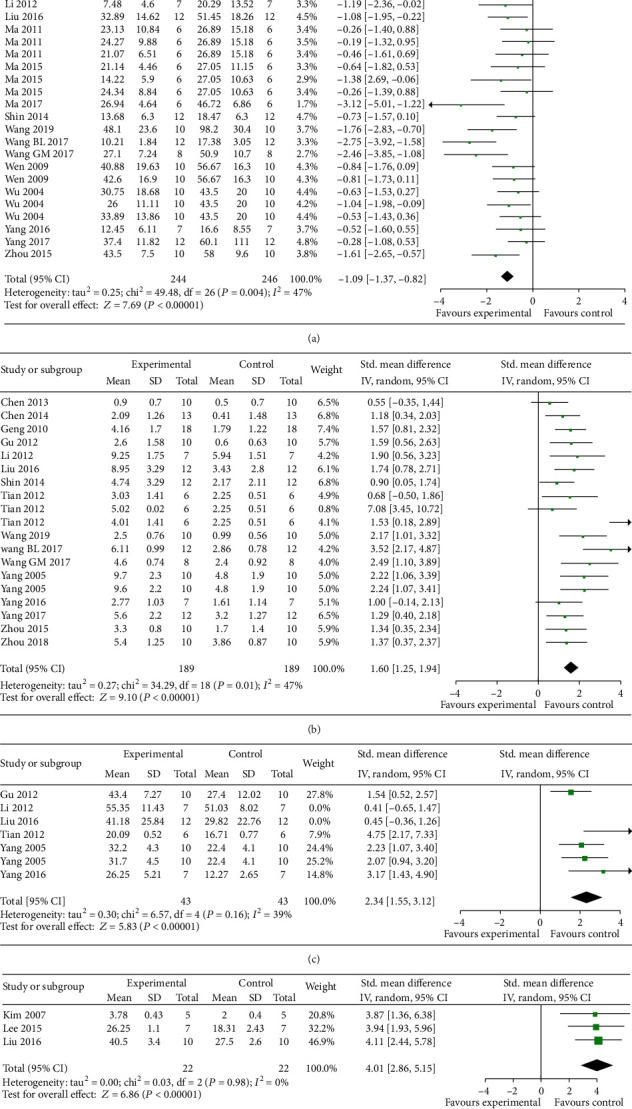
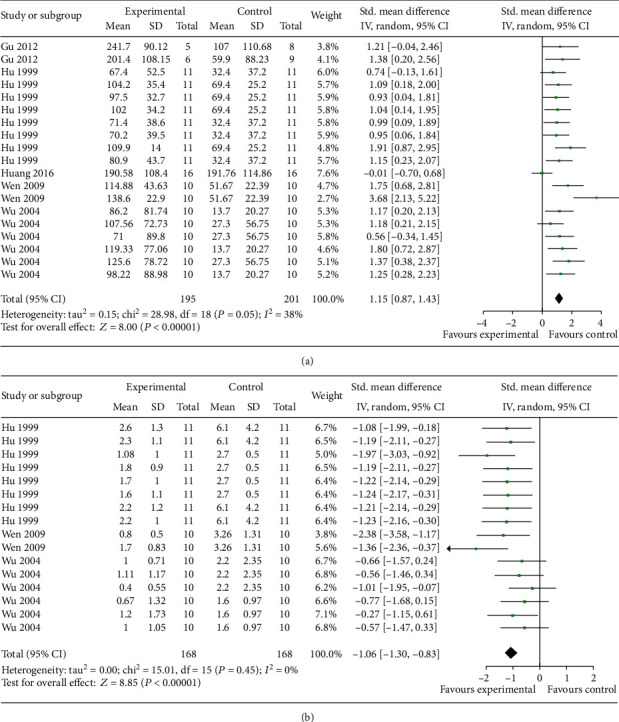
Extracts or active components from Acorus gramineus Aiton (EAAGA) have been clinically used for cognition impairment more than hundreds of years and are still used in modern times in China and elsewhere worldwide. Previous studies reported that EAAGA improves cognition impairment in animal models. Here, we conducted a preclinical systematic review to assess the current evidence of EAAGA for cognition impairment. We searched 7 databases up until June 2019. Methodological quality for each included studies was accessed according to the CAMARADES 10-item checklist. The primary outcome measures were neurobehavioral function scores evaluated by the Morris water maze test, electrical Y-maze test, step-down test, radial eight-arm maze test, and step-through test. The secondary outcome measures were mechanisms of EAAGA for cognition function. Finally, 34 studies involving 1431 animals were identified. The quality score of studies range from 1 to 6, and the median was 3.32. Compared with controls, the results of the meta-analysis indicated EAAGA exerted a significant effect in decreasing the escape latency and error times and in increasing the length of time spent in the platform quadrant and the number of platform crossings representing learning ability and memory function (all < 0.01). The possible mechanisms of EAAGA are largely through anti-inflammatory, antioxidant, antiapoptosis activities, inhibition of neurotoxicity, regulating synaptic plasticity, protecting cerebrovascular, stimulating cholinergic system, and suppressing astrocyte activation. In conclusion, EAAGA exert potential neuroprotective effects in experimental cognition impairment, and EAAGA could be a candidate for cognition impairment treatment and further clinical trials.
菖蒲属(Acorus gramineus Aiton)的提取物或活性成分在临床上已经被用于治疗认知障碍超过数百年,并且在现代中国和其他世界各地仍在使用。先前的研究报告称,菖蒲属提取物可改善动物模型的认知障碍。在这里,我们进行了一项临床前系统评价,以评估菖蒲属提取物治疗认知障碍的现有证据。我们搜索了截至 2019 年 6 月的 7 个数据库。根据 CAMARADES 10 项清单评估每个纳入研究的方法学质量。主要结局指标是通过 Morris 水迷宫测试、电 Y 迷宫测试、下台阶测试、放射状八臂迷宫测试和穿梭箱测试评估的神经行为功能评分。次要结局指标是菖蒲属提取物对认知功能的作用机制。最终,确定了 34 项涉及 1431 只动物的研究。研究的质量评分范围为 1 至 6,中位数为 3.32。与对照组相比,荟萃分析的结果表明,菖蒲属提取物在降低逃避潜伏期和错误次数以及增加平台象限的停留时间和平台穿越次数方面具有显著作用,这些指标代表学习能力和记忆功能(均 < 0.01)。菖蒲属提取物的可能机制主要是通过抗炎、抗氧化、抗细胞凋亡活性、抑制神经毒性、调节突触可塑性、保护脑血管、刺激胆碱能系统和抑制星形胶质细胞激活。总之,菖蒲属提取物在实验性认知障碍中具有潜在的神经保护作用,菖蒲属提取物可能是认知障碍治疗和进一步临床试验的候选药物。