Shang Li-Ming, Liao Xi-Wen, Zhu Guang-Zhi, Huang Ke-Tuan, Han Chuang-Ye, Yang Cheng-Kun, Wang Xiang-Kun, Zhou Xin, Su Hao, Ye Xin-Ping, Peng Tao
Department of Hepatobiliary Surgery, The First Affiliated Hospital of Guangxi Medical University, Nanning, 530021, Guangxi Zhuang Autonomous Region, People's Republic of China.
J Cancer. 2020 Jul 20;11(19):5556-5567. doi: 10.7150/jca.39888. eCollection 2020.
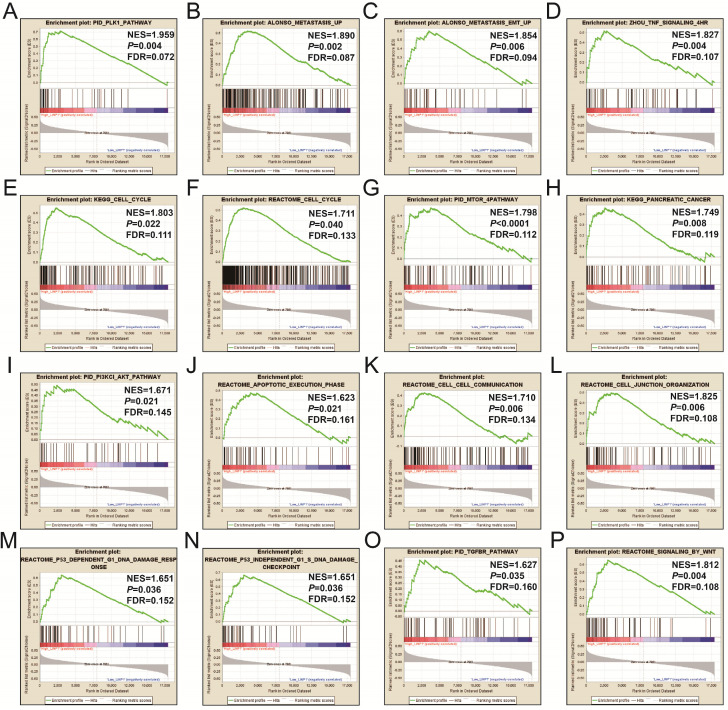
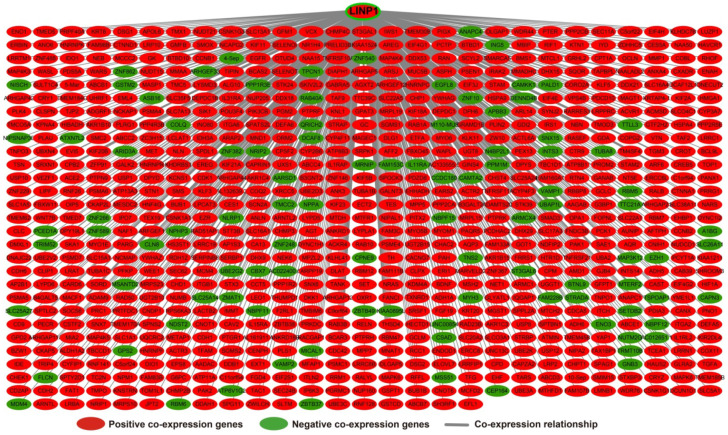
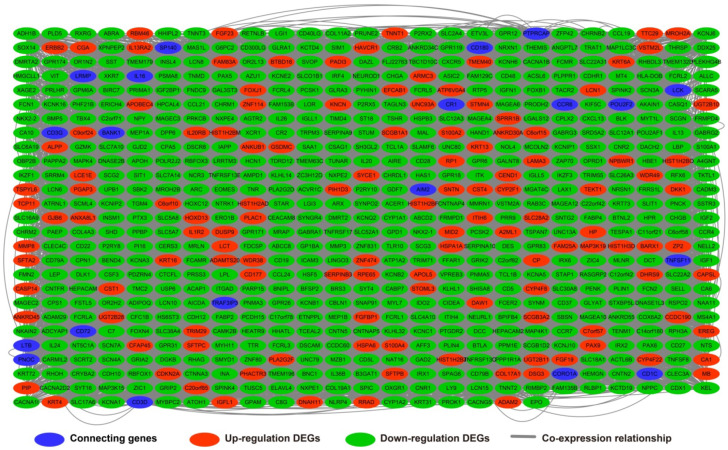
Our current study is to explore the prognostic value and molecular mechanisms underlying the role of lncRNA in non-homologous end joining pathway 1 (LINP1) in early stage pancreatic ductal adenocarcinoma (PDAC). Genome-wide RNA-seq datasets of 112 early stage PDAC patients were got from The Cancer Genome Atlas and analyzed using multiple online tools. Overall survival in high LINP1 expression patients was shorter than those with low expression (high-LINP1 vs. low-LINP1=481 vs. 592 days, log-rank P=0.0432). The multivariate Cox proportional hazard regression model suggested that high-LINP1 patients had a markedly higher risk of death than low-LINP1 patients (adjusted P=0.004, hazard ratio=2.214, 95% confidence interval=1.283-3.820). Analysis of genome-wide co-expressed genes, screening of differentially expressed genes, and gene set enrichment analysis indicated that LINP1 may be involved in the regulation of cell proliferation-, cell adhesion- and cell cycle-related biological processes in PDAC. Six small-molecule compounds including STOCK1N-35874, fenofibrate, exisulind, NU-1025, vinburnine, and doxylamine were identified as potential LINP1-targeted drugs for the treatment of PDAC. Our study indicated that LINP1 may serve as a prognostic biomarker of early stage PDAC. Analysis of genome-wide datasets led to the elucidation of the underlying mechanisms and identified six potential targeted drugs for the treatment of early PDAC.
我们当前的研究旨在探索长链非编码RNA在非同源末端连接途径1(LINP1)在早期胰腺导管腺癌(PDAC)中的预后价值及分子机制。从癌症基因组图谱获取了112例早期PDAC患者的全基因组RNA测序数据集,并使用多个在线工具进行分析。LINP1高表达患者的总生存期短于低表达患者(高LINP1组与低LINP1组分别为481天和592天,对数秩检验P = 0.0432)。多变量Cox比例风险回归模型表明,高LINP1患者的死亡风险显著高于低LINP1患者(校正P = 0.004,风险比= 2.214,95%置信区间= 1.283 - 3.820)。全基因组共表达基因分析、差异表达基因筛选和基因集富集分析表明,LINP1可能参与PDAC中细胞增殖、细胞黏附和细胞周期相关生物学过程的调控。六种小分子化合物,包括STOCK1N - 35874、非诺贝特、依西美坦、NU - 1025、长春胺和多西拉敏,被确定为治疗PDAC的潜在LINP1靶向药物。我们的研究表明,LINP1可能作为早期PDAC的预后生物标志物。全基因组数据集分析揭示了潜在机制,并确定了六种治疗早期PDAC的潜在靶向药物。