Sun Michael, Marquardt Craig A, Disner Seth G, Burton Philip C, Davenport Nicholas D, Lissek Shmuel, Sponheim Scott R
Department of Psychological and Brain Sciences, Dartmouth College, Hanover, NH, USA.
Department of Psychiatry and Behavioral Sciences, University of Minnesota, Minneapolis, MN, USA.
Personal Neurosci. 2020 Jul 30;3:e9. doi: 10.1017/pen.2020.10. eCollection 2020.
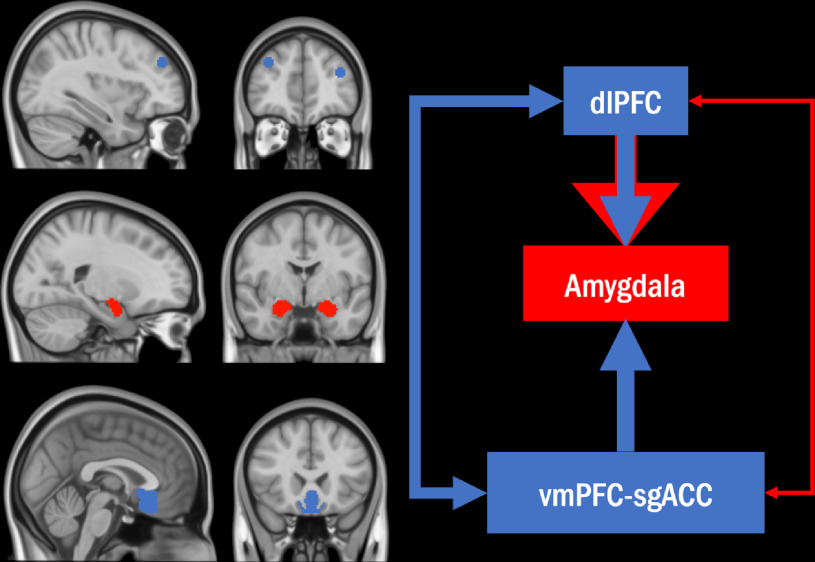
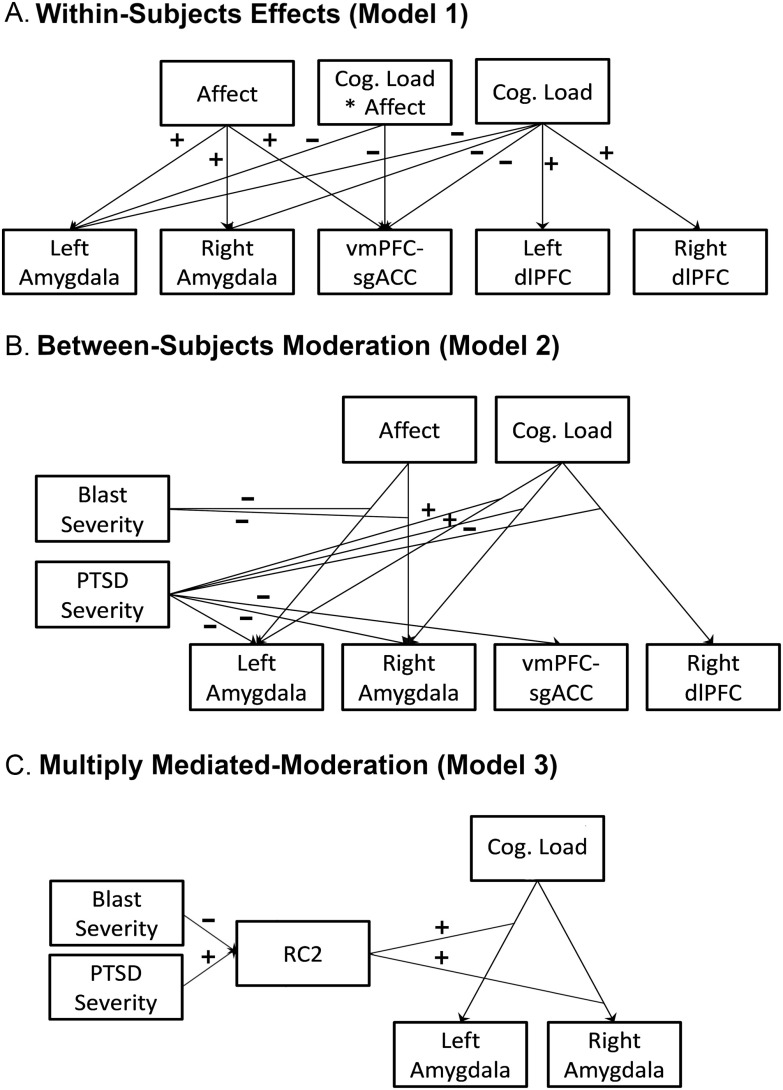
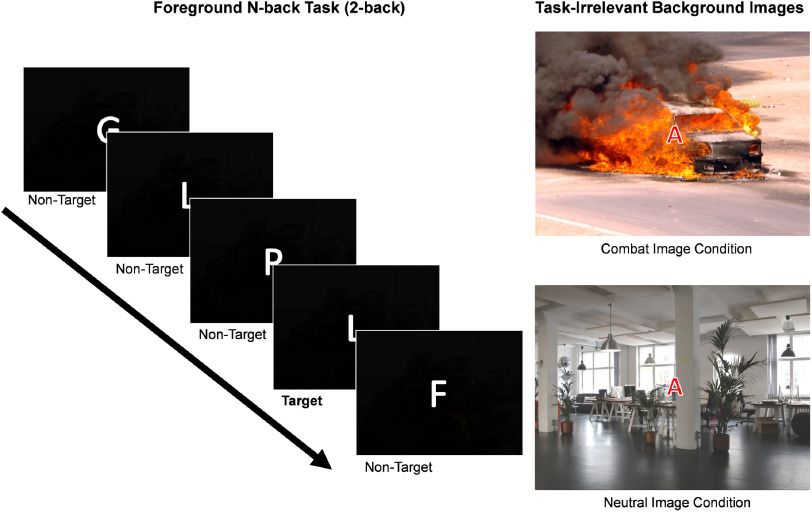
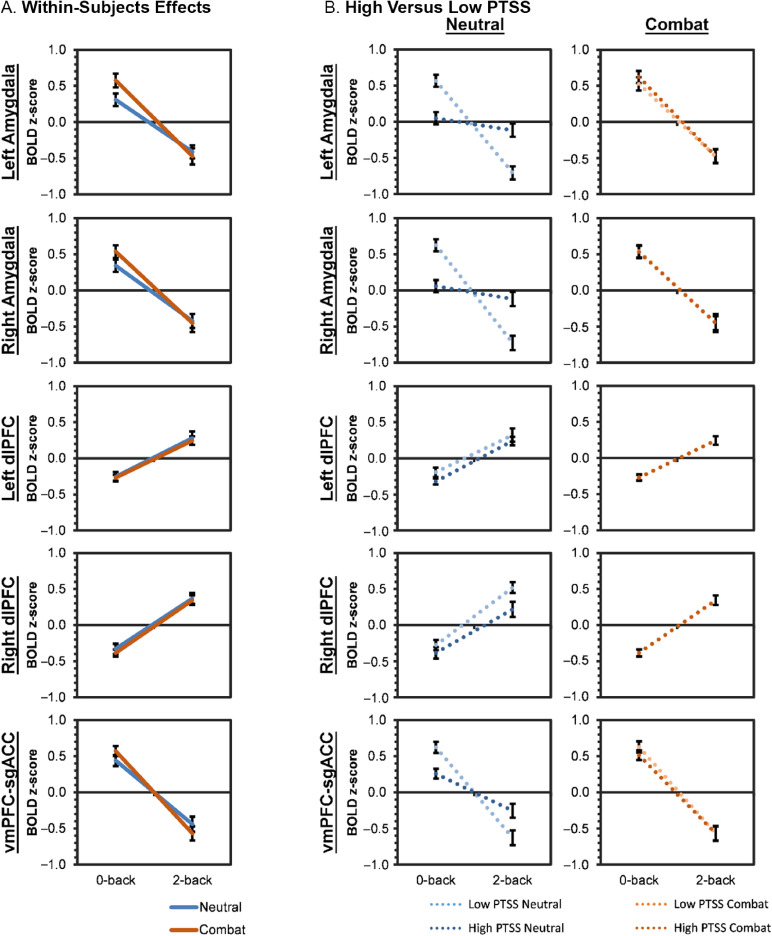
Posttraumatic stress disorder (PTSD) is often complicated by the after-effects of mild traumatic brain injury (mTBI). The mixture of brain conditions results in abnormal affective and cognitive functioning, as well as maladaptive behavior. To better understand how brain activity explains cognitive and emotional processes in these conditions, we used an emotional N-back task and functional magnetic resonance imaging (fMRI) to study neural responses in US military veterans after deployments to Iraq and Afghanistan. Additionally, we sought to examine whether hierarchical dimensional models of maladaptive personality could account for the relationship between combat-related brain conditions and fMRI responses under cognitive and affective challenge. FMRI data, measures of PTSD symptomatology (PTSS), blast-induced mTBI (bmTBI) severity, and maladaptive personality (MMPI-2-RF) were gathered from 93 veterans. Brain regions central to emotion regulation were selected for analysis, and consisted of bilateral amygdala, bilateral dorsolateral prefrontal (dlPFC), and ventromedial prefrontal/subgenual anterior cingulate (vmPFC-sgACC). Cognitive load increased activity in dlPFC and reduced activity in emotional responding brain regions. However, individuals with greater PTSS showed blunted deactivations in bilateral amygdala and vmPFC-sgACC, and weaker responses in right dlPFC. Additionally, we found that elevated emotional/internalizing dysfunction (EID), specifically low positive emotionality (RC2), accounted for PTSS-related changes in bilateral amygdala under increased cognitive load. Findings suggest that PTSS might result in amygdala and vmPFC-sgACC activity resistant to moderation by cognitive demands, reflecting emotion dysregulation despite a need to marshal cognitive resources. Anhedonia may be an important target for interventions that improve the affective and cognitive functioning of individuals with PTSD.
创伤后应激障碍(PTSD)常伴有轻度创伤性脑损伤(mTBI)的后遗症。这两种脑部状况的结合会导致情感和认知功能异常,以及适应不良行为。为了更好地理解大脑活动如何解释这些情况下的认知和情感过程,我们使用了一项情绪n-back任务和功能磁共振成像(fMRI)来研究美国军事退伍军人在部署到伊拉克和阿富汗后的神经反应。此外,我们试图研究适应不良人格的层次维度模型是否能够解释与战斗相关的脑部状况与认知和情感挑战下fMRI反应之间的关系。我们收集了93名退伍军人的fMRI数据、PTSD症状学(PTSS)测量值、爆炸所致mTBI(bmTBI)严重程度以及适应不良人格(MMPI-2-RF)。我们选择了对情绪调节至关重要的脑区进行分析,这些脑区包括双侧杏仁核、双侧背外侧前额叶(dlPFC)以及腹内侧前额叶/膝下前扣带回(vmPFC-sgACC)。认知负荷增加了dlPFC的活动,并减少了情绪反应脑区的活动。然而,PTSS较高的个体在双侧杏仁核和vmPFC-sgACC中的失活减弱,在右侧dlPFC中的反应较弱。此外,我们发现情绪/内化功能障碍(EID)升高,特别是低积极情绪(RC2),解释了认知负荷增加时双侧杏仁核中与PTSS相关的变化。研究结果表明,PTSS可能导致杏仁核和vmPFC-sgACC的活动不受认知需求的调节,这反映了尽管需要调动认知资源,但仍存在情绪调节障碍。快感缺失可能是改善PTSD患者情感和认知功能的干预措施的一个重要靶点。