Zhu Baoli, Friedrich Sebastian, Wang Zhe, Táncsics András, Lueders Tillmann
Chair of Ecological Microbiology, University of Bayreuth, Bayreuth, Germany.
Chair of Hydrogeology, Technical University of Munich, Munich, Germany.
Front Microbiol. 2020 Aug 14;11:1867. doi: 10.3389/fmicb.2020.01867. eCollection 2020.
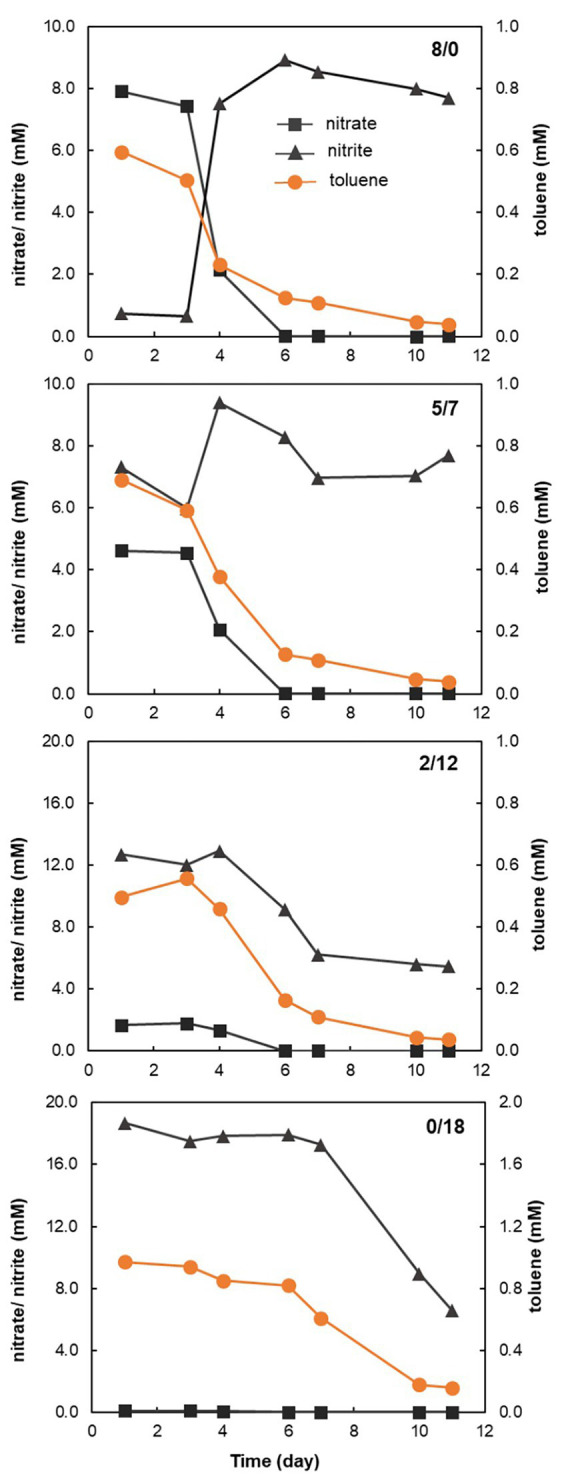
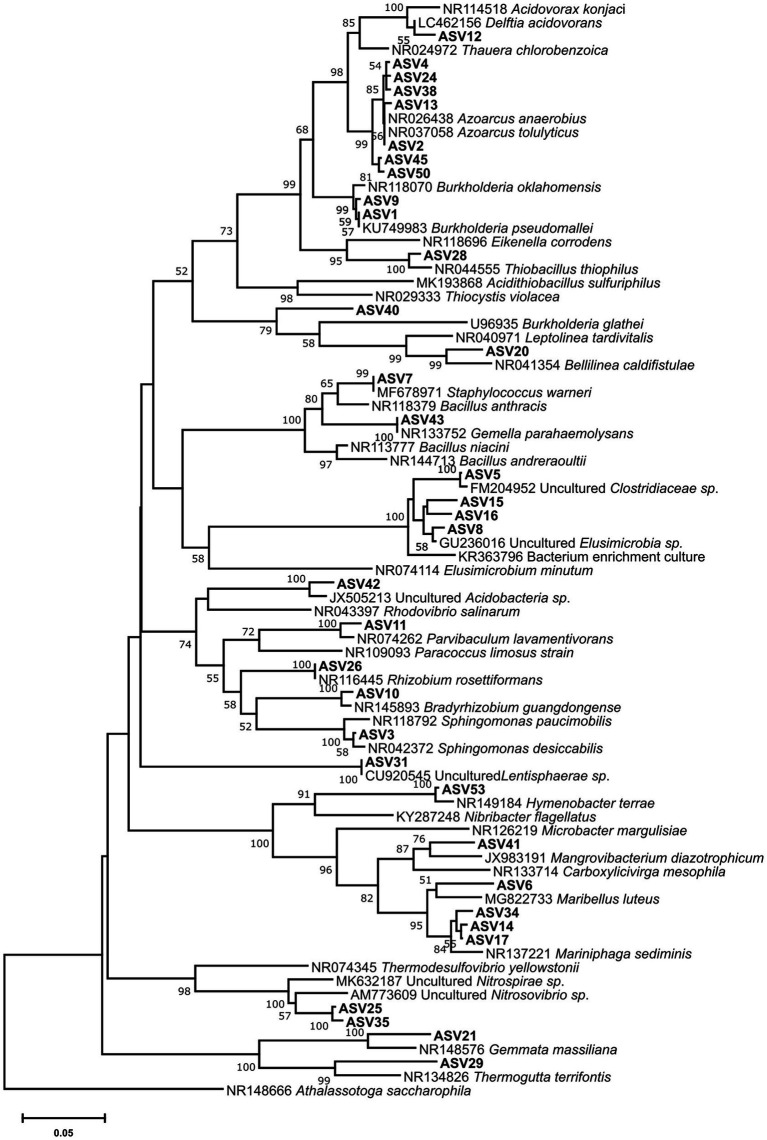
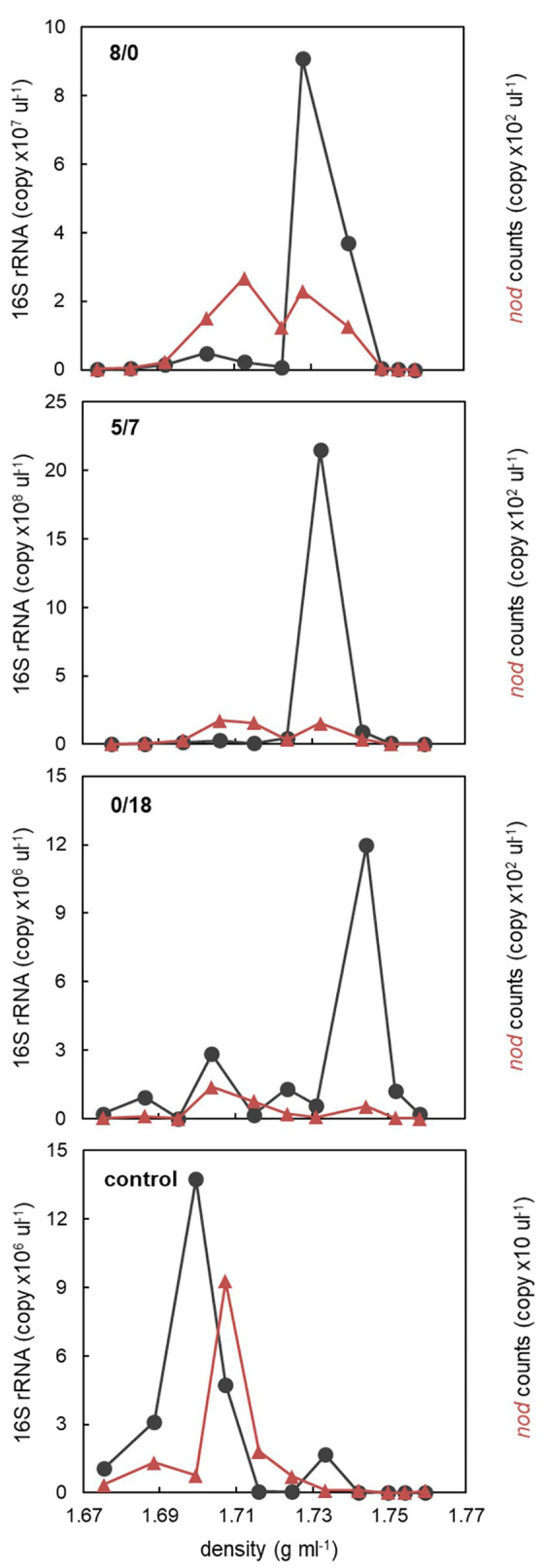
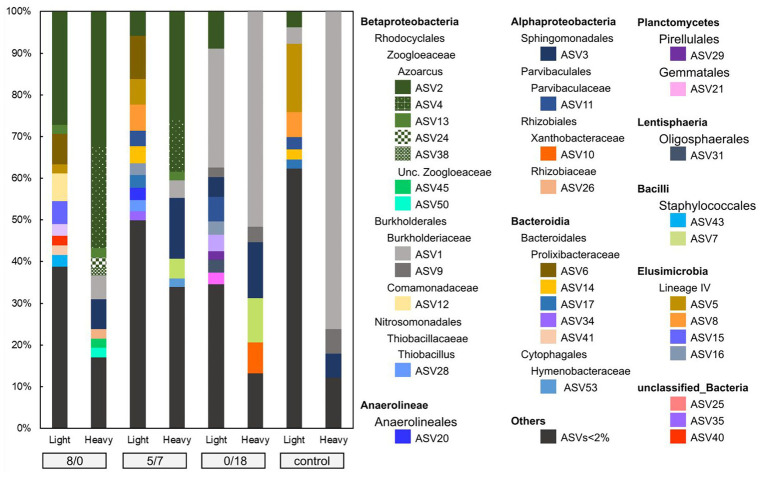
Microorganisms are essential in the degradation of environmental pollutants. Aromatic hydrocarbons, e.g., benzene, toluene, ethylbenzene, and xylene (BTEX), are common aquifer contaminants, whose degradation is often limited by the availability of electron acceptors. It is clear that different electron acceptors such as nitrate, iron, or sulfate support the activity of distinct degraders. However, this has not been demonstrated for the availability of nitrate vs. nitrite, both of which can be respired in reductive nitrogen cycling. Here DNA-stable isotope probing, we report that nitrate and nitrite provided as electron acceptors in different concentrations and ratios not only modulated the microbial communities responsible for toluene degradation but also influenced how nitrate reduction proceeded. Zoogloeaceae members, mainly spp., were the key toluene degraders with nitrate-only, or both nitrate and nitrite as electron acceptors. In addition, a shift within degrader populations was observed on the amplicon sequence variant (ASV) level depending on electron acceptor ratios. In contrast, members of the Sphingomonadales were likely the most active toluene degraders when only nitrite was provided. Nitrate reduction did not proceed beyond nitrite in the nitrate-only treatment, while it continued when nitrite was initially also present in the microcosms. Likely, this was attributed to the fact that different microbial communities were stimulated and active in different microcosms. Together, these findings demonstrate that the availability of nitrate and nitrite can define degrader community selection and N-reduction outcomes. It also implies that nitrate usage efficiency in bioremediation could possibly be enhanced by an initial co-supply of nitrite, modulating the active degrader communities.
微生物在环境污染物降解中起着至关重要的作用。芳香烃,如苯、甲苯、乙苯和二甲苯(BTEX),是常见的含水层污染物,其降解通常受电子受体可用性的限制。很明显,不同的电子受体,如硝酸盐、铁或硫酸盐,支持不同降解菌的活性。然而,对于硝酸盐和亚硝酸盐的可用性,这一点尚未得到证实,两者在还原性氮循环中均可被呼吸利用。在此,我们通过DNA稳定同位素探测报告,以不同浓度和比例作为电子受体提供的硝酸盐和亚硝酸盐不仅调节了负责甲苯降解的微生物群落,还影响了硝酸盐还原的进行方式。动胶菌科成员,主要是 spp.,是仅以硝酸盐或硝酸盐和亚硝酸盐作为电子受体时甲苯降解的关键菌。此外,根据电子受体比例,在扩增子序列变体(ASV)水平上观察到降解菌群体内的转变。相比之下,当仅提供亚硝酸盐时,鞘脂单胞菌目成员可能是最活跃的甲苯降解菌。在仅硝酸盐处理中,硝酸盐还原不会超过亚硝酸盐阶段,而当微观世界中最初也存在亚硝酸盐时,还原过程会继续。这可能归因于不同的微生物群落在不同的微观世界中受到刺激并具有活性。总之,这些发现表明硝酸盐和亚硝酸盐的可用性可以决定降解菌群落的选择和氮还原结果。这也意味着在生物修复中,通过初始共供应亚硝酸盐来调节活跃的降解菌群落,可能会提高硝酸盐的利用效率。