Murayama Minoru, Yamamoto Sumiko
Funabashi Municipal Rehabilitation Hospital, Funabashi, Japan.
International University of Health and Welfare Graduate School, Tokyo, Japan.
Prog Rehabil Med. 2020 Sep 11;5:20200021. doi: 10.2490/prm.20200021. eCollection 2020.
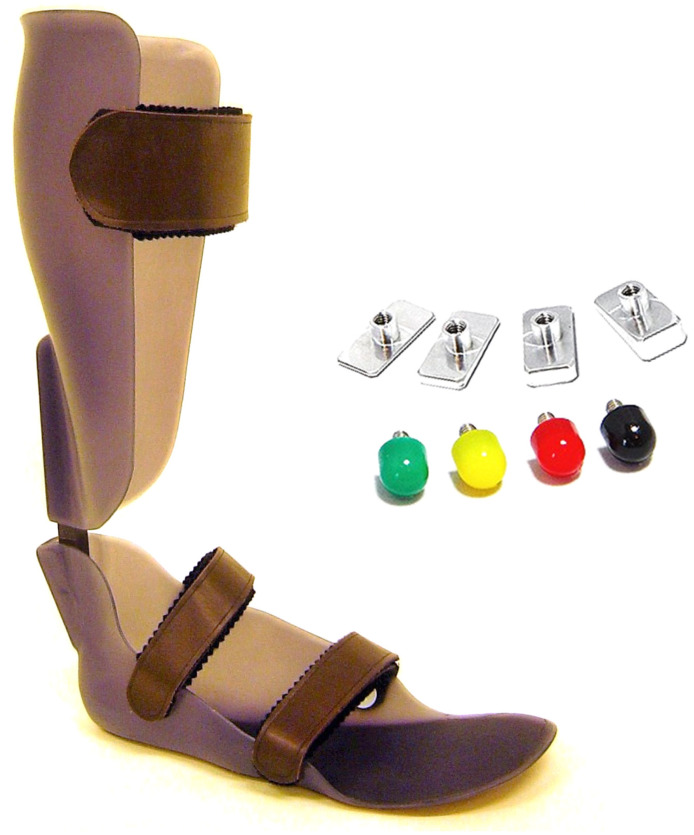
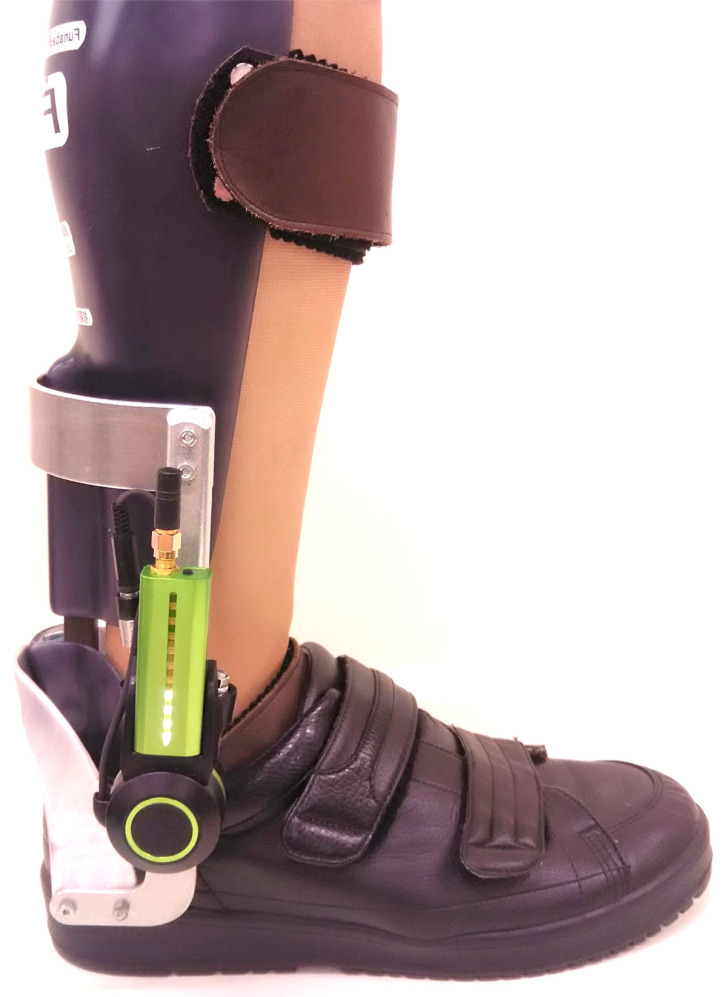
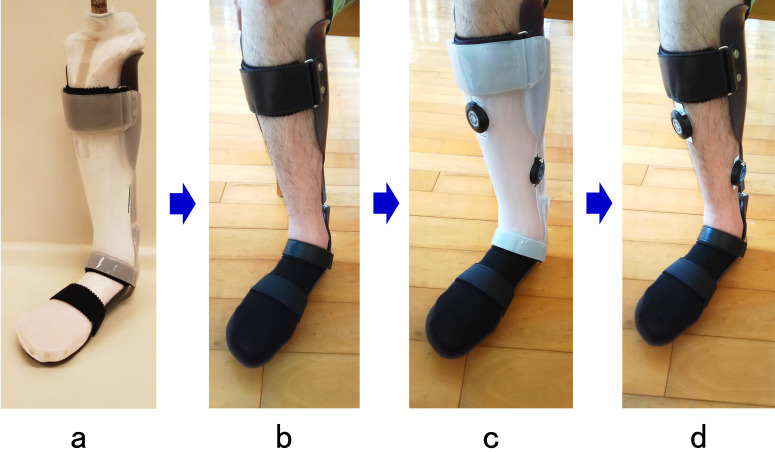
Previous studies have suggested that the use of an ankle-foot orthosis may cause disuse atrophy of the tibialis anterior muscle. The objective of this study was to explore gait and muscle activity changes in patients in the recovery phase of stroke with 2-month use of an ankle-foot orthosis that provided plantarflexion resistance.
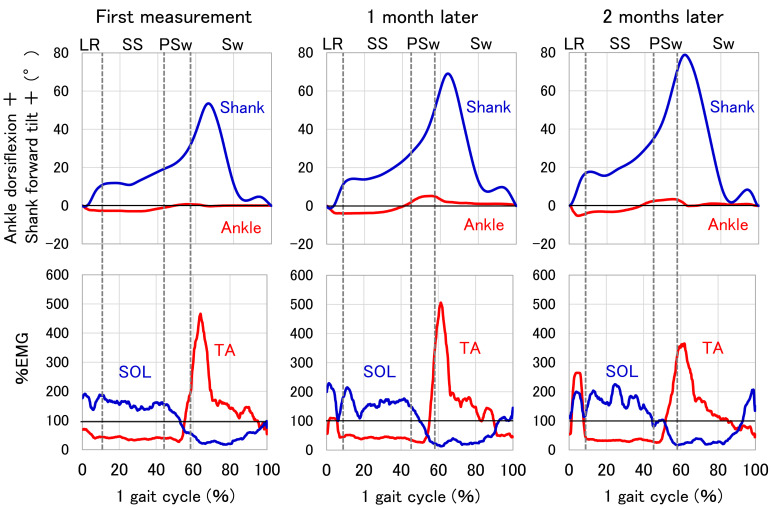
The participants were 19 patients in the recovery phase of stroke who were prescribed an ankle-foot orthosis that provided plantarflexion resistance. We measured ankle and shank tilt angles as well as electromyography activity of the tibialis anterior and the soleus during 10-m walk tests. Measurements were taken on three occasions. The first was 2 weeks after delivery of the orthosis, 1 and 2 months after the initial measurement, and the third 2 months later. Changes in gait parameters were analyzed between the first and second measurements and between the second and third measurements.
Between the second and third measurements, significant increases were observed in plantarflexion and shank forward tilt angles and the activity ratio of the tibialis anterior during loading response compared with other phases.
Plantarflexion movement induced by an ankle-foot orthosis with plantarflexion resistance could increase the activity ratio of the tibialis anterior during loading response.
先前的研究表明,使用踝足矫形器可能会导致胫前肌废用性萎缩。本研究的目的是探讨在中风恢复阶段使用具有跖屈阻力的踝足矫形器2个月的患者的步态和肌肉活动变化。
参与者为19名中风恢复阶段的患者,他们被开具了具有跖屈阻力的踝足矫形器。我们在10米步行测试期间测量了踝关节和小腿倾斜角度以及胫前肌和比目鱼肌的肌电图活动。测量进行了三次。第一次是在矫形器交付后2周,在初次测量后1个月和2个月,第三次是在2个月后。分析了第一次和第二次测量之间以及第二次和第三次测量之间的步态参数变化。
在第二次和第三次测量之间,与其他阶段相比,在负重反应期间观察到跖屈和小腿前倾角度以及胫前肌的活动比率显著增加。
具有跖屈阻力的踝足矫形器引起的跖屈运动可增加负重反应期间胫前肌的活动比率。