Department of Anesthesiology, Eastern Hepatobiliary Surgery Hospital, the Second Military Medical University, 225 Changhai Road, Shanghai, China.
Department of Anesthesiology, Ren Ji Hospital, School of Medicine, Shanghai Jiao Tong University, 160 Pudian Road, Shanghai, China.
BMC Anesthesiol. 2020 Sep 14;20(1):233. doi: 10.1186/s12871-020-01111-w.
Whether anesthesia type is associated with the surgical outcome of Hepatocellular carcinoma (HCC) patients with portal vein tumor thrombus (PVTT) remains to be determined. This study aims to investigate the impact of volatile inhalational anesthesia (INHA) versus total IV anesthesia (TIVA) on the survival outcomes in HCC patients with PVTT.
A cohort of in-patients whom were diagnosed of HCC with PVTT in Eastern Hepatobiliary Surgery Hospital, Shanghai, China, from January 1, 2008 to December 24, 2012 were identified. Surgical patients receiving the INHA and TIVA were screened out. The overall survival (OS), recurrence-free survival (RFS) and several postoperative adverse events were compared according to anesthesia types.
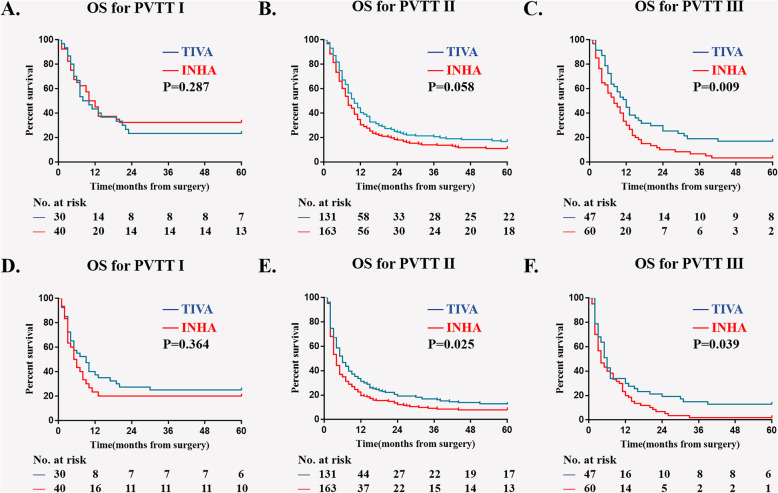
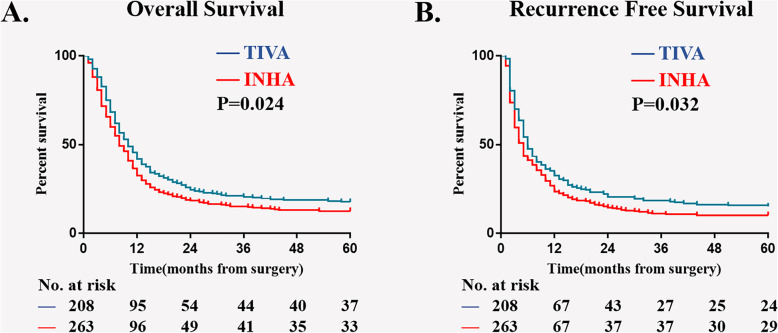
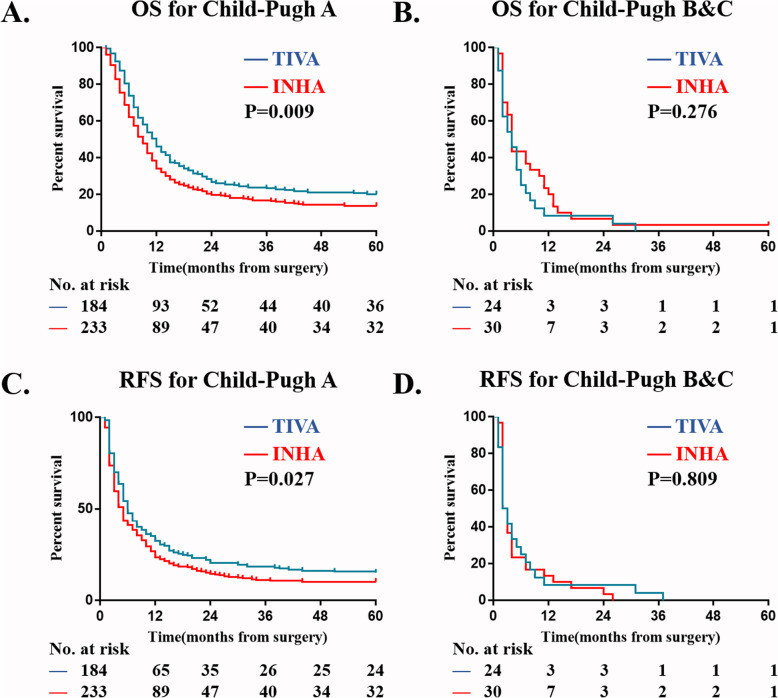
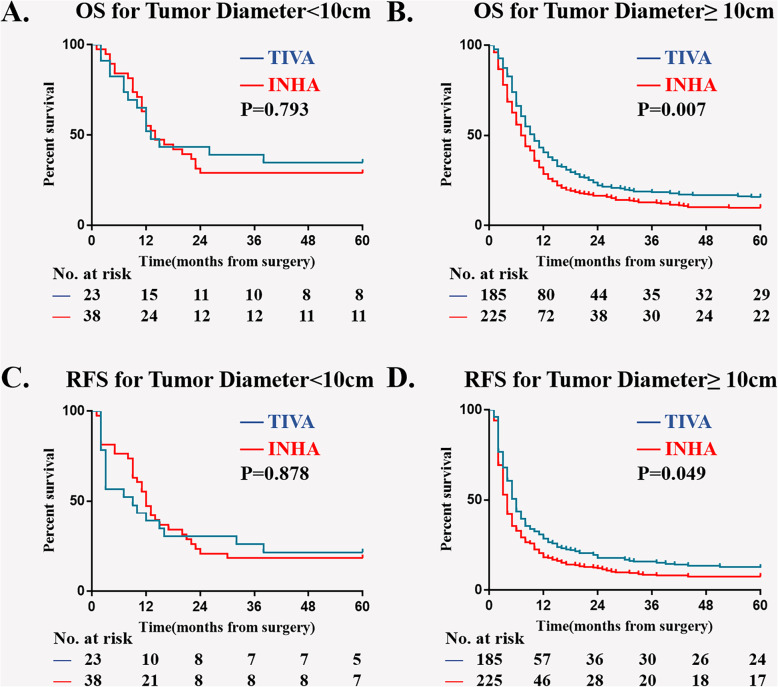
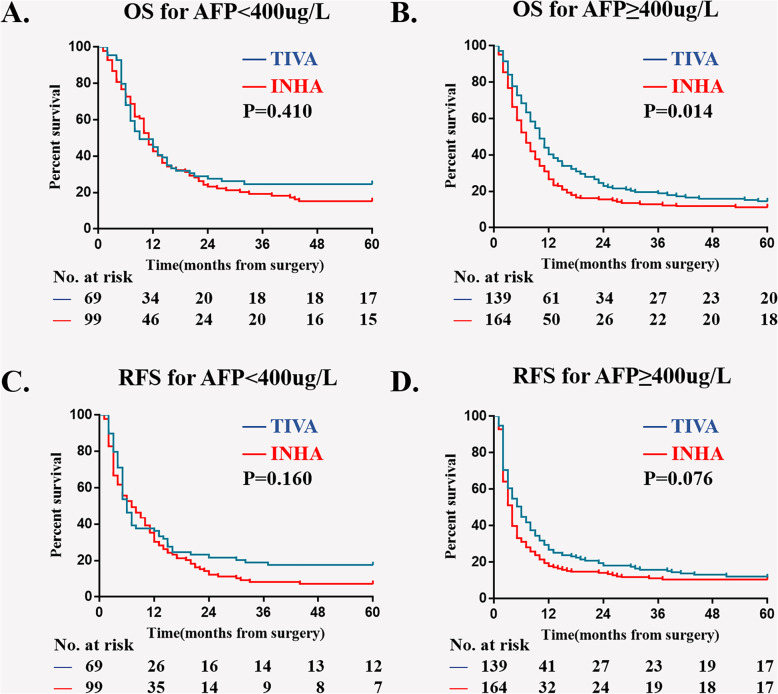
A total of 1513 patients were included in this study. After exclusions are applied, 263 patients remain in the INHA group and 208 in the TIVA group. Patients receiving INHA have a lower 5-year overall survival rate than that of patients receiving TIVA [12.6% (95% CI, 9.0 to 17.3) vs. 17.7% (95% CI, 11.3 to 20.8), P = 0.024]. Results of multivariable Cox-regression analysis also identify that INHA anesthesia is significantly associated with mortality and cancer recurrence after surgery compare to TIVA, with HR (95%CI) of 1.303 (1.065, 1.595) and 1.265 (1.040, 1.539), respectively. Subgroup analysis suggested that in more severe cancer patients, the worse outcome related to INHA might be more significant.
This retrospective analysis identifies that TIVA is associated with better outcomes compared with INHA. Future prospective studies clinical and translational studies are required to verify this difference and investigate underlying pathophysiology.
麻醉类型是否与伴有门静脉癌栓(PVTT)的肝细胞癌(HCC)患者的手术结果相关仍未确定。本研究旨在探讨挥发性吸入麻醉(INHA)与全静脉麻醉(TIVA)对 HCC 合并 PVTT 患者生存结局的影响。
本研究纳入 2008 年 1 月 1 日至 2012 年 12 月 24 日期间在上海东方肝胆外科医院诊断为 HCC 合并 PVTT 的住院患者。筛选出接受 INHA 和 TIVA 的手术患者。根据麻醉类型比较总生存(OS)、无复发生存(RFS)和几种术后不良事件。
本研究共纳入 1513 例患者。排除后,263 例患者归入 INHA 组,208 例归入 TIVA 组。接受 INHA 的患者 5 年总生存率低于接受 TIVA 的患者[12.6%(95%CI,9.0 至 17.3)比 17.7%(95%CI,11.3 至 20.8),P=0.024]。多变量 Cox 回归分析结果也表明,与 TIVA 相比,INHA 麻醉与手术后的死亡率和癌症复发显著相关,HR(95%CI)分别为 1.303(1.065,1.595)和 1.265(1.040,1.539)。亚组分析表明,在癌症程度更严重的患者中,与 INHA 相关的较差结果可能更为显著。
本回顾性分析表明,TIVA 与 INHA 相比,结果更好。需要进行未来的前瞻性临床和转化研究来验证这种差异,并探讨潜在的病理生理学机制。