Miike Tadashi, Kawakami Hiroshi, Kameda Takuro, Yamamoto Shojiro, Tahara Yoshihiro, Hidaka Tomonori, Kubuki Yoko, Yorita Kenji, Akiyama Yutaka, Arimura Yasuji, Kubota Yoshimasa, Kataoka Hiroaki, Shimoda Kazuya
Department of Gastroenterology and Hepatology, Division of Endoscopy and Center for Digestive Disease, University of Miyazaki Hospital, 5200 Kihara, Kiyotake, Miyazaki, 889-1692, Japan.
Division of Gastroenterology and Hematology, Department of Internal Medicine, Faculty of Medicine, University of Miyazaki, 5200 Kihara, Kiyotake, Miyazaki, 889-1692, Japan.
BMC Gastroenterol. 2020 Sep 14;20(1):298. doi: 10.1186/s12876-020-01438-1.
Adult T-cell leukemia/lymphoma (ATLL) is a peripheral T-cell malignancy caused by human T-cell leukemia virus type 1. The clinical course of ATLL is very heterogeneous, and many organs, including the gastrointestinal (GI) tract, can be involved. However, there are few detailed reports on ATLL infiltration in the GI tract. We investigated the clinical characteristics of ATLL infiltration in the GI tract.
This retrospective observational single-center study included 40 consecutive ATLL patients who underwent GI endoscopy. The patients' demographic and clinical characteristics and endoscopic findings were analyzed retrospectively. Patients with ATLL who were diagnosed by histological examination were divided into two groups based on GI tract infiltration.
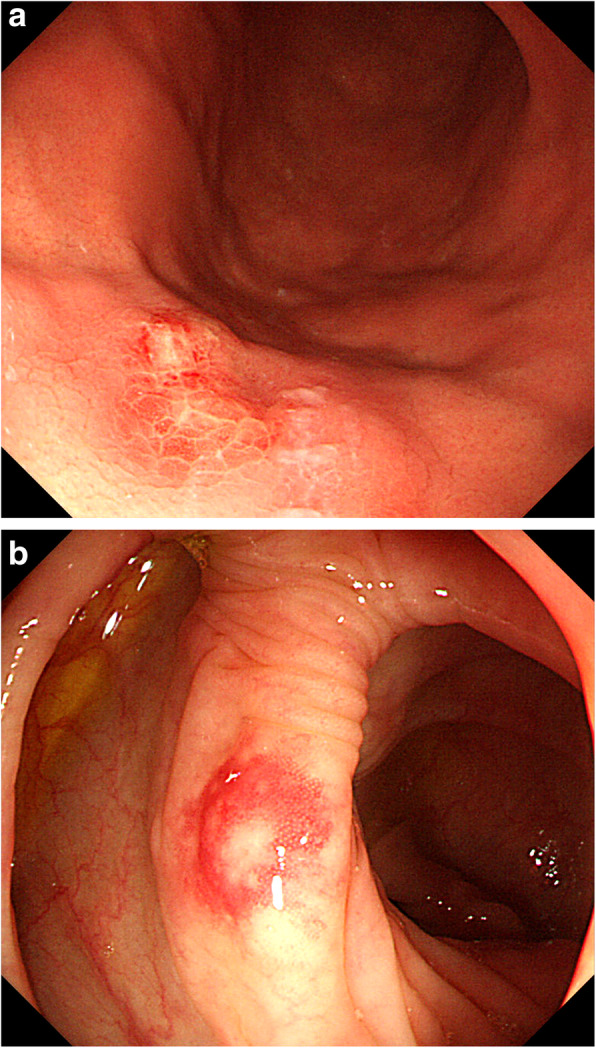
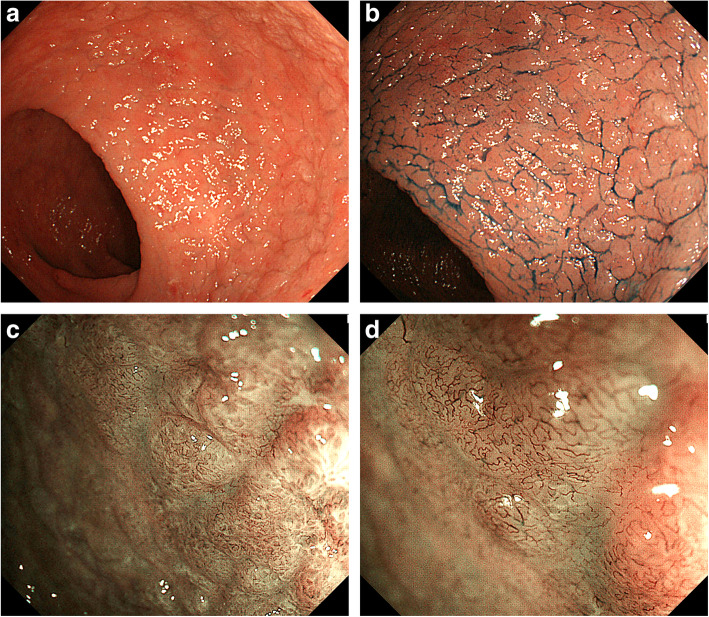
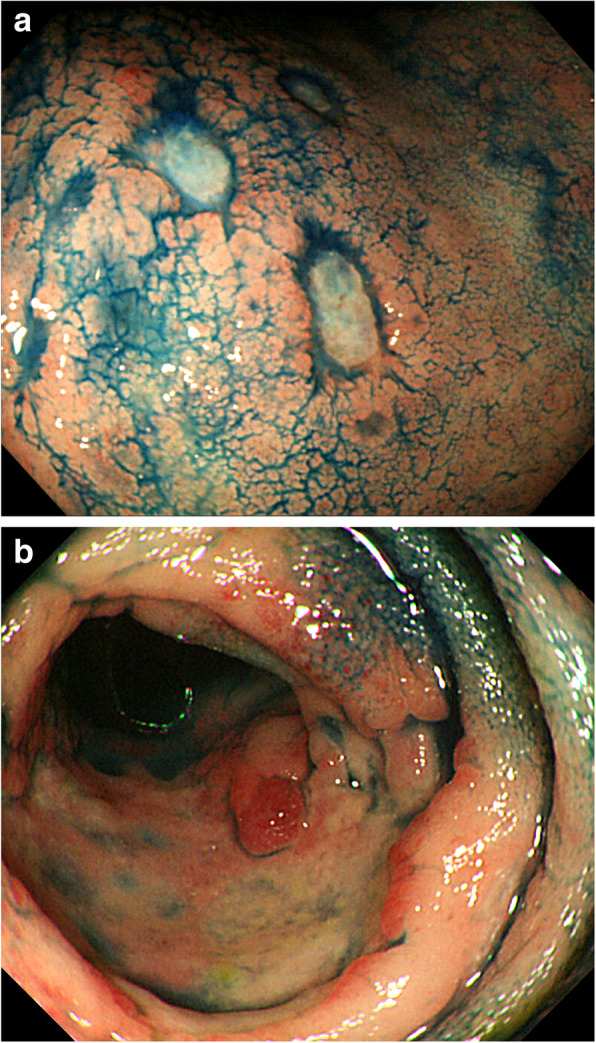
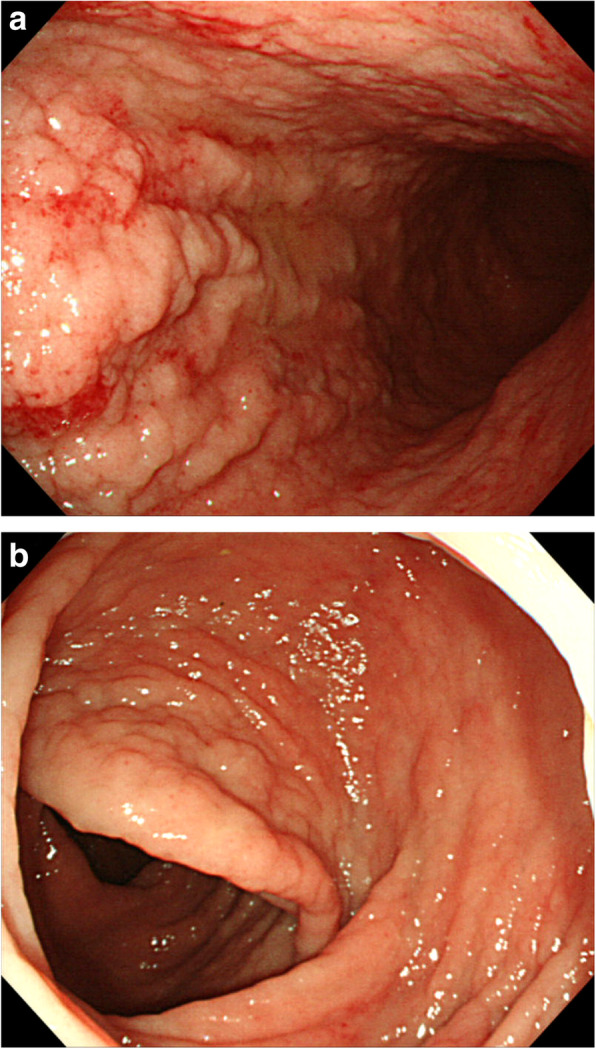
Multivariate analysis revealed that the absence of skin lesions was significantly associated with GI infiltration (P < 0.05). Furthermore, the infiltration group tended to have similar macroscopic lesions in the upper and lower GI tracts, such as diffuse type, tumor-forming type, and giant-fold type.
GI endoscopy may be considered for ATLL patients without skin lesions.
成人T细胞白血病/淋巴瘤(ATLL)是由1型人类T细胞白血病病毒引起的外周T细胞恶性肿瘤。ATLL的临床病程非常异质性,包括胃肠道(GI)在内的许多器官都可能受累。然而,关于ATLL在胃肠道浸润的详细报道很少。我们研究了ATLL在胃肠道浸润的临床特征。
这项回顾性观察性单中心研究纳入了40例连续接受GI内镜检查的ATLL患者。回顾性分析了患者的人口统计学和临床特征以及内镜检查结果。经组织学检查确诊的ATLL患者根据胃肠道浸润情况分为两组。
多因素分析显示,无皮肤病变与胃肠道浸润显著相关(P < 0.05)。此外,浸润组在上、下胃肠道往往有相似类型的宏观病变,如弥漫型、肿瘤形成型和巨大皱襞型。
对于没有皮肤病变的ATLL患者,可考虑进行GI内镜检查。