Department of Immunology and Microbiology, University of Colorado, School of Medicine, Aurora, Colorado.
Department of Pathology, The University of Colorado Anschutz Medical Campus, Aurora, Colorado.
Clin Cancer Res. 2020 Dec 1;26(23):6362-6373. doi: 10.1158/1078-0432.CCR-20-1762. Epub 2020 Sep 14.
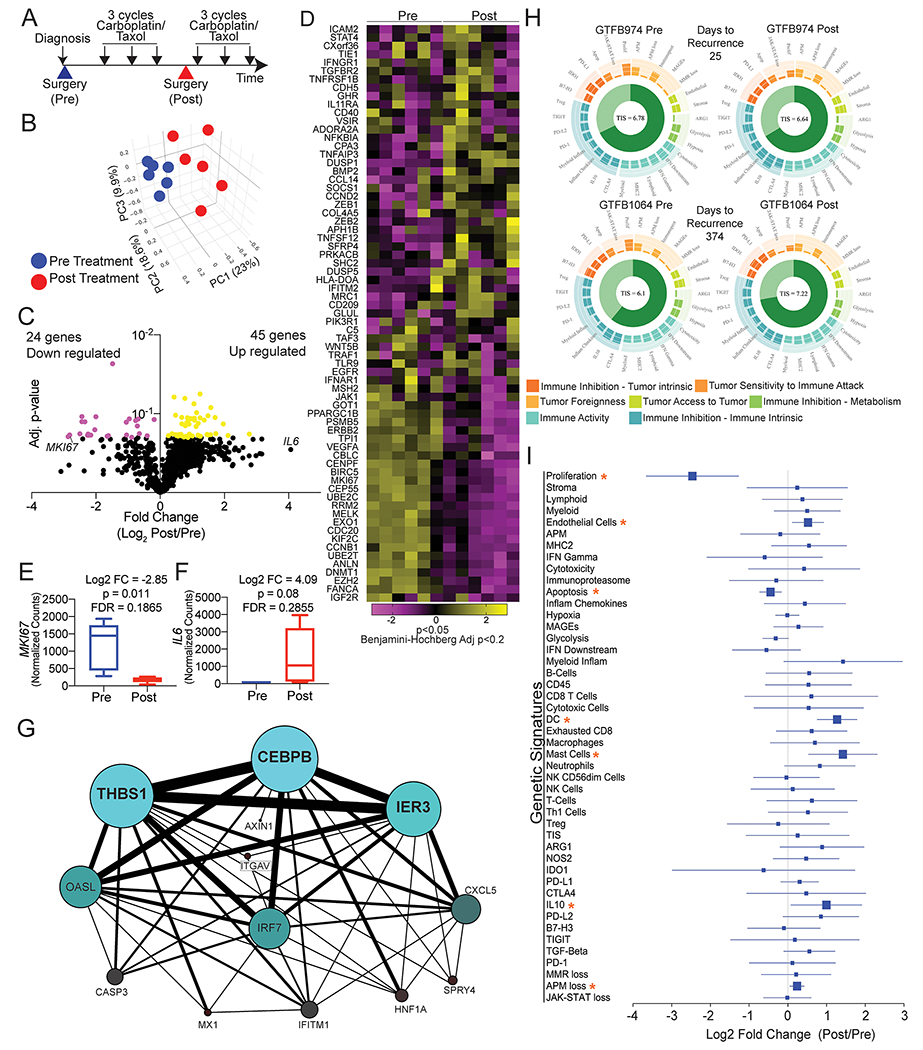
Ovarian cancer has one of the highest deaths to incidence ratios across all cancers. Initial chemotherapy is effective, but most patients develop chemoresistant disease. Mechanisms driving clinical chemo-response or -resistance are not well-understood. However, achieving optimal surgical cytoreduction improves survival, and cytoreduction is improved by neoadjuvant chemotherapy (NACT). NACT offers a window to profile pre- versus post-NACT tumors, which we used to identify chemotherapy-induced changes to the tumor microenvironment.
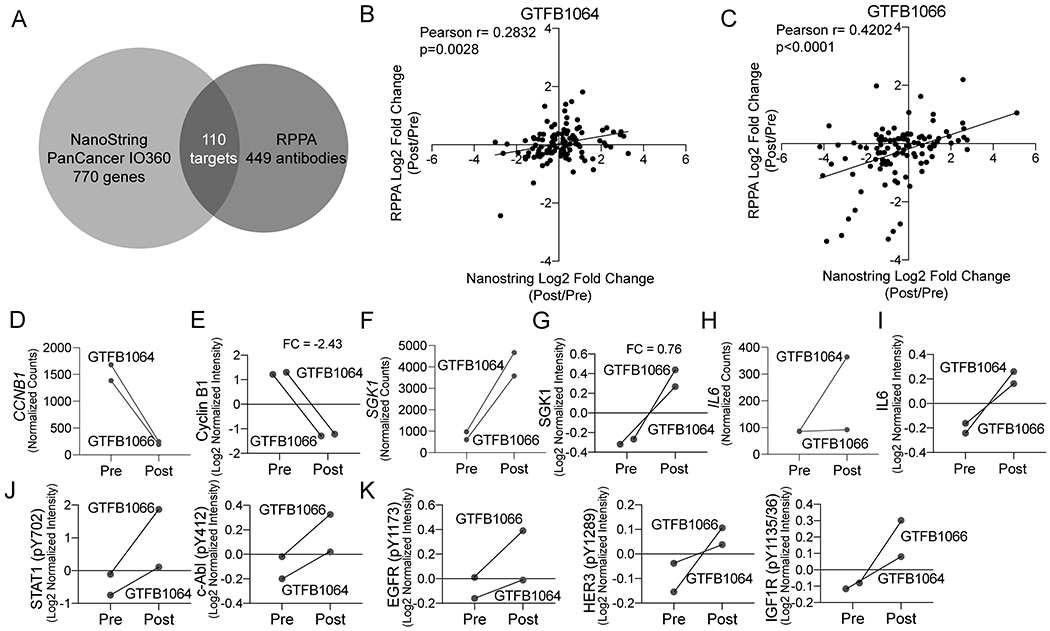
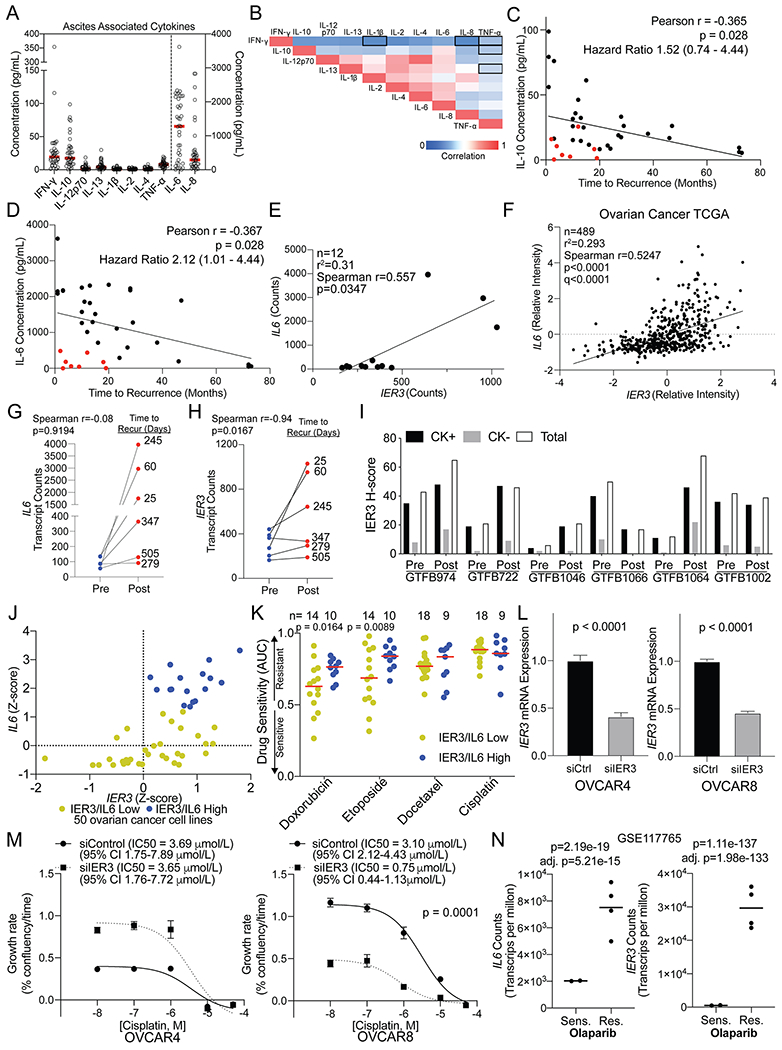
We obtained matched pre- and post-NACT archival tumor tissues from patients with high-grade serous ovarian cancer (patient, = 6). We measured mRNA levels of 770 genes (756 genes/14 housekeeping genes, NanoString Technologies), and performed reverse phase protein array (RPPA) on a subset of matched tumors. We examined cytokine levels in pre-NACT ascites samples ( = 39) by ELISAs. A tissue microarray with 128 annotated ovarian tumors expanded the transcriptional, RPPA, and cytokine data by multispectral IHC.
The most upregulated gene post-NACT was (16.79-fold). RPPA data were concordant with mRNA, consistent with elevated immune infiltration. Elevated IL6 in pre-NACT ascites specimens correlated with a shorter time to recurrence. Integrating NanoString ( = 12), RPPA ( = 4), and cytokine ( = 39) studies identified an activated inflammatory signaling network and induced and (immediate early response 3) post-NACT, associated with poor chemo-response and time to recurrence.
Multiomics profiling of ovarian tumor samples pre- and post-NACT provides unique insight into chemo-induced changes to the tumor microenvironment. We identified a novel IL6/IER3 signaling axis that may drive chemoresistance and disease recurrence.
卵巢癌是所有癌症中发病率与死亡率比值最高的癌症之一。初始化疗是有效的,但大多数患者会出现化疗耐药性疾病。导致临床化疗反应或耐药性的机制尚未得到很好的理解。然而,实现最佳的手术减瘤可以提高生存率,而新辅助化疗(NACT)可以改善减瘤效果。NACT 提供了一个在化疗前后对肿瘤进行分析的窗口,我们利用这个窗口来确定化疗对肿瘤微环境的影响。
我们从患有高级别浆液性卵巢癌的患者中获得了配对的化疗前和化疗后存档肿瘤组织(患者,=6)。我们测量了 770 个基因的 mRNA 水平(756 个基因/14 个管家基因,NanoString 技术),并对部分匹配的肿瘤进行了反转录蛋白阵列(RPPA)分析。我们通过 ELISA 检测了化疗前腹水样本中的细胞因子水平(=39)。一个包含 128 个注释卵巢肿瘤的组织微阵列通过多光谱免疫组化扩展了转录组、RPPA 和细胞因子数据。
化疗后上调最明显的基因是(上调 16.79 倍)。RPPA 数据与 mRNA 数据一致,表明免疫浸润增加。化疗前腹水标本中 IL6 水平升高与复发时间较短有关。整合 NanoString(=12)、RPPA(=4)和细胞因子(=39)研究结果,确定了一个激活的炎症信号网络,并诱导了化疗后和(早期反应 3)的表达,与化疗反应不良和复发时间有关。
对化疗前和化疗后卵巢肿瘤样本进行多组学分析,为化疗诱导的肿瘤微环境变化提供了独特的见解。我们发现了一个新的 IL6/IER3 信号轴,可能驱动化疗耐药和疾病复发。