Minnesota Population Center, University of Minnesota Twin Cities, Minnesota, USA.
U.S. Geological Survey, Earth Resources Observation and Science (EROS) Center, Sioux Falls, South Dakota, USA.
Sci Data. 2020 Sep 14;7(1):303. doi: 10.1038/s41597-020-00643-7.
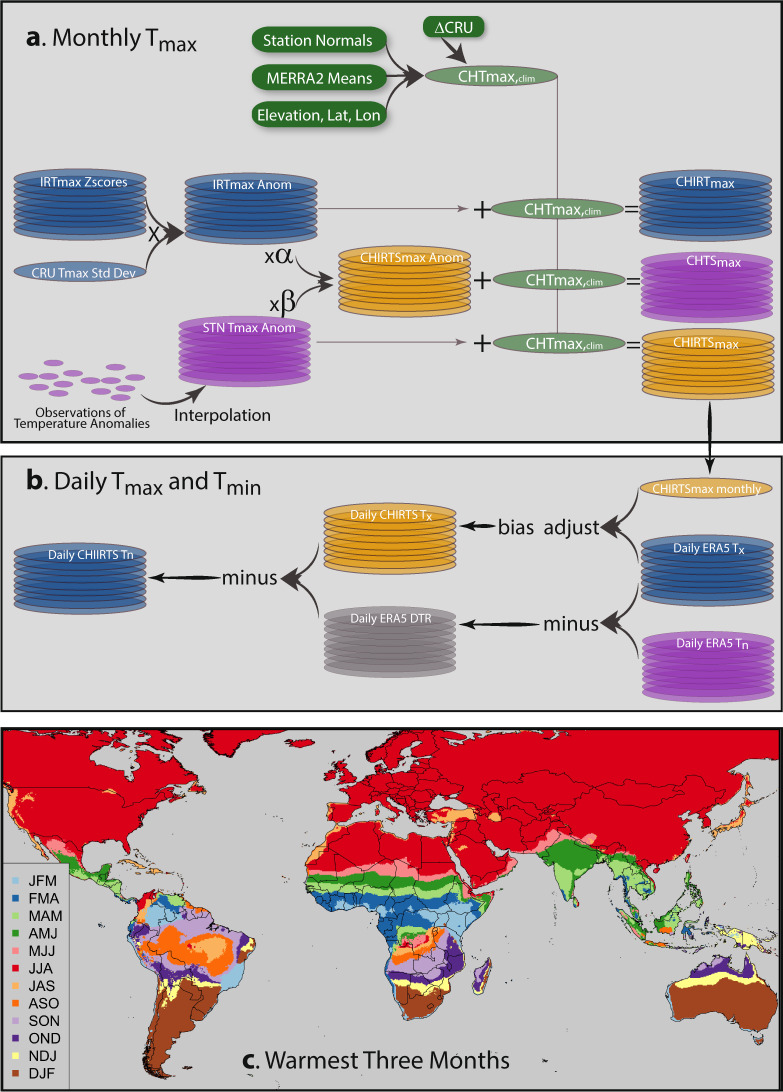
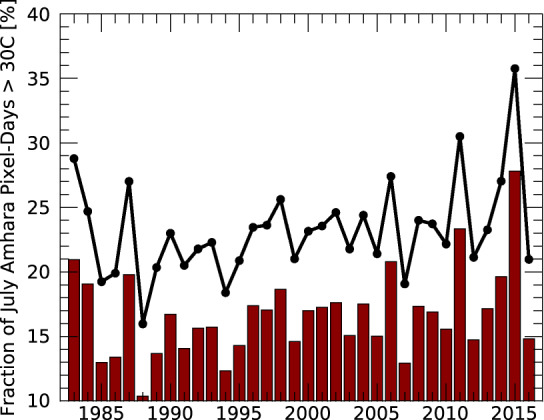
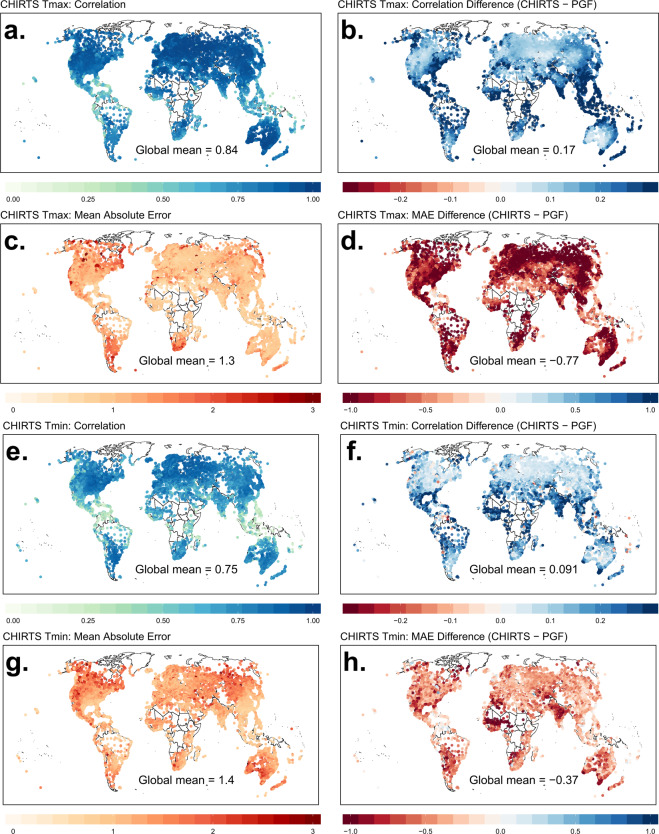
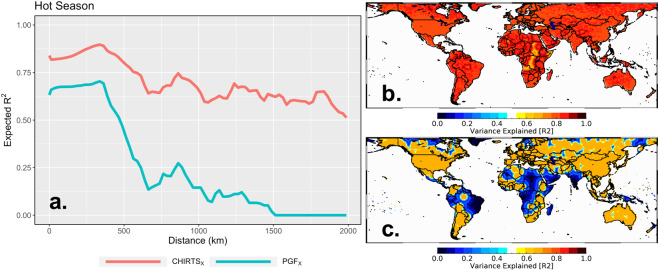
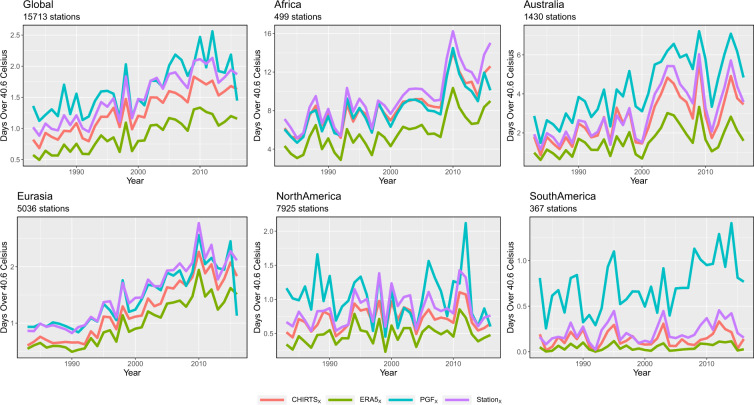
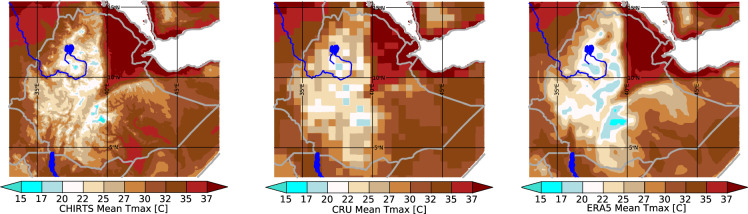
We present a high-resolution daily temperature data set, CHIRTS-daily, which is derived by merging the monthly Climate Hazards center InfraRed Temperature with Stations climate record with daily temperatures from version 5 of the European Centre for Medium-Range Weather Forecasts Re-Analysis. We demonstrate that remotely sensed temperature estimates may more closely represent true conditions than those that rely on interpolation, especially in regions with sparse in situ data. By leveraging remotely sensed infrared temperature observations, CHIRTS-daily provides estimates of 2-meter air temperature for 1983-2016 with a footprint covering 60°S-70°N. We describe this data set and perform a series of validations using station observations from two prominent climate data sources. The validations indicate high levels of accuracy, with CHIRTS-daily correlations with observations ranging from 0.7 to 0.9, and very good representation of heat wave trends.
我们呈现了一个高分辨率的日温度数据集 CHIRTS-daily,它是通过将每月气候危害中心的红外温度与站气候记录与欧洲中期天气预报中心再分析第 5 版的日温度合并而得到的。我们证明,遥感温度估计可能比依赖插值的估计更能代表真实情况,特别是在现场数据稀疏的地区。通过利用遥感红外温度观测,CHIRTS-daily 提供了 1983-2016 年 2 米空气温度的估计值,足迹覆盖 60°S-70°N。我们描述了这个数据集,并使用两个著名气候数据源的站观测进行了一系列验证。验证表明,该数据集具有很高的准确性,与观测的相关系数在 0.7 到 0.9 之间,并且很好地表示了热浪趋势。