Department of Life Sciences, The Natural History Museum, London, UK.
Departamento de Ciencias de la Vida, EU-US Marine Biodiversity Group, Universidad de Alcalá, Alcalá de Henares, Spain.
Mol Ecol. 2020 Nov;29(22):4412-4427. doi: 10.1111/mec.15635. Epub 2020 Sep 30.
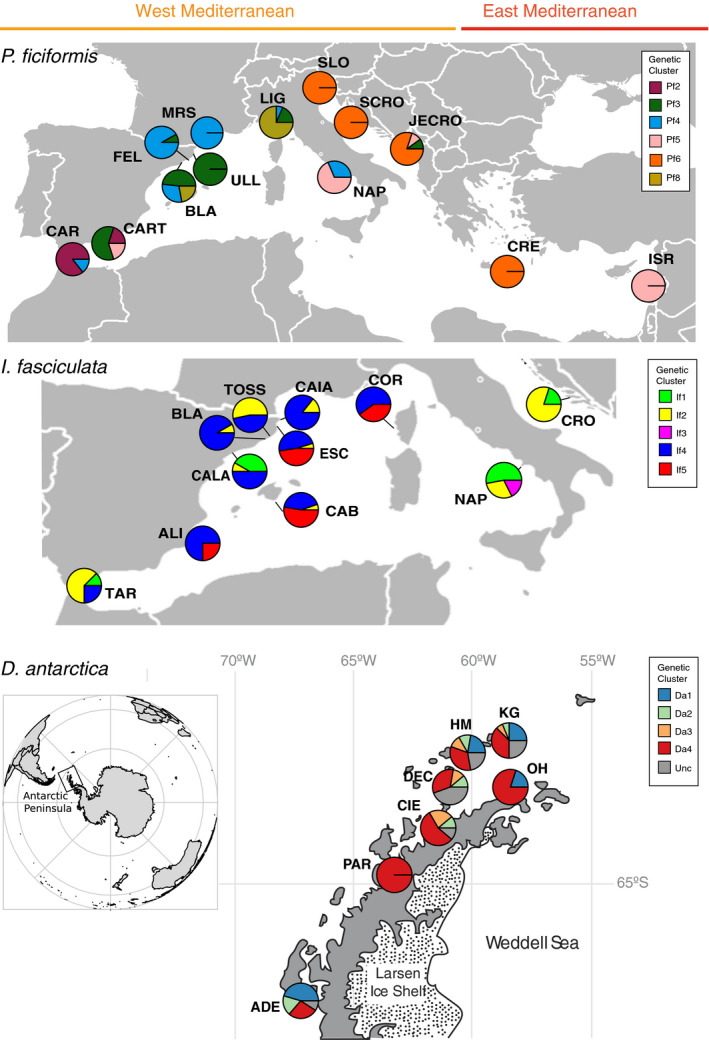
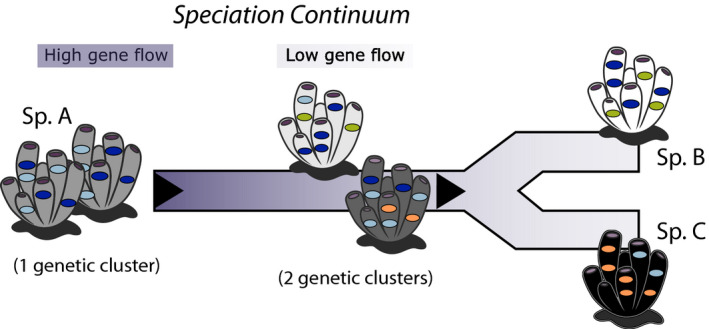
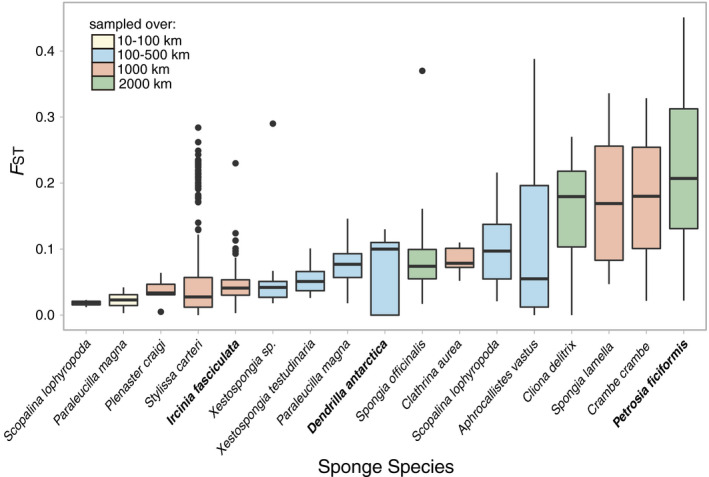
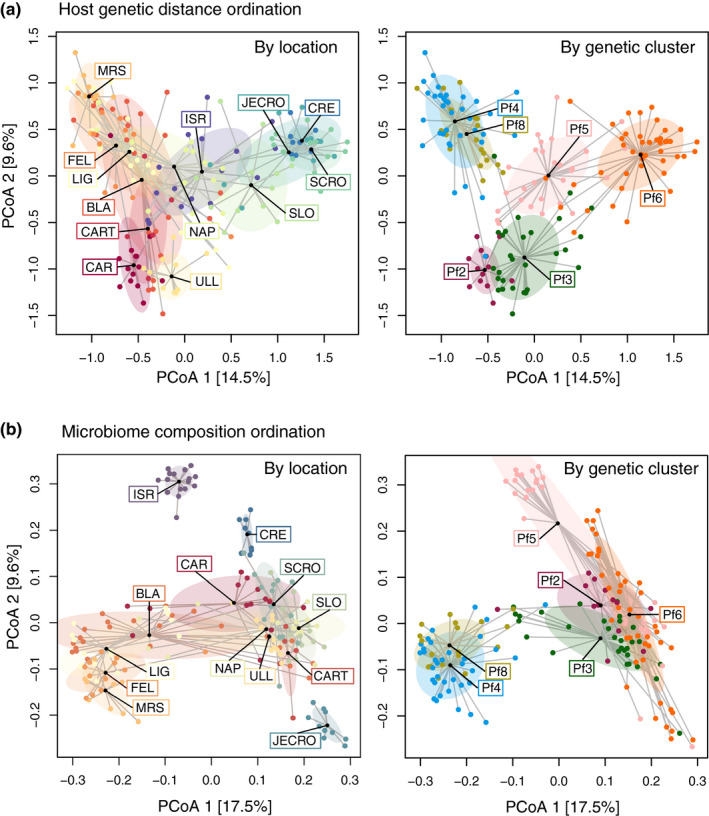
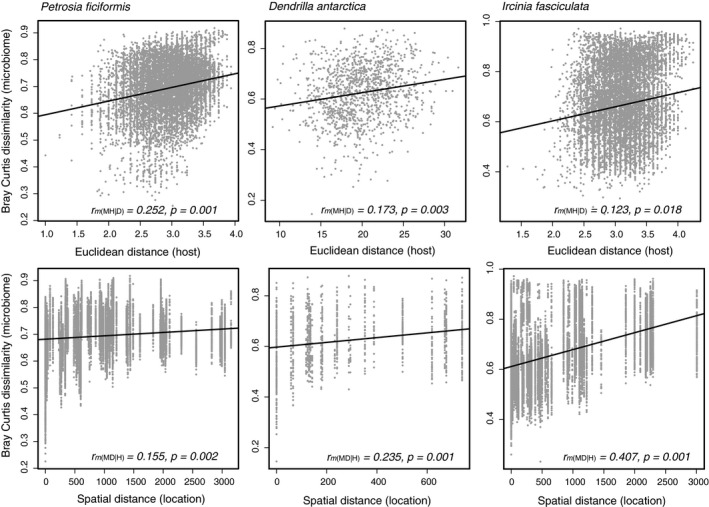
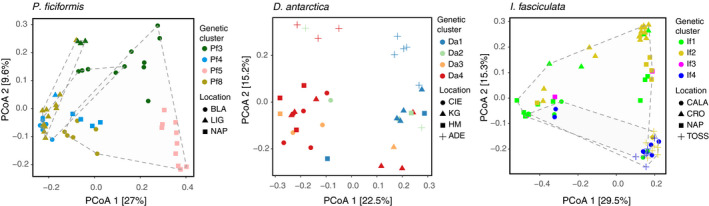
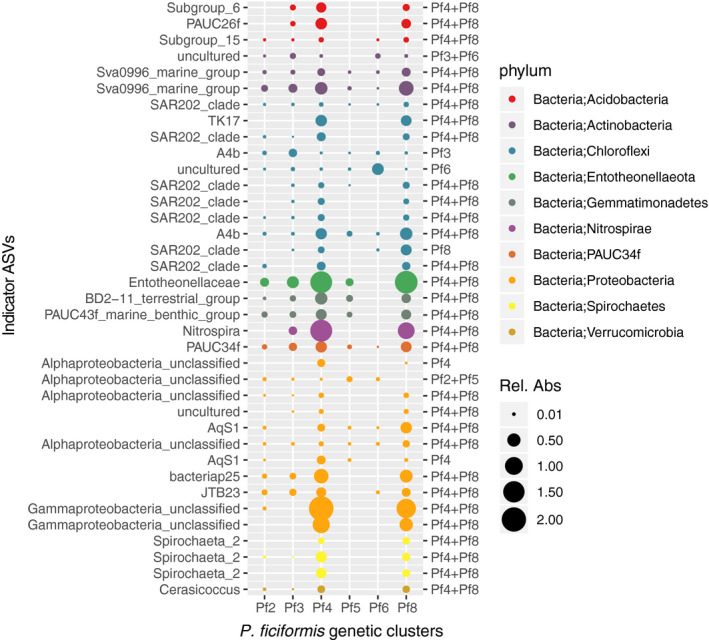
Most animals, including sponges (Porifera), have species-specific microbiomes. Which genetic or environmental factors play major roles structuring the microbial community at the intraspecific level in sponges is, however, largely unknown. In this study, we tested whether geographic location or genetic structure of conspecific sponges influences their microbial assembly. For that, we used three sponge species with different rates of gene flow, and collected samples along their entire distribution range (two from the Mediterranean and one from the Southern Ocean) yielding a total of 393 samples. These three sponge species have been previously analysed by microsatellites or single nucleotide polymorphisms, and here we investigate their microbiomes by amplicon sequencing of the microbial 16S rRNA gene. The sponge Petrosia ficiformis, with highly isolated populations (low gene flow), showed a stronger influence of the host genetic distance on the microbial composition than the spatial distance. Host-specificity was therefore detected at the genotypic level, with individuals belonging to the same host genetic cluster harbouring more similar microbiomes than distant ones. On the contrary, the microbiome of Ircinia fasciculata and Dendrilla antarctica - both with weak population structure (high gene flow) - seemed influenced by location rather than by host genetic distance. Our results suggest that in sponge species with high population structure, the host genetic cluster influence the microbial community more than the geographic location.
大多数动物,包括海绵动物(多孔动物门),都有特定于物种的微生物组。然而,在海绵动物中,哪些遗传或环境因素在种内水平上起主要作用来构建微生物群落,在很大程度上还不清楚。在这项研究中,我们测试了同种海绵的地理位置或遗传结构是否会影响其微生物的组装。为此,我们使用了三种具有不同基因流动率的海绵物种,并沿着它们的整个分布范围收集样本(地中海两种,南大洋一种),共获得 393 个样本。这三种海绵物种以前已经通过微卫星或单核苷酸多态性进行了分析,在这里,我们通过扩增子测序来研究它们的微生物组 16S rRNA 基因。具有高度隔离种群(低基因流动)的海绵 Petrosia ficiformis 显示出宿主遗传距离对微生物组成的影响大于空间距离。因此,在基因型水平上检测到了宿主特异性,同一宿主遗传聚类的个体比远缘个体具有更相似的微生物组。相反,Ircinia fasciculata 和 Dendrilla antarctica 的微生物组(种群结构较弱,基因流动率较高)似乎受位置而不是宿主遗传距离的影响。我们的研究结果表明,在种群结构较高的海绵物种中,宿主遗传聚类对微生物群落的影响大于地理位置。