Aboelwafa Hanaa R, El-Kott Attalla F, Abd-Ella Eman M, Yousef Hany N
Department of Biological and Geological Sciences, Faculty of Education, Ain Shams University, Cairo 11566, Egypt.
Biology Department, Faculty of Science, King Khalid University, Abha 61421, Saudi Arabia.
Brain Sci. 2020 Sep 11;10(9):628. doi: 10.3390/brainsci10090628.
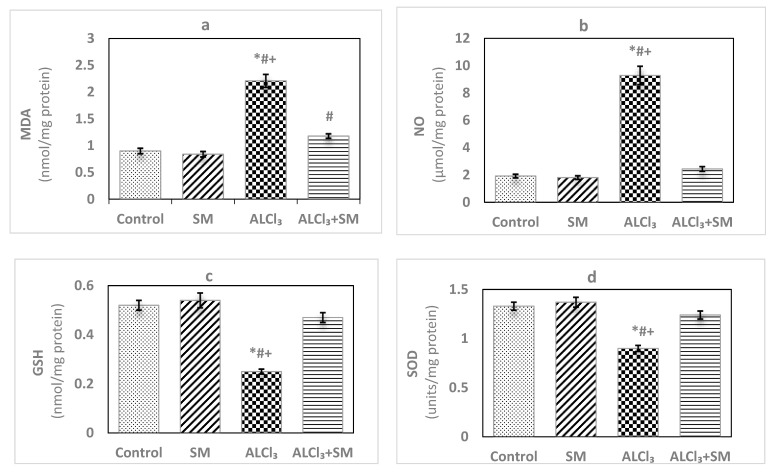
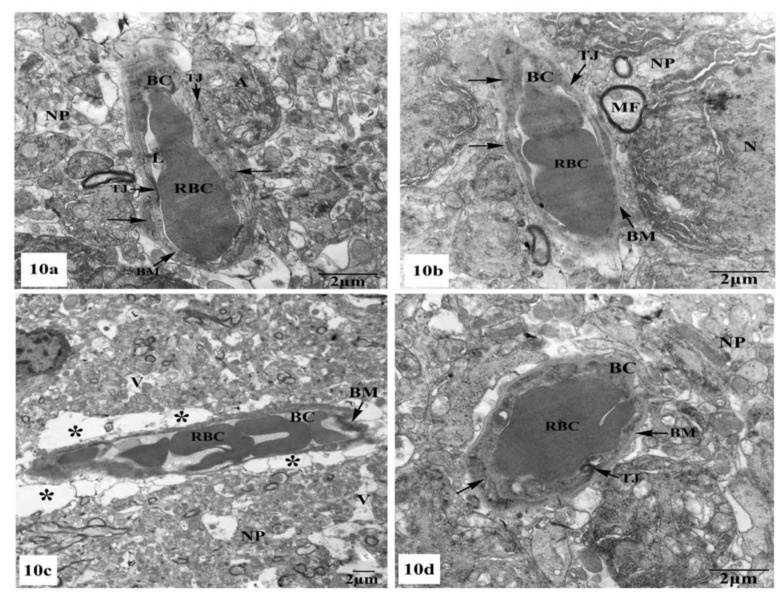
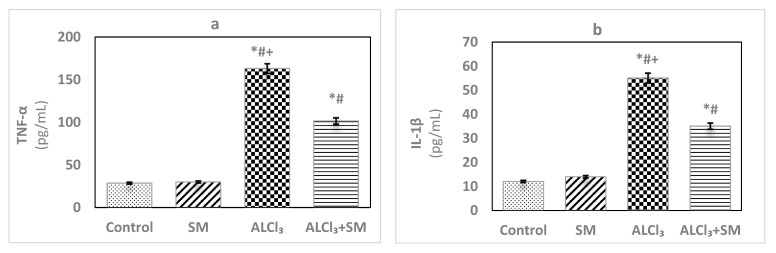
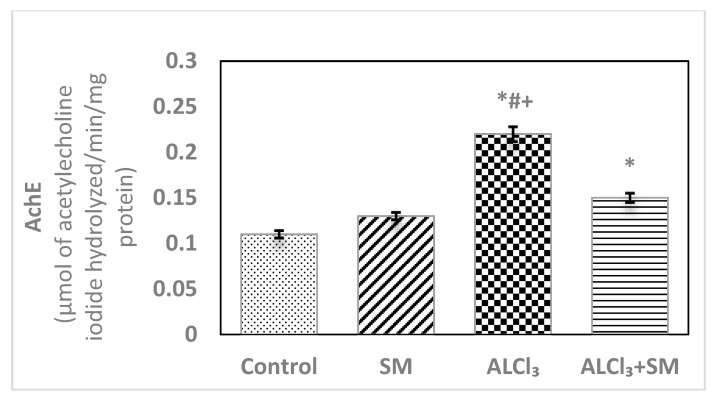
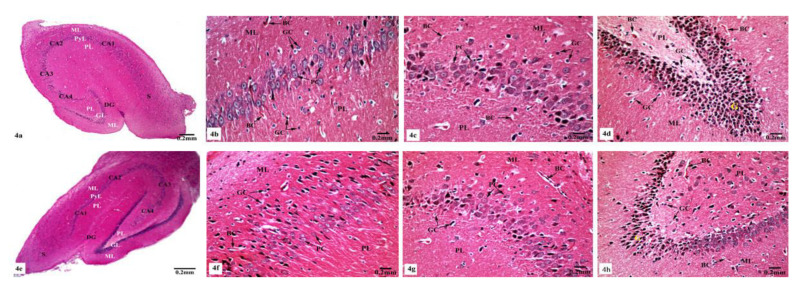
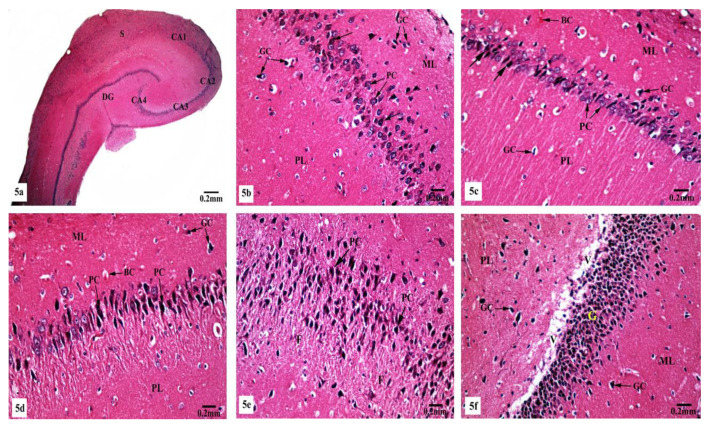
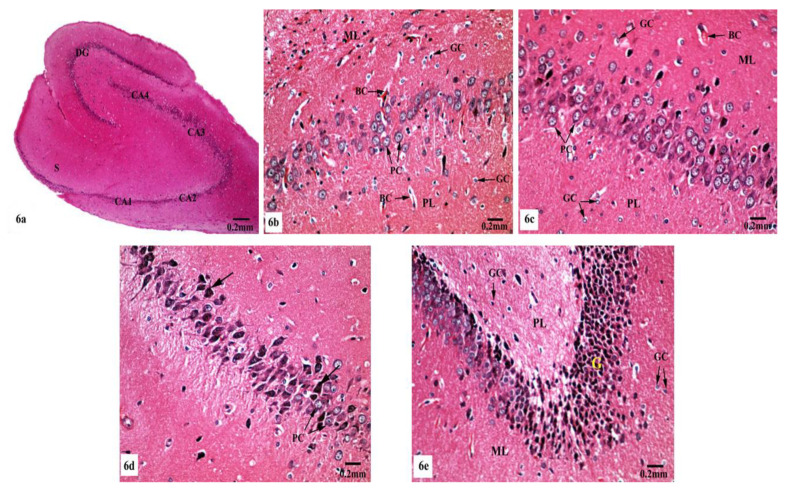
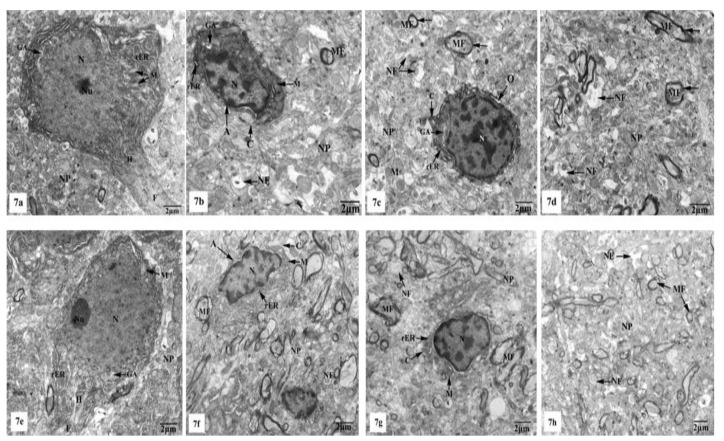
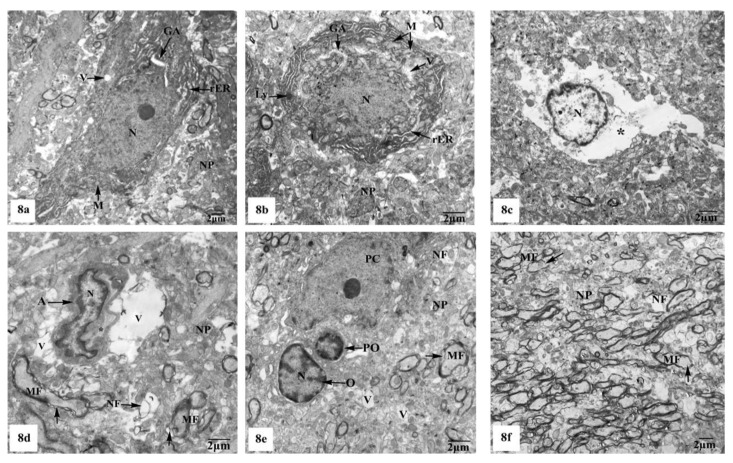
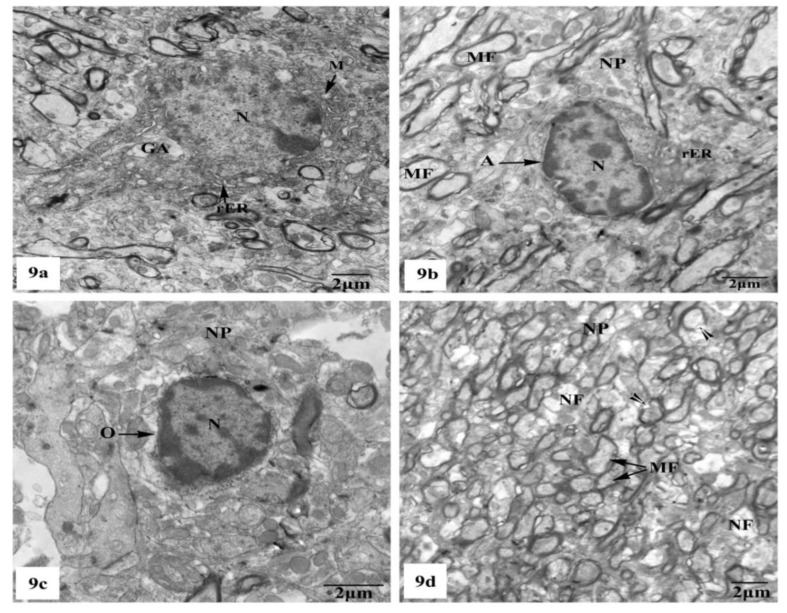
Alzheimer's disease (AD) is a worldwide rapidly growing neurodegenerative disease. Here, we elucidated the neuroprotective effects of silymarin (SM) on the hippocampal tissues of aluminum chloride (AlCl)-induced Alzheimer-like disease in rats using biochemical, histological, and ultrastructural approaches. Forty rats were divided into control, SM, AlCl, and AlCl + SM groups. Biochemically, AlCl administration resulted in marked elevation in levels of lipid peroxidation (LPO) and nitric oxide (NO) and decrease in levels of reduced glutathione (GSH), catalase (CAT), and superoxide dismutase (SOD). Moreover, AlCl significantly increased tumor necrosis factor-α (TNF-α), interleukin-1beta (IL-1β), and acetylcholinesterase (AChE) activities. Furthermore, myriad histological and ultrastructural alterations were recorded in the hippocampal tissues of AlCl-treated rats represented as marked degenerative changes of pyramidal neurons, astrocytes, and oligodendrocytes. Additionally, some myelinated nerve fibers exhibited irregular arrangement of their myelin coats, while the others revealed focal degranulation of their myelin sheaths. Severe defects in the blood-brain barrier (BBB) were also recorded. However, co-administration of SM with AlCl reversed most of the biochemical, histological, and ultrastructural changes triggered by AlCl in rats. The results of the current study indicate that SM can potentially mend most of the previously evoked neuronal damage in the hippocampal tissues of AlCl-kindled rats.
阿尔茨海默病(AD)是一种在全球范围内迅速增长的神经退行性疾病。在此,我们采用生物化学、组织学和超微结构方法,阐明了水飞蓟宾(SM)对氯化铝(AlCl)诱导的大鼠阿尔茨海默样疾病海马组织的神经保护作用。将40只大鼠分为对照组、SM组、AlCl组和AlCl + SM组。在生物化学方面,给予AlCl导致脂质过氧化(LPO)和一氧化氮(NO)水平显著升高,还原型谷胱甘肽(GSH)、过氧化氢酶(CAT)和超氧化物歧化酶(SOD)水平降低。此外,AlCl显著增加肿瘤坏死因子-α(TNF-α)、白细胞介素-1β(IL-1β)和乙酰胆碱酯酶(AChE)的活性。此外,在AlCl处理的大鼠海马组织中记录到无数组织学和超微结构改变,表现为锥体细胞、星形胶质细胞和少突胶质细胞的明显退行性变化。此外,一些有髓神经纤维的髓鞘排列不规则,而其他一些则显示髓鞘的局灶性脱颗粒。血脑屏障(BBB)也出现严重缺陷。然而,SM与AlCl联合给药逆转了AlCl在大鼠中引发的大多数生物化学、组织学和超微结构变化。本研究结果表明,SM可能修复AlCl点燃的大鼠海马组织中先前诱发的大部分神经元损伤。