Kadar Adinda Darwati, Astawan Made, Putri Sastia Prama, Fukusaki Eiichiro
Department of Biotechnology, Graduate School of Engineering, Osaka University, 2-1 Yamadaoka, Suita, Osaka 565-0871, Japan.
Department of Food Science and Technology, Faculty of Agricultural Engineering and Technology, IPB University, Jl. Raya Dramaga, Bogor, Jawa Barat 16680, Indonesia.
Metabolites. 2020 Sep 11;10(9):367. doi: 10.3390/metabo10090367.
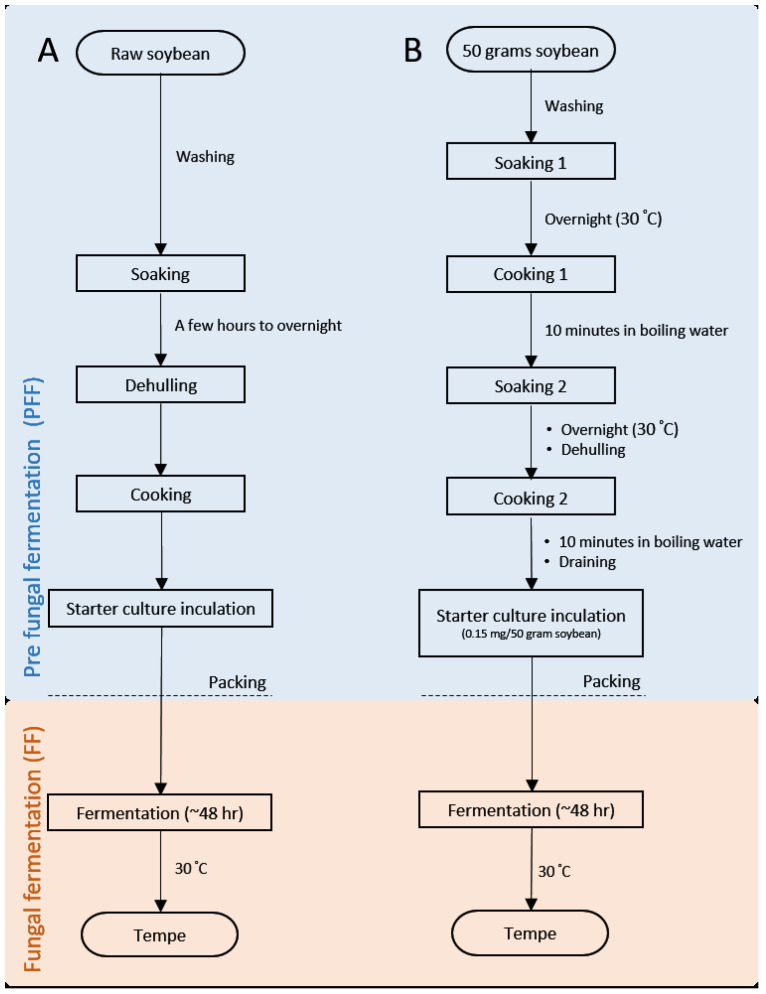
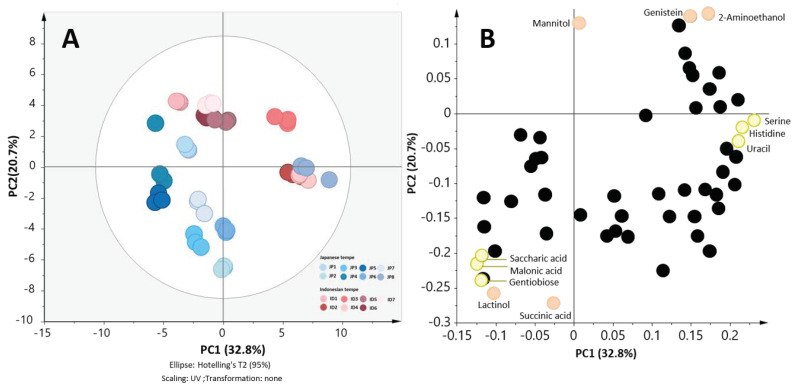
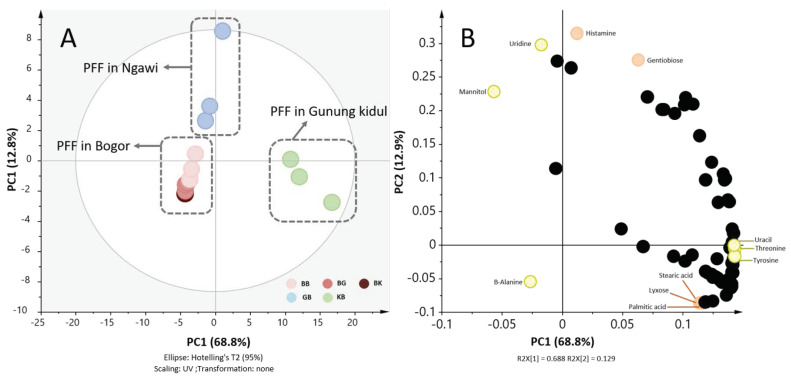
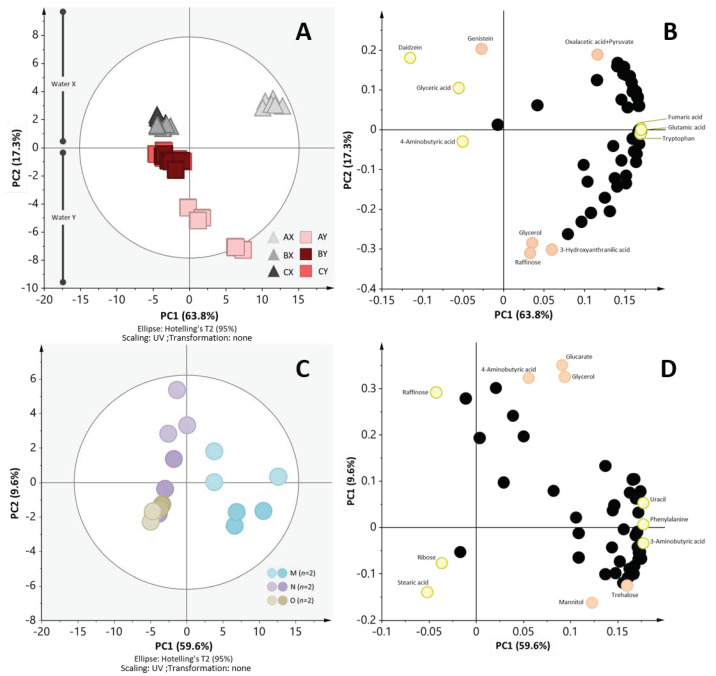
Tempe is a fermented soybean food from Indonesia, made by inoculating spp. onto cooked and dehulled soybean. Tempe has been a part of Indonesian culture since the 16th century and is now produced globally as a highly nutritious plant-based food. Despite a longstanding history on the production of tempe, very few studies have been reported to understand the effect of raw material to the end product metabolite composition. In this research, we applied GC/MS-based metabolite profiling to investigate the effect of various possible factors that might affect the final product (environmental factors, raw materials, and starter cultures). Representative samples were tempe produced by Indonesian industries, Japanese industries as well as laboratory made tempe. The results showed that both environmental factors and raw materials (soybean, water, and starter culture) contributed to the tempe metabolite profile. Here we found the possibility that starter cultures might play a greater role to determine the metabolite profiles compared to other tested factors. This research might provide useful insights for the larger scale industries to maintain the quality of tempe for the benefit of the consumers.
丹贝是一种源自印度尼西亚的发酵大豆食品,通过将特定菌种接种到煮熟并去皮的大豆上制成。自16世纪以来,丹贝一直是印度尼西亚文化的一部分,如今作为一种营养丰富的植物性食品在全球生产。尽管丹贝的生产历史悠久,但很少有研究报道了解原材料对最终产品代谢物组成的影响。在本研究中,我们应用基于气相色谱/质谱联用的代谢物谱分析来研究各种可能影响最终产品的因素(环境因素、原材料和发酵剂)的作用。代表性样品包括印度尼西亚企业、日本企业生产的丹贝以及实验室自制的丹贝。结果表明,环境因素和原材料(大豆、水和发酵剂)都对丹贝的代谢物谱有影响。在此我们发现,与其他测试因素相比,发酵剂可能在决定代谢物谱方面发挥更大作用。本研究可能为大规模产业维持丹贝质量以造福消费者提供有用的见解。