Graduate Institute of Bioresources, National Pingtung University of Science and Technology, Pingtung 91201, Taiwan.
Department of Food Science, National Pingtung University of Science and Technology, Pingtung 91201, Taiwan.
Nutrients. 2018 Aug 22;10(9):1143. doi: 10.3390/nu10091143.
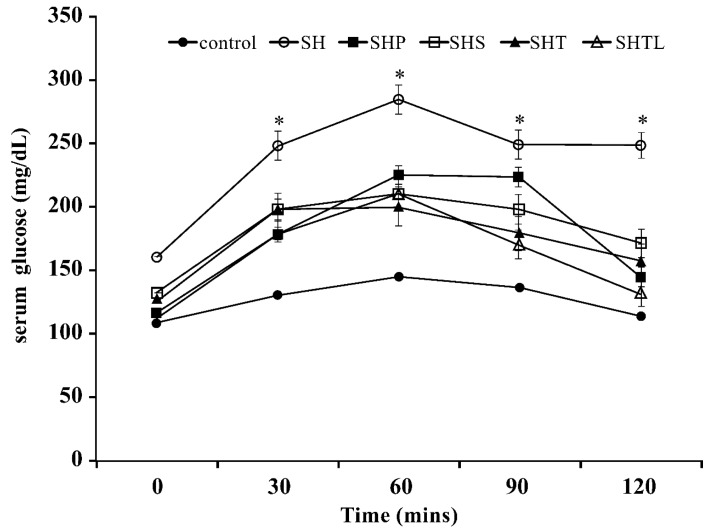
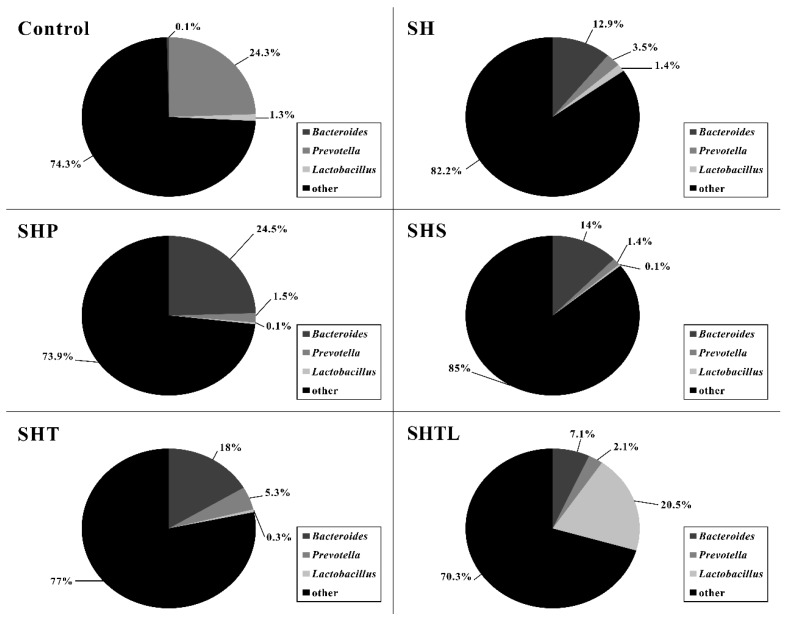
The increased consumption of high fat-containing foods has been linked to the prevalence of obesity and abnormal metabolic syndromes. , a fungus in the family Mucoraceae, is widely used as a starter for homemade tempeh. Although can prevent the growth of other microorganisms, it grows well with lactic acid bacteria (LAB). can produce β-glucosidase, which catalyzes the hydrolysis of glucoside isoflavones into aglycones (with greater bioavailability). Therefore, the development of a soybean-based functional food by the co-inoculation of and is a promising approach to increase the bioactivity of tempeh. In this study, the ameliorative effect of in soy tempeh on abnormal carbohydrate metabolism in high-fat diet (HFD)-induced hyperglycemic rats was evaluated. The co-incubation of with during soy tempeh fermentation reduced the homeostatic model assessment of insulin resistance, HbA1c, serum glucose, total cholesterol, triglyceride, free fatty acid, insulin, and low-density lipoprotein contents, and significantly increased the high-density lipoprotein content in HFD rats. It also increased the LAB counts, as well as the bile acid, cholesterol, triglyceride, and short-chain fatty acid contents in the feces of HFD rats. Our results suggested that the modulation of serum glucose and lipid levels by LAB occurs via alterations in the internal microbiota, leading to the inhibition of cholesterol synthesis and promotion of lipolysis. Tempeh, which was produced with both and , might be a beneficial dietary supplement for individuals with abnormal carbohydrate metabolism.
高脂肪食物消费的增加与肥胖和异常代谢综合征的流行有关。根霉属的一种真菌,广泛用作自制豆豉的起始物。虽然根霉可以防止其他微生物的生长,但它与乳酸菌(LAB)生长良好。根霉可以产生β-葡萄糖苷酶,催化糖苷异黄酮水解成苷元(具有更高的生物利用度)。因此,通过共同接种和来开发基于大豆的功能性食品是提高豆豉生物活性的一种很有前途的方法。在这项研究中,评估了大豆豆豉中对高脂肪饮食(HFD)诱导的高血糖大鼠异常碳水化合物代谢的改善作用。在大豆豆豉发酵过程中,与共同孵育降低了稳态模型评估的胰岛素抵抗、HbA1c、血清葡萄糖、总胆固醇、甘油三酯、游离脂肪酸、胰岛素和低密度脂蛋白含量,并显著增加了 HFD 大鼠的高密度脂蛋白含量。它还增加了 HFD 大鼠粪便中的 LAB 计数以及胆汁酸、胆固醇、甘油三酯和短链脂肪酸含量。我们的结果表明,LAB 通过改变内部微生物群来调节血清葡萄糖和脂质水平,从而抑制胆固醇合成并促进脂肪分解。同时使用和生产的豆豉可能是改善异常碳水化合物代谢个体的有益膳食补充剂。