Campbell Courtney M, Guha Avirup, Haque Tamanna, Neilan Tomas G, Addison Daniel
Cardio-Oncology Program, Division of Cardiology, Department of Internal Medicine, The Ohio State University Medical Center, Columbus, OH 43210, USA.
Harrington Heart and Vascular Institute, Case Western Reserve University, Cleveland, OH 44106, USA.
J Clin Med. 2020 Sep 11;9(9):2935. doi: 10.3390/jcm9092935.
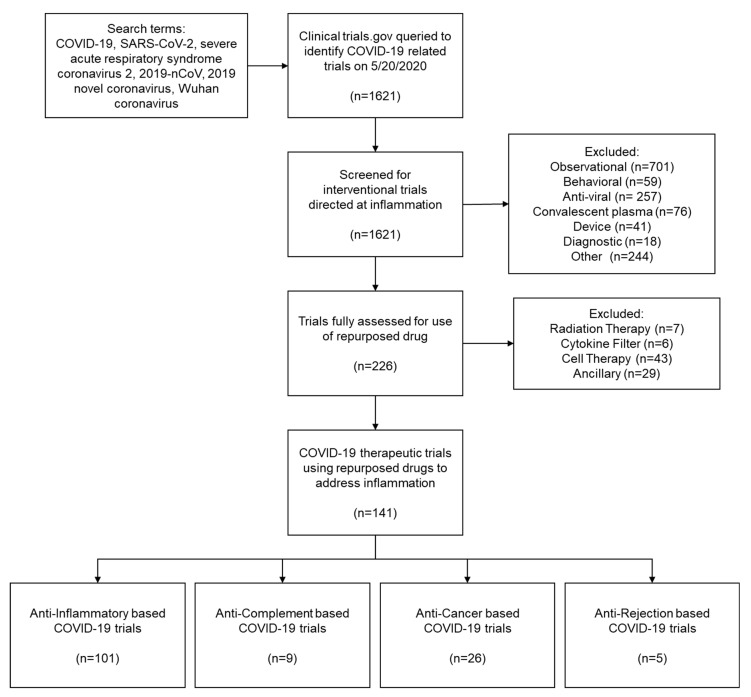
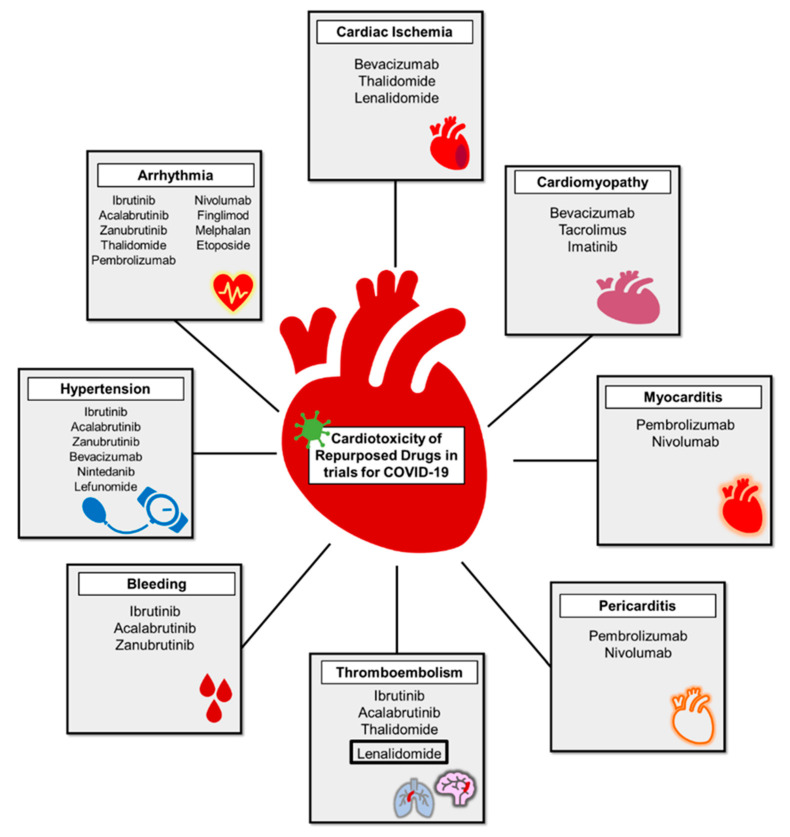
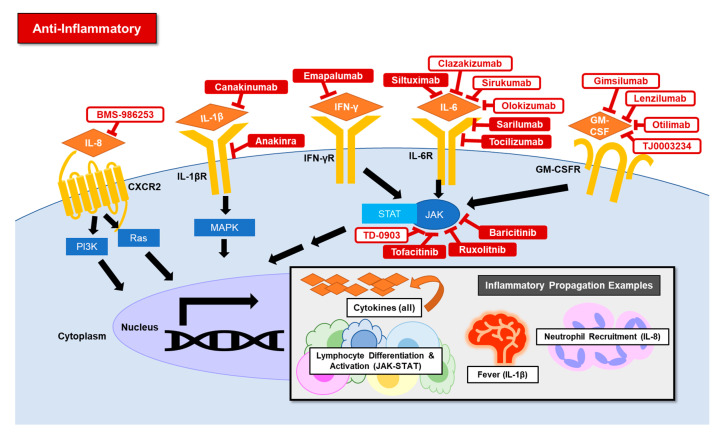
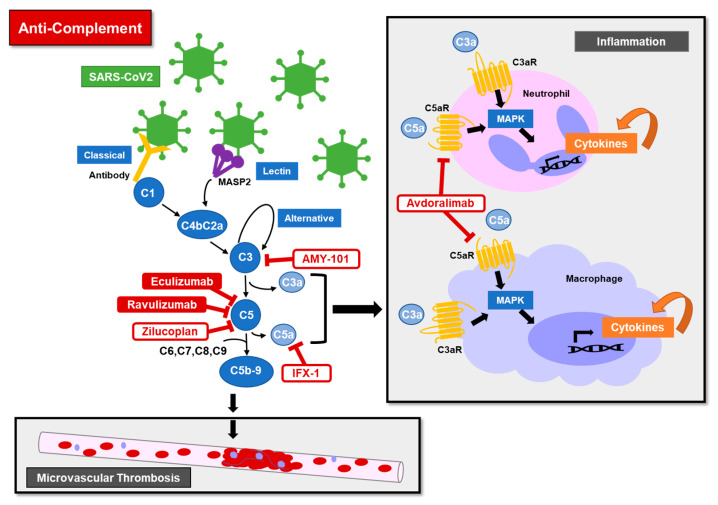
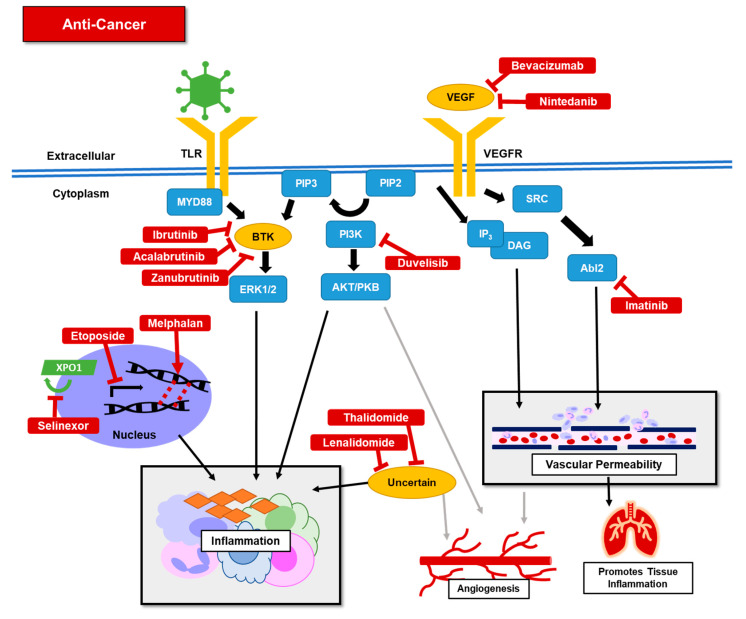
The ongoing coronavirus disease 2019 (COVID-19) pandemic has resulted in efforts to identify therapies to ameliorate adverse clinical outcomes. The recognition of the key role for increased inflammation in COVID-19 has led to a proliferation of clinical trials targeting inflammation. The purpose of this review is to characterize the current state of immunotherapy trials in COVID-19, and focuses on associated cardiotoxicities, given the importance of pharmacovigilance. The search terms related to COVID-19 were queried in ClinicalTrials.gov. A total of 1621 trials were identified and screened for interventional trials directed at inflammation. Trials ( = 226) were fully assessed for the use of a repurposed drug, identifying a total of 141 therapeutic trials using a repurposed drug to target inflammation in COVID-19 infection. Building on the results of the Randomized Evaluation of COVID-19 Therapy (RECOVERY) trial demonstrating the benefit of low dose dexamethasone in COVID-19, repurposed drugs targeting inflammation are promising. Repurposed drugs directed at inflammation in COVID-19 primarily have been drawn from cancer therapies and immunomodulatory therapies, specifically targeted anti-inflammatory, anti-complement, and anti-rejection agents. The proposed mechanisms for many cytokine-directed and anti-rejection drugs are focused on evidence of efficacy in cytokine release syndromes in humans or animal models. Anti-complement-based therapies have the potential to decrease both inflammation and microvascular thrombosis. Cancer therapies are hypothesized to decrease vascular permeability and inflammation. Few publications to date describe using these drugs in COVID-19. Early COVID-19 intervention trials have re-emphasized the subtle, but important cardiotoxic sequelae of potential therapies on outcomes. The volume of trials targeting the COVID-19 hyper-inflammatory phase continues to grow rapidly with the evaluation of repurposed drugs and late-stage investigational agents. Leveraging known clinical safety profiles and pharmacodynamics allows swift investigation in clinical trials for a novel indication. Physicians should remain vigilant for cardiotoxicity, often not fully appreciated in small trials or in short time frames.
持续的2019冠状病毒病(COVID-19)大流行促使人们努力寻找改善不良临床结局的治疗方法。认识到炎症增加在COVID-19中的关键作用,导致针对炎症的临床试验激增。本综述的目的是描述COVID-19免疫治疗试验的现状,并鉴于药物警戒的重要性,重点关注相关的心脏毒性。在ClinicalTrials.gov中查询了与COVID-19相关的检索词。共识别出1621项试验,并筛选针对炎症的干预性试验。对226项试验进行了全面评估,以确定是否使用了一种重新利用的药物,共识别出141项使用重新利用的药物针对COVID-19感染中的炎症进行治疗的试验。基于COVID-19治疗随机评估(RECOVERY)试验的结果,该试验证明低剂量地塞米松对COVID-19有益,针对炎症的重新利用药物很有前景。针对COVID-19炎症的重新利用药物主要来自癌症治疗和免疫调节治疗,特别是靶向抗炎、抗补体和抗排斥药物。许多细胞因子导向和抗排斥药物的 proposed机制 集中在人体或动物模型中细胞因子释放综合征的疗效证据上。基于抗补体的疗法有可能减少炎症和微血管血栓形成。癌症治疗被推测可降低血管通透性和炎症。迄今为止,很少有出版物描述在COVID-19中使用这些药物。早期的COVID-19干预试验再次强调了潜在疗法对结局的细微但重要的心脏毒性后遗症。随着对重新利用药物和后期研究药物的评估,针对COVID-19高炎症阶段的试验数量继续迅速增长。利用已知的临床安全性概况和药效学,可以在临床试验中迅速对新适应症进行研究。医生应保持对心脏毒性的警惕,这在小型试验或短时间内往往没有得到充分认识。
原文中“proposed mechanisms”直接保留了英文,可能是有拼写错误,结合语境推测可能是“提出的机制”之类的意思。