Breast Surgery, Department of Surgical Oncology, Roswell Park Comprehensive Cancer Center, Buffalo, New York, NY 14263, USA.
Department of Gastroenterological Surgery, Yokohama City University Graduate School of Medicine, Yokohama 236-0004, Japan.
Int J Mol Sci. 2020 Sep 13;21(18):6708. doi: 10.3390/ijms21186708.
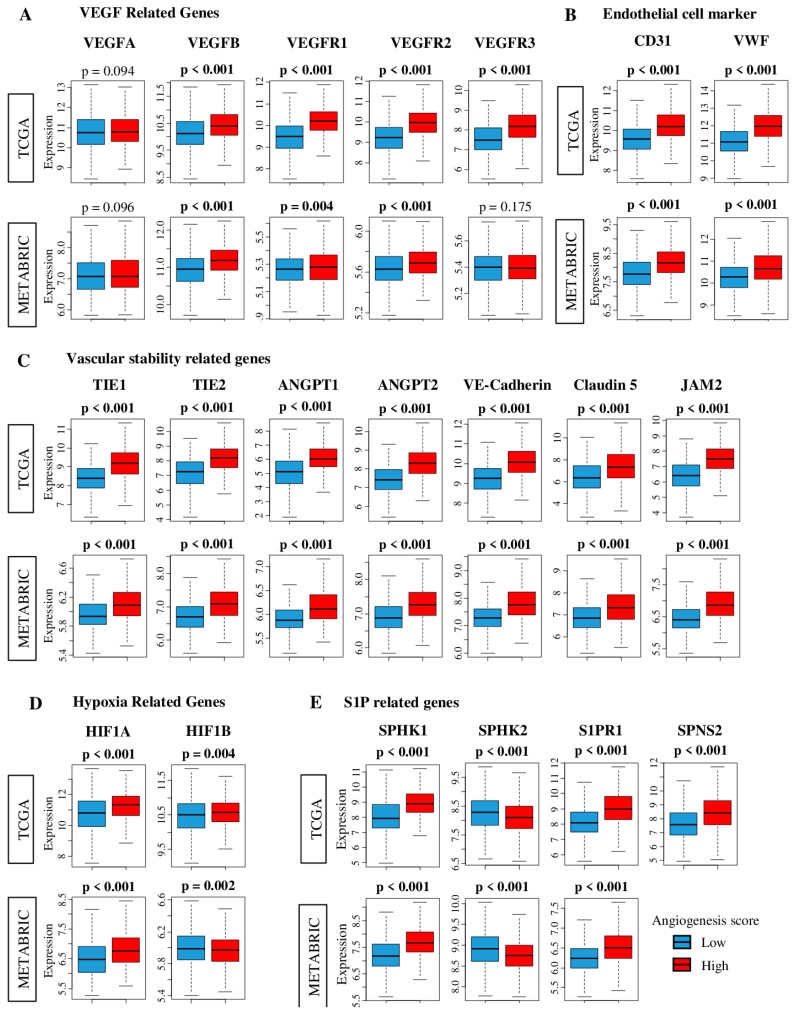
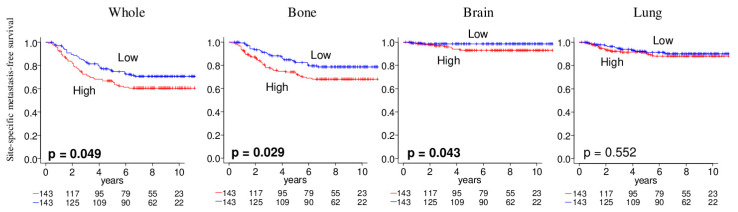
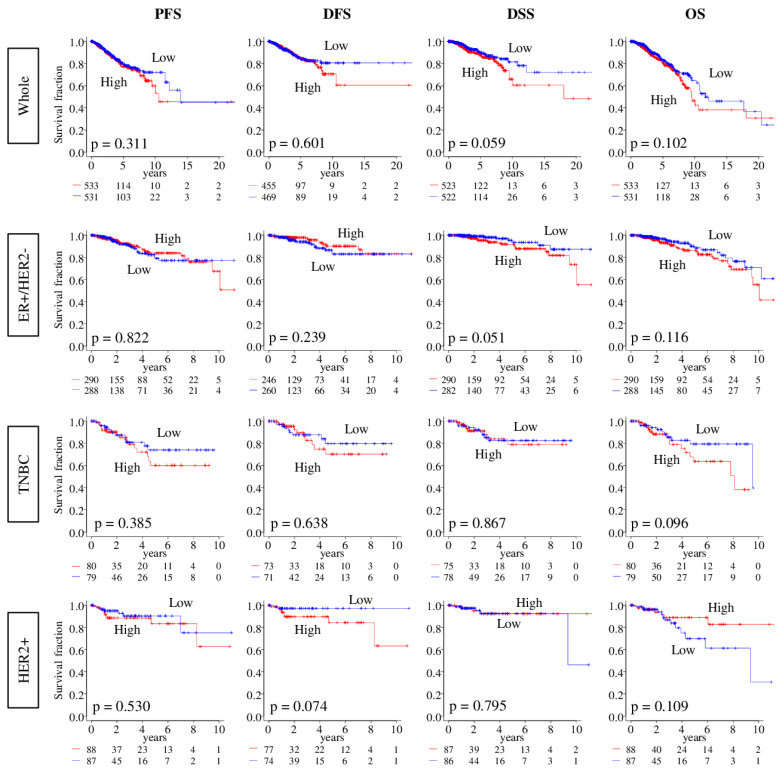
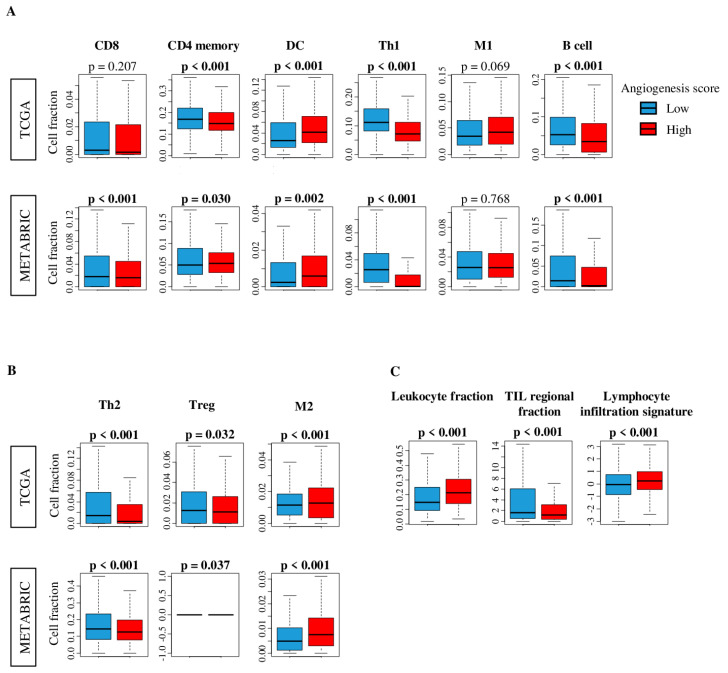
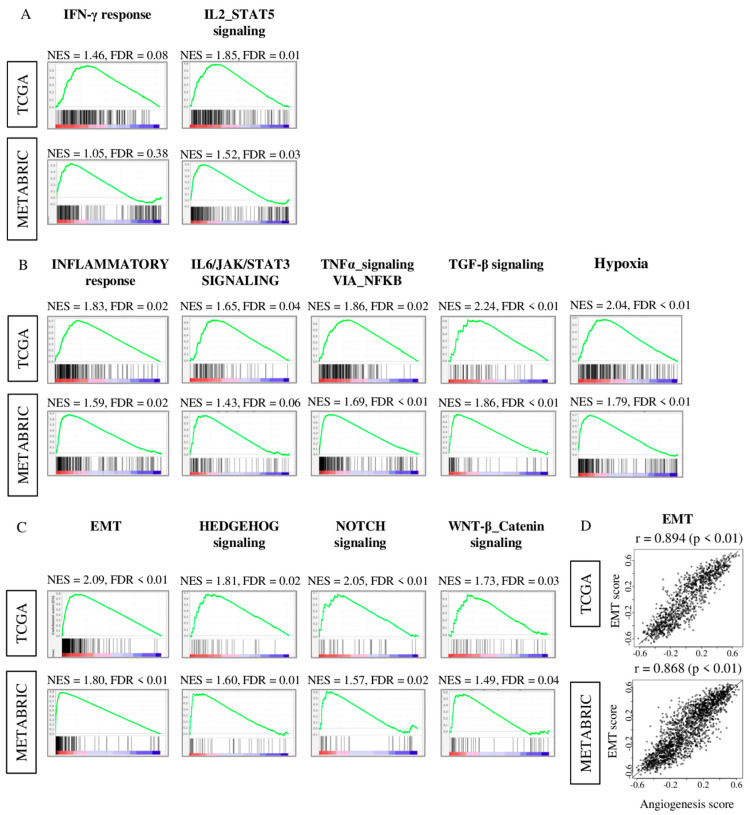
Angiogenesis is one of the hallmarks of cancer. We hypothesized that intra-tumoral angiogenesis correlates with inflammation and metastasis in breast cancer patients. To test this hypothesis, we generated an angiogenesis pathway score using gene set variation analysis and analyzed the tumor transcriptome of 3999 breast cancer patients from The Cancer Genome Atlas Breast Cancer (TCGA-BRCA), Molecular Taxonomy of Breast Cancer International Consortium (METABRIC), GSE20194, GSE25066, GSE32646, and GSE2034 cohorts. We found that the score correlated with expression of various angiogenesis-, vascular stability-, and sphingosine-1-phosphate (S1P)-related genes. Surprisingly, the angiogenesis score was not associated with breast cancer subtype, Nottingham pathological grade, clinical stage, response to neoadjuvant chemotherapy, or patient survival. However, a high score was associated with a low fraction of both favorable and unfavorable immune cell infiltrations except for dendritic cell and M2 macrophage, and with Leukocyte Fraction, Tumor Infiltrating Lymphocyte Regional Fraction and Lymphocyte Infiltration Signature scores. High-score tumors had significant enrichment for unfavorable inflammation-related gene sets (interleukin (IL)6, and tumor necrosis factor (TNF)α- and TGFβ-signaling), as well as metastasis-related gene sets (epithelial mesenchymal transition, and Hedgehog-, Notch-, and WNT-signaling). High score was significantly associated with metastatic recurrence particularly to brain and bone. In conclusion, using the angiogenesis pathway score, we found that intra-tumoral angiogenesis is associated with immune reaction, inflammation and metastasis-related pathways, and metastatic recurrence in breast cancer.
血管生成是癌症的特征之一。我们假设肿瘤内血管生成与乳腺癌患者的炎症和转移有关。为了验证这一假设,我们使用基因集变异分析生成了一个血管生成途径评分,并分析了来自癌症基因组图谱乳腺癌(TCGA-BRCA)、乳腺癌国际联合会分子分类(METABRIC)、GSE20194、GSE25066、GSE32646 和 GSE2034 队列的 3999 名乳腺癌患者的肿瘤转录组。我们发现该评分与各种血管生成、血管稳定性和鞘氨醇-1-磷酸(S1P)相关基因的表达相关。令人惊讶的是,血管生成评分与乳腺癌亚型、诺丁汉病理分级、临床分期、新辅助化疗反应或患者生存无关。然而,高评分与有利和不利的免疫细胞浸润分数均较低相关,除树突状细胞和 M2 巨噬细胞外,还与白细胞分数、肿瘤浸润淋巴细胞区域分数和淋巴细胞浸润特征评分相关。高评分肿瘤在与炎症相关的基因集(白细胞介素(IL)6 和肿瘤坏死因子(TNF)α和 TGFβ信号)以及与转移相关的基因集(上皮间质转化以及 Hedgehog、Notch 和 WNT 信号)中显著富集。高评分与转移性复发,尤其是脑转移和骨转移显著相关。总之,使用血管生成途径评分,我们发现肿瘤内血管生成与乳腺癌中的免疫反应、炎症和转移相关途径以及转移性复发有关。