Zhang Jingwen, Ren Di, Fedorova Julia, He Zhibin, Li Ji
College of Life Sciences, Shandong Normal University, Jinan 250014, China.
Department of Surgery, Morsani College of Medicine, University of South Florida, Tampa, FL 33612, USA.
Antioxidants (Basel). 2020 Sep 13;9(9):858. doi: 10.3390/antiox9090858.
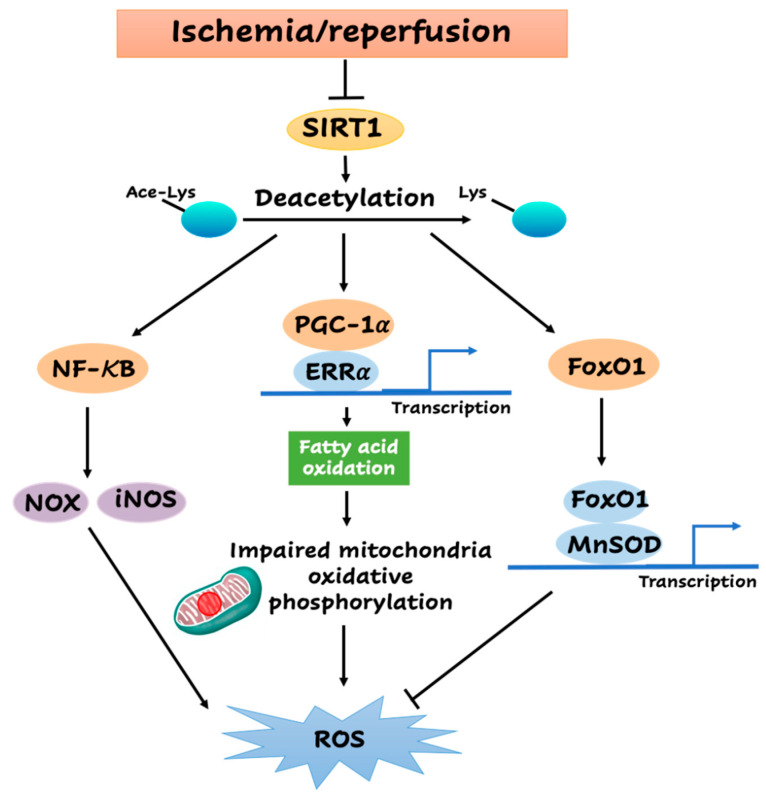
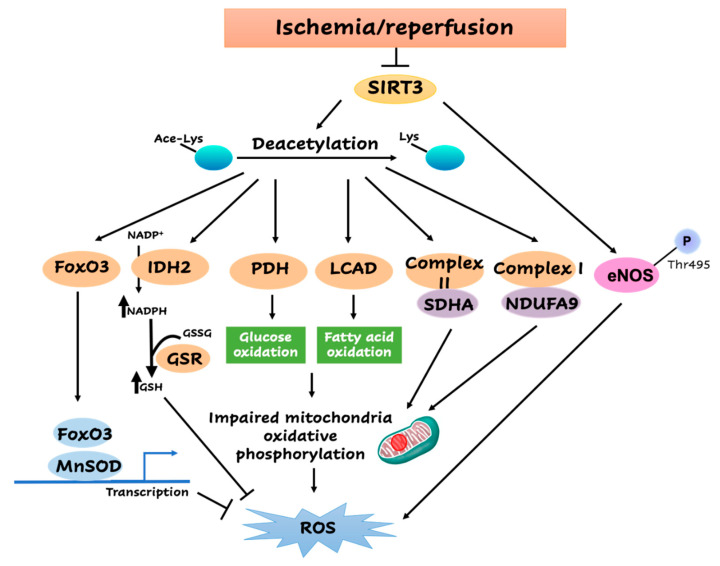
Ischemia/reperfusion (I/R) injury is the central cause of global death in cardiovascular diseases, which is characterized by disorders such as angina, stroke, and peripheral vascular disease, finally causing severe debilitating diseases and death. The increased rates of morbidity and mortality caused by I/R are parallel with aging. Aging-associated cardiac physiological structural and functional deterioration were found to contribute to abnormal reactive oxygen species (ROS) production during I/R stress. Disturbed redox homeostasis could further trigger the related signaling pathways that lead to cardiac irreversible damages with mitochondria dysfunction and cell death. It is notable that sirtuin proteins are impaired in aged hearts and are critical to maintaining redox homeostasis via regulating substrate metabolism and inflammation and thus preserving cardiac function under stress. This review discussed the cellular and functional alterations upon I/R especially in aging hearts. We propose that mitochondria are the primary source of reactive oxygen species (ROS) that contribute to I/R injury in aged hearts. Then, we highlight the cardiomyocyte protection of the age-related proteins Sirtuin1 (SIRT1) and Sirtuin1 (SIRT3) in response to I/R injury, and we discuss their modulation of cardiac metabolism and the inflammatory reaction that is involved in ROS formation.
缺血/再灌注(I/R)损伤是心血管疾病全球死亡的主要原因,其特征为心绞痛、中风和外周血管疾病等病症,最终导致严重的衰弱性疾病和死亡。I/R导致的发病率和死亡率上升与衰老相关。研究发现,与衰老相关的心脏生理结构和功能退化会导致I/R应激期间活性氧(ROS)产生异常。氧化还原稳态紊乱会进一步触发相关信号通路,导致心脏出现不可逆损伤,伴有线粒体功能障碍和细胞死亡。值得注意的是,沉默调节蛋白在老年心脏中功能受损,而通过调节底物代谢和炎症来维持氧化还原稳态,从而在应激状态下保护心脏功能方面起着关键作用。本综述讨论了I/R尤其是老年心脏中的细胞和功能改变。我们提出线粒体是导致老年心脏I/R损伤的活性氧(ROS)的主要来源。然后,我们强调了与年龄相关的蛋白质沉默调节蛋白1(SIRT1)和沉默调节蛋白3(SIRT3)对心肌细胞的保护作用,以应对I/R损伤,并讨论了它们对心脏代谢和参与ROS形成的炎症反应的调节作用。