A.I. Virtanen Institute for Molecular Sciences, University of Eastern Finland, FI-70211, Kuopio, Finland.
School of Biomedical Sciences and Pharmacy and the Priority Research Centre for Stroke and Brain Injury, The University of Newcastle, University Dr, Callaghan, NSW, 2308, Australia.
J Neuroinflammation. 2020 Sep 15;17(1):271. doi: 10.1186/s12974-020-01935-w.
Increased physical exercise improves cognitive function and reduces pathology associated with Alzheimer's disease (AD). However, the mechanisms underlying the beneficial effects of exercise in AD on the level of specific brain cell types remain poorly investigated. The involvement of astrocytes in AD pathology is widely described, but their exact role in exercise-mediated neuroprotection warrant further investigation. Here, we investigated the effect of long-term voluntary physical exercise on the modulation of the astrocyte state.
Male 5xFAD mice and their wild-type littermates had free access to a running wheel from 1.5 to 7 months of age. A battery of behavioral tests was used to assess the effects of voluntary exercise on cognition and learning. Neuronal loss, impairment in neurogenesis, beta-amyloid (Aβ) deposition, and inflammation were evaluated using a variety of histological and biochemical measurements. Sophisticated morphological analyses were performed to delineate the specific involvement of astrocytes in exercise-induced neuroprotection in the 5xFAD mice.
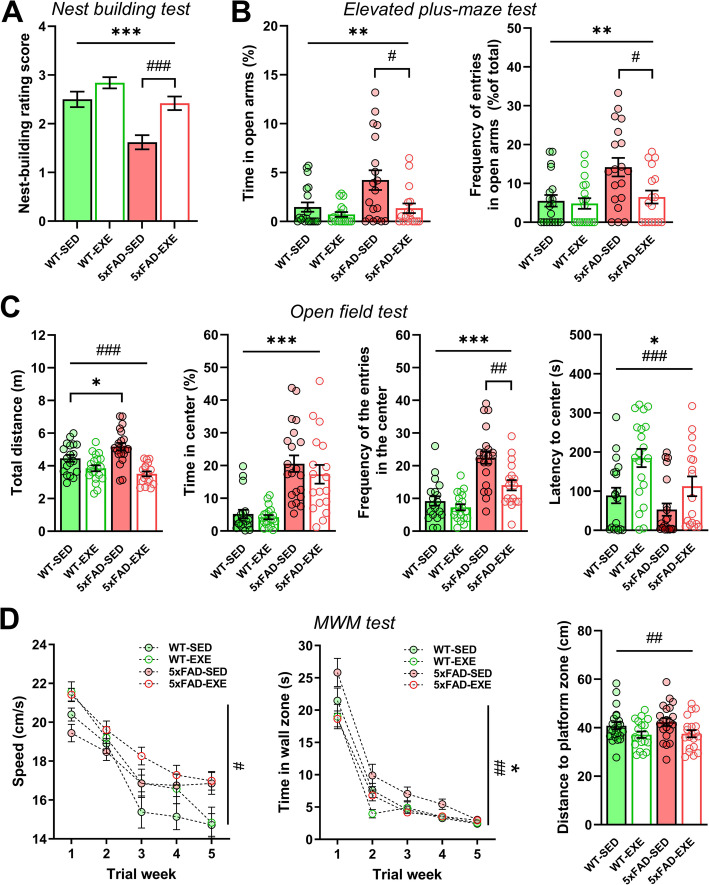
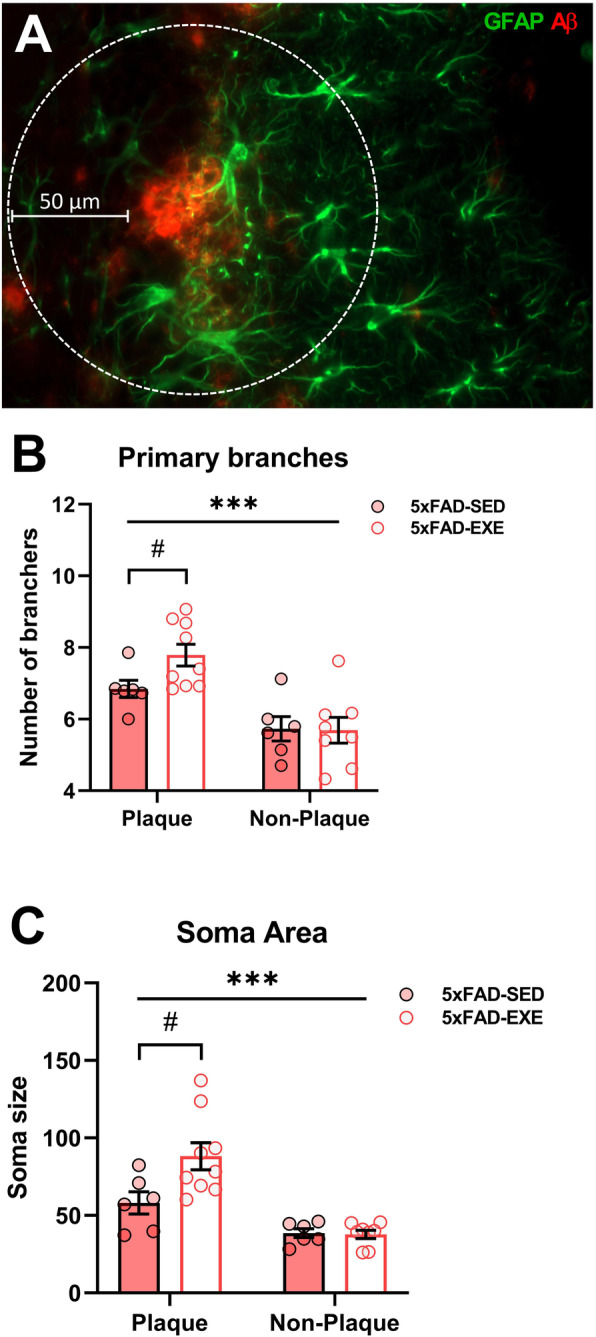
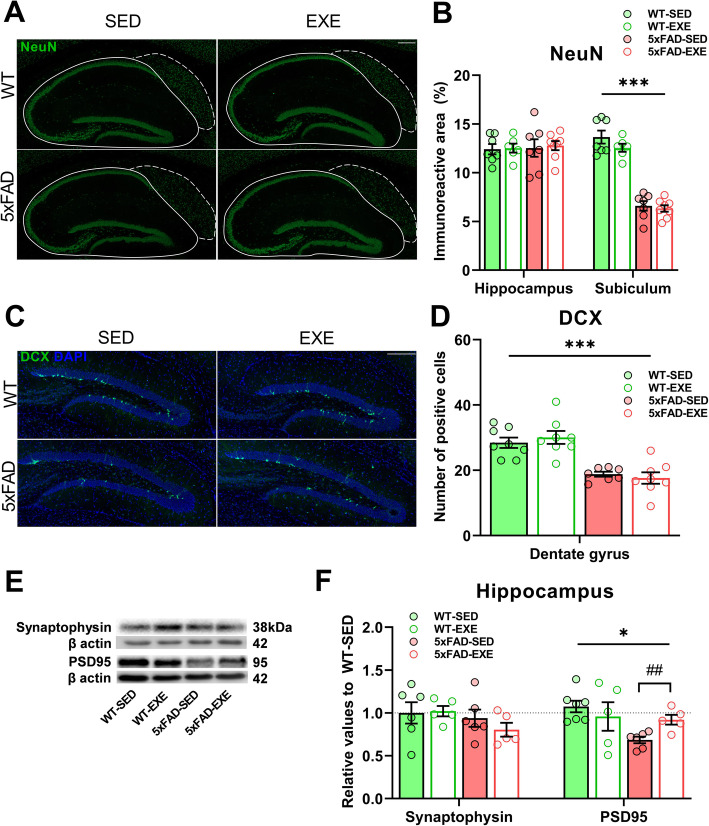
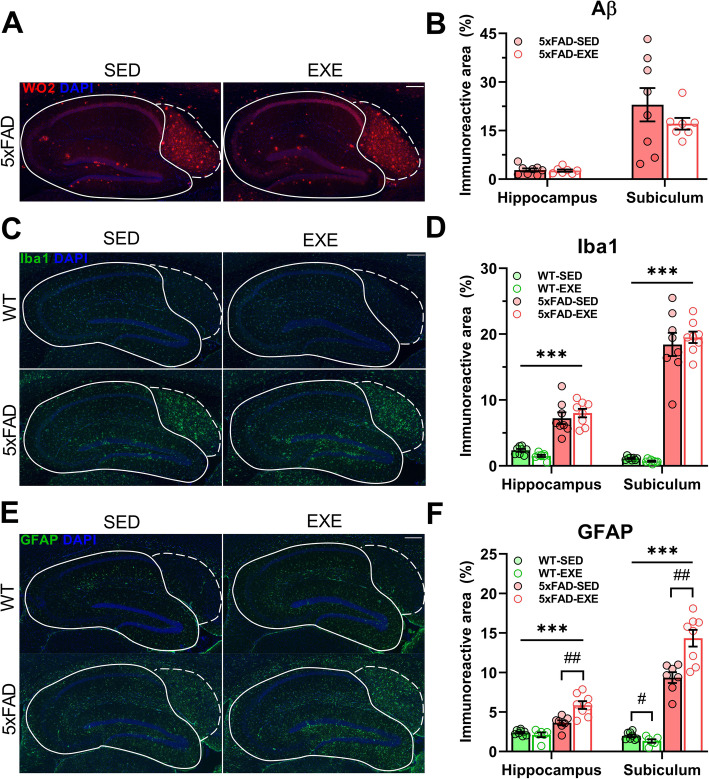
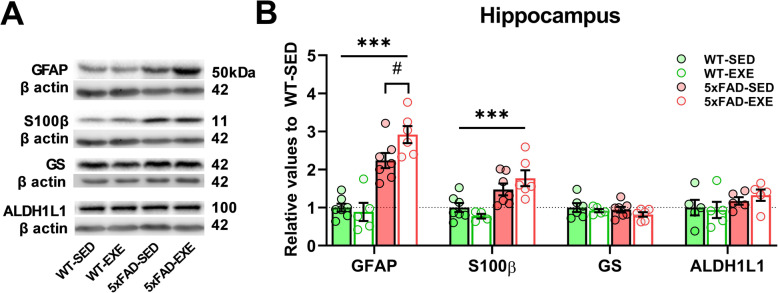
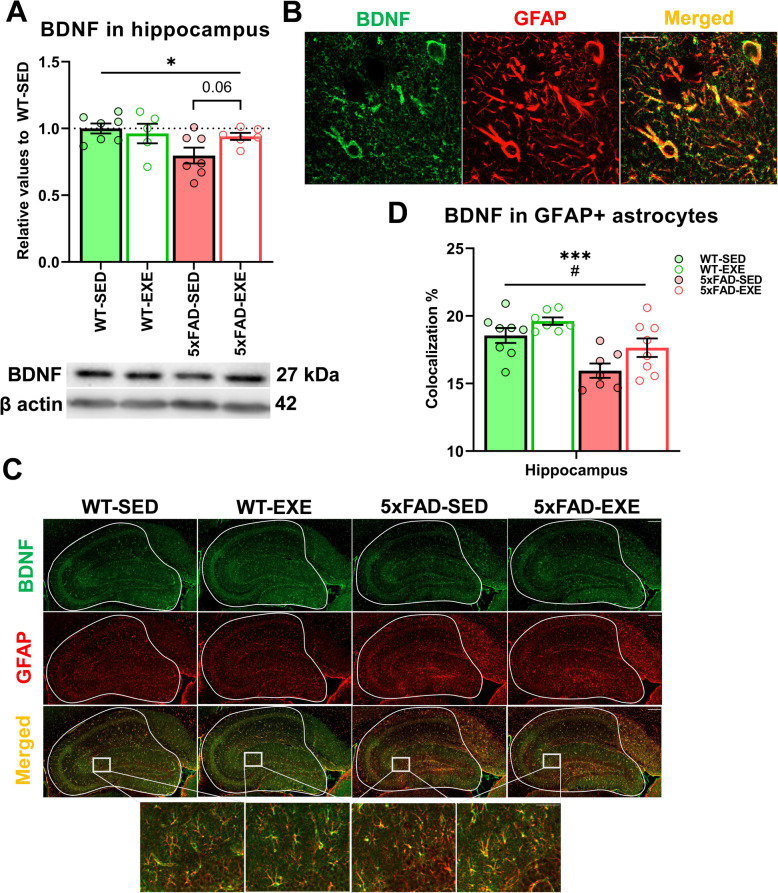
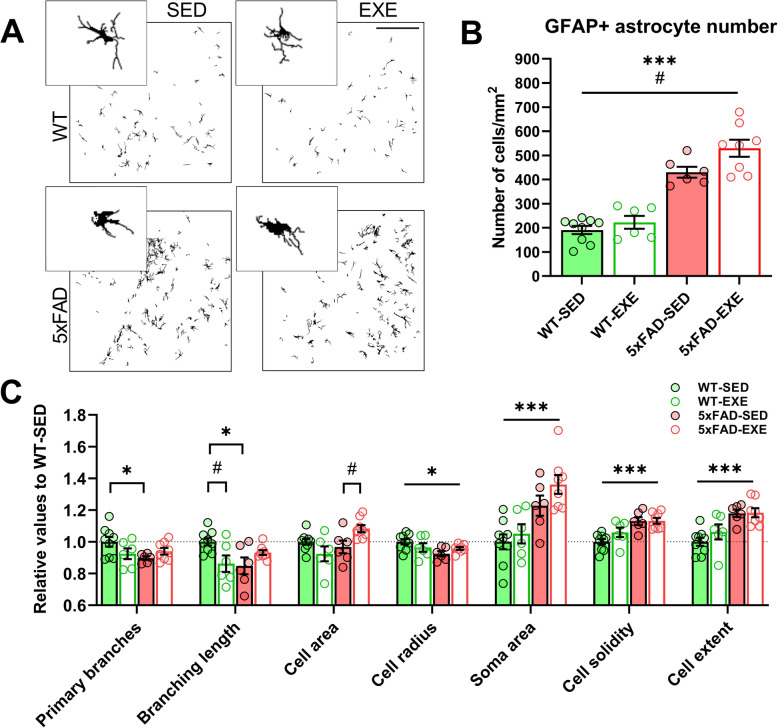
Long-term voluntary physical exercise reversed cognitive impairment in 7-month-old 5xFAD mice without affecting neurogenesis, neuronal loss, Aβ plaque deposition, or microglia activation. Exercise increased glial fibrillary acid protein (GFAP) immunoreactivity and the number of GFAP-positive astrocytes in 5xFAD hippocampi. GFAP-positive astrocytes in hippocampi of the exercised 5xFAD mice displayed increases in the numbers of primary branches and in the soma area. In general, astrocytes distant from Aβ plaques were smaller in size and possessed simplified processes in comparison to plaque-associated GFAP-positive astrocytes. Morphological alterations of GFAP-positive astrocytes occurred concomitantly with increased astrocytic brain-derived neurotrophic factor (BDNF) and restoration of postsynaptic protein PSD-95.
Voluntary physical exercise modulates the reactive astrocyte state, which could be linked via astrocytic BDNF and PSD-95 to improved cognition in 5xFAD hippocampi. The molecular pathways involved in this modulation could potentially be targeted for benefit against AD.
增加身体活动可改善认知功能并减少与阿尔茨海默病(AD)相关的病理学。然而,运动对 AD 中特定脑细胞类型的有益影响的机制仍未得到充分研究。星形胶质细胞在 AD 病理学中的参与被广泛描述,但它们在运动介导的神经保护中的确切作用仍需要进一步研究。在这里,我们研究了长期自愿身体活动对星形胶质细胞状态调节的影响。
雄性 5xFAD 小鼠及其野生型同窝仔鼠从 1.5 到 7 个月大时可自由使用跑步轮。使用一系列行为测试来评估自愿运动对认知和学习的影响。使用各种组织学和生化测量来评估神经元丢失、神经发生受损、β-淀粉样蛋白(Aβ)沉积和炎症。进行了复杂的形态分析,以描绘星形胶质细胞在 5xFAD 小鼠运动诱导的神经保护中的特定作用。
长期自愿身体活动逆转了 7 个月大的 5xFAD 小鼠的认知障碍,而不影响神经发生、神经元丢失、Aβ斑块沉积或小胶质细胞激活。运动增加了 5xFAD 海马中的胶质纤维酸性蛋白(GFAP)免疫反应性和 GFAP 阳性星形胶质细胞的数量。锻炼后的 5xFAD 小鼠海马中的 GFAP 阳性星形胶质细胞增加了初级分支的数量和细胞体面积。总的来说,与 Aβ 斑块相关的 GFAP 阳性星形胶质细胞相比,远离 Aβ 斑块的星形胶质细胞体积较小,并且其突起过程更为简单。GFAP 阳性星形胶质细胞的形态改变与星形胶质细胞脑源性神经营养因子(BDNF)的增加和突触后蛋白 PSD-95 的恢复同时发生。
自愿身体活动调节反应性星形胶质细胞状态,这可能通过星形胶质细胞 BDNF 和 PSD-95 与 5xFAD 海马中的认知改善相关。这种调节涉及的分子途径可能成为针对 AD 的潜在治疗靶点。