Experimental Therapeutics Unit, Medical Oncology Department, Hospital Clínico San Carlos, and IdISSC, Madrid, Spain.
Centro de Investigación Biomédica en Red Oncología (CIBERONC), Madrid, Spain.
J Exp Clin Cancer Res. 2020 Sep 15;39(1):189. doi: 10.1186/s13046-020-01672-1.
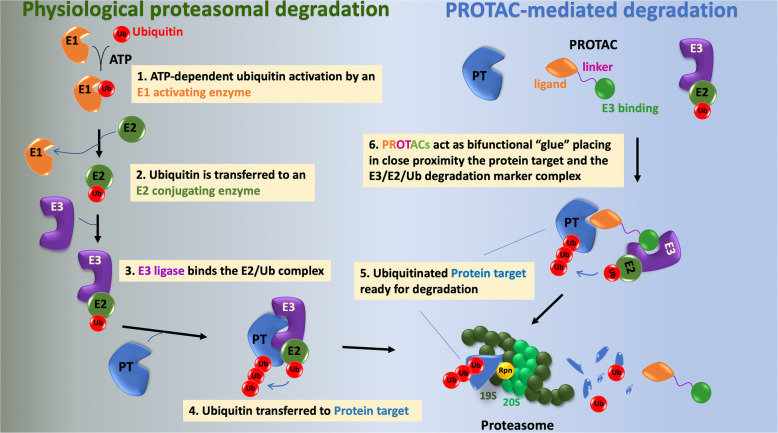
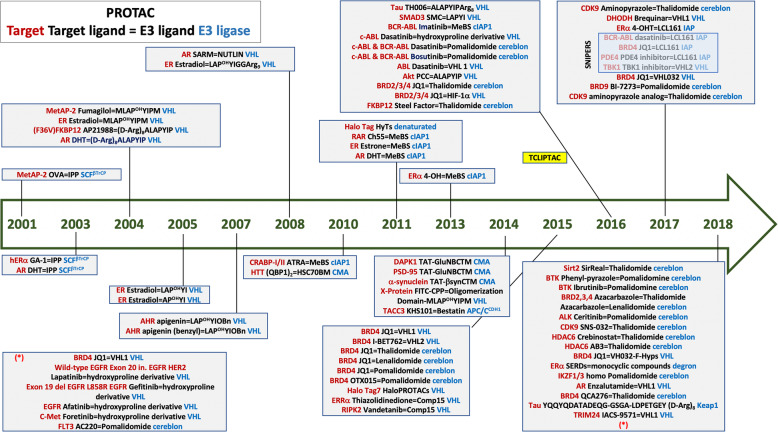
Exploitation of the protein degradation machinery as a therapeutic strategy to degrade oncogenic proteins is experiencing revolutionary advances with the development of proteolysis targeting chimeras (PROTACs). PROTACs are heterobifunctional structures consisting of a ligand that binds a protein to be degraded and a ligand for an E3 ubiquitin ligase. The bridging between the protein of interest and the E3 ligase mediated by the PROTAC facilitates ubiquitination of the protein and its proteasomal degradation. In this review we discuss the molecular medicine behind PROTAC mechanism of action, with special emphasis on recent developments and their potential translation to the clinical setting.
利用蛋白降解机制作为一种治疗策略,通过降解致癌蛋白来治疗疾病,这一策略随着蛋白水解靶向嵌合体(PROTAC)的发展取得了革命性的进展。PROTAC 是一种杂双功能结构,由配体组成,该配体可结合待降解的蛋白和 E3 泛素连接酶的配体。PROTAC 通过将靶蛋白与 E3 连接酶桥接,促进了靶蛋白的泛素化及其蛋白酶体降解。在这篇综述中,我们讨论了 PROTAC 作用机制的分子医学基础,特别强调了最近的进展及其在临床环境中的潜在转化。