University Children's Hospital, Department of Oncology and Children's Research Center, Steinwiesstrasse 75, CH-8032, Zurich, Switzerland.
Princess Máxima Center for Pediatric Oncology, Uppsalalaan 8, 3584, CT, Utrecht, The Netherlands.
Nat Commun. 2020 Sep 15;11(1):4629. doi: 10.1038/s41467-020-18388-7.
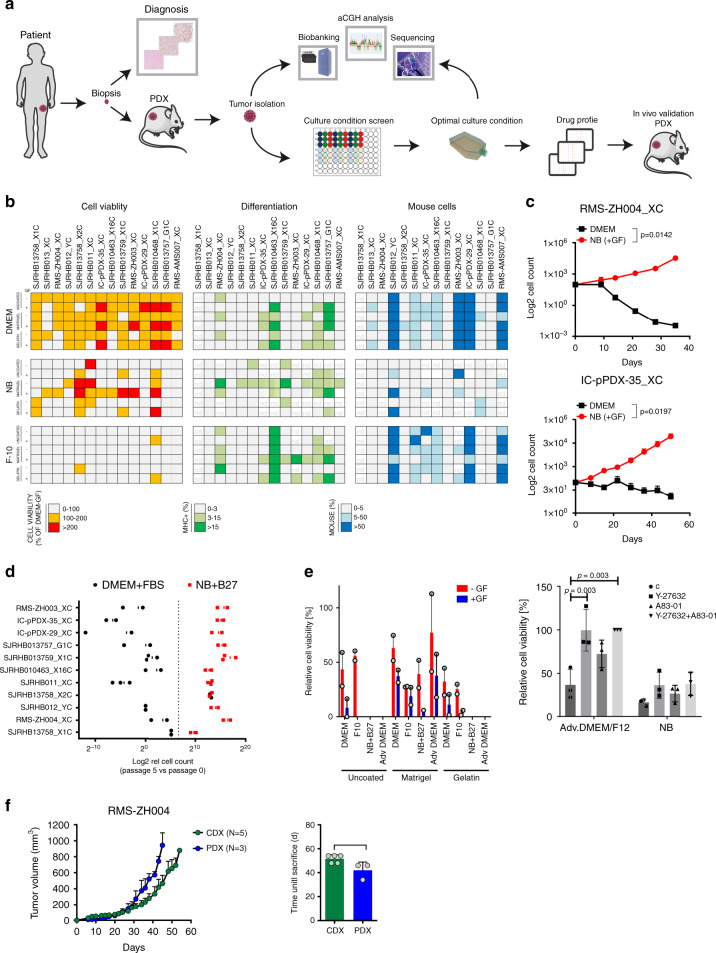
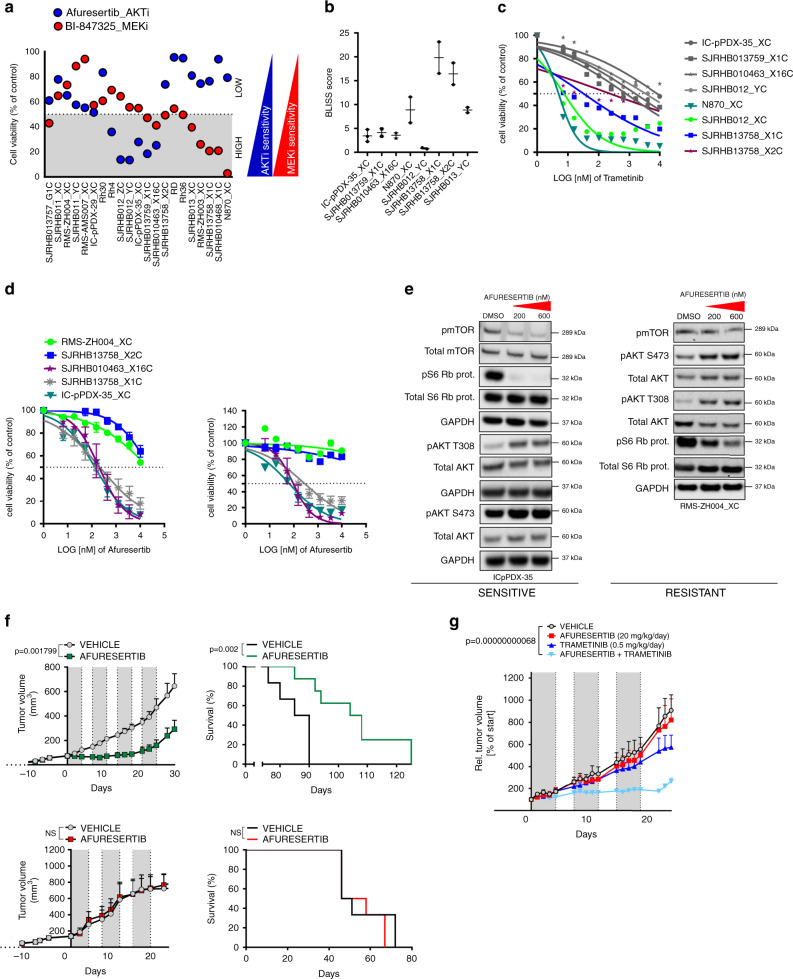
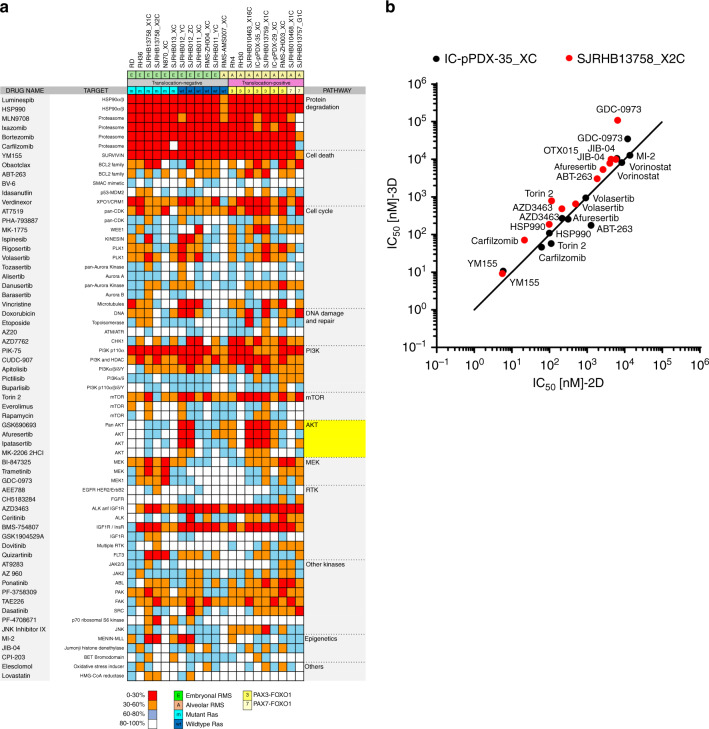
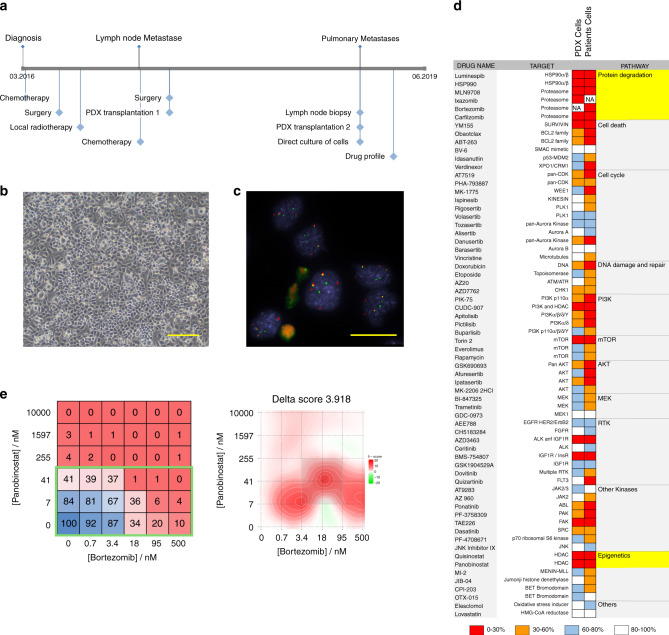
Cancer therapy is currently shifting from broadly used cytotoxic drugs to patient-specific precision therapies. Druggable driver oncogenes, identified by molecular analyses, are present in only a subset of patients. Functional profiling of primary tumor cells could circumvent these limitations, but suitable platforms are unavailable for most cancer entities. Here, we describe an in vitro drug profiling platform for rhabdomyosarcoma (RMS), using a living biobank composed of twenty RMS patient-derived xenografts (PDX) for high-throughput drug testing. Optimized in vitro conditions preserve phenotypic and molecular characteristics of primary PDX cells and are compatible with propagation of cells directly isolated from patient tumors. Besides a heterogeneous spectrum of responses of largely patient-specific vulnerabilities, profiling with a large drug library reveals a strong sensitivity towards AKT inhibitors in a subgroup of RMS. Overall, our study highlights the feasibility of in vitro drug profiling of primary RMS for patient-specific treatment selection in a co-clinical setting.
癌症治疗目前正从广泛使用的细胞毒性药物转向针对特定患者的精准治疗。通过分子分析鉴定的可用药驱动癌基因仅存在于一部分患者中。对原发性肿瘤细胞进行功能分析可以规避这些限制,但大多数癌症实体缺乏合适的平台。在这里,我们描述了一种用于横纹肌肉瘤(RMS)的体外药物分析平台,使用由二十个 RMS 患者来源异种移植(PDX)组成的活体生物库进行高通量药物测试。优化的体外条件保留了原发性 PDX 细胞的表型和分子特征,并且与直接从患者肿瘤中分离的细胞的增殖兼容。除了具有很大的患者特异性脆弱性的异质反应谱外,对大型药物库的分析还揭示了 RMS 亚组中对 AKT 抑制剂的强烈敏感性。总的来说,我们的研究强调了在临床环境中对原发性 RMS 进行体外药物分析以进行针对特定患者的治疗选择的可行性。