Wu Wanwen, Chen Ying, Huang Lan, Li Wenjian, Tao Changli, Shen Han
Guangdong Province Key Laboratory for Biotechnology Drug Candidates, School of Life Sciences and Biopharmaceutics, Guangdong Pharmaceutical University, Guangzhou, Guangdong 510006, P.R. China.
Oncol Lett. 2020 Nov;20(5):123. doi: 10.3892/ol.2020.11986. Epub 2020 Aug 19.
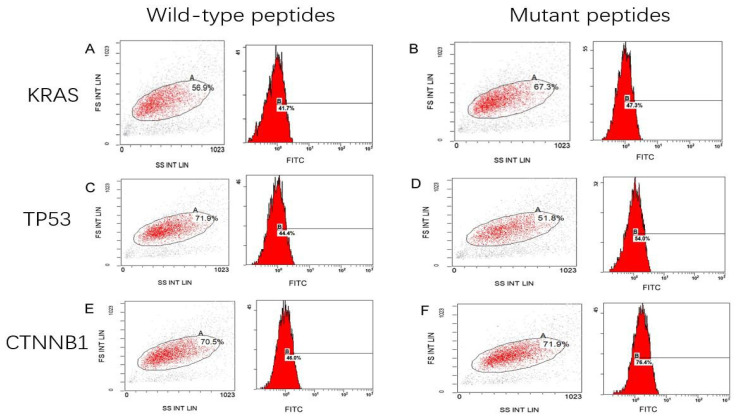
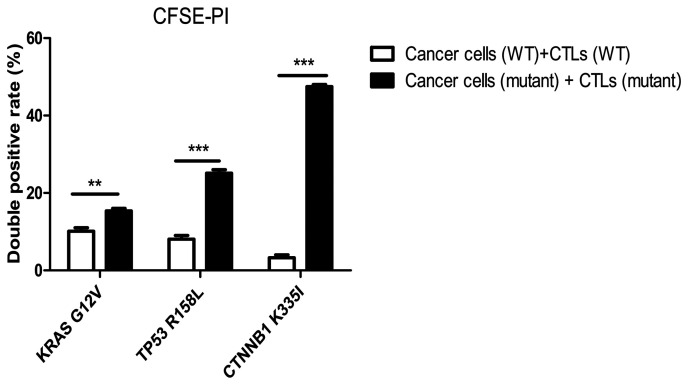
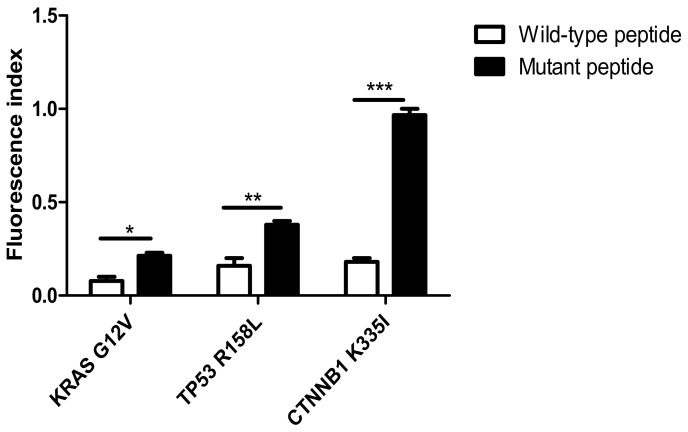
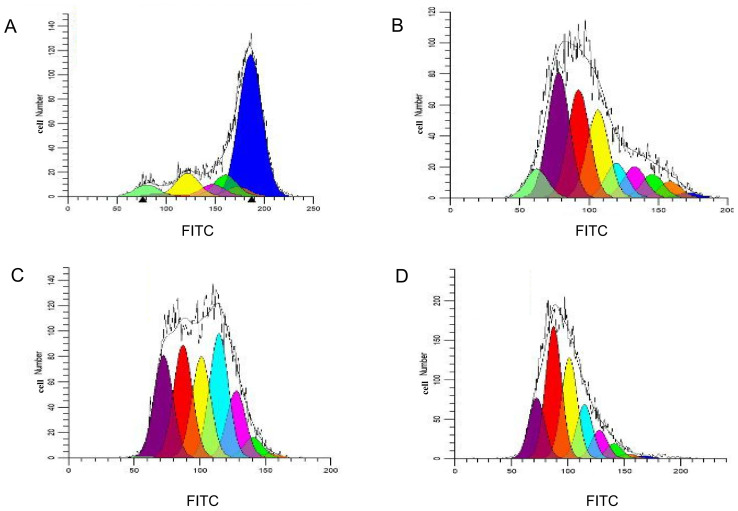
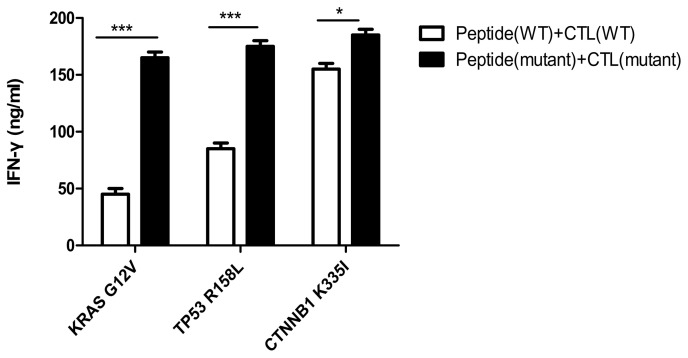
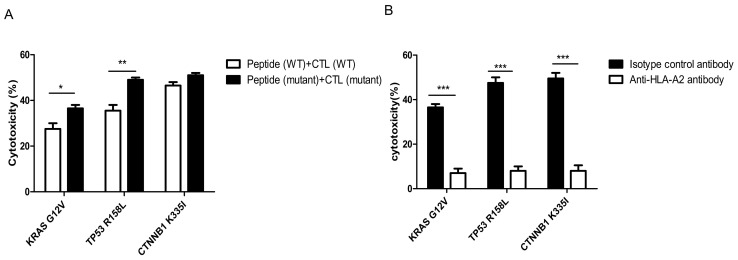
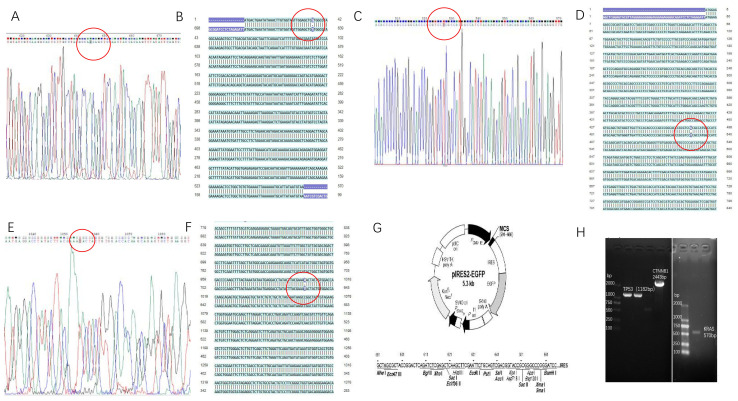
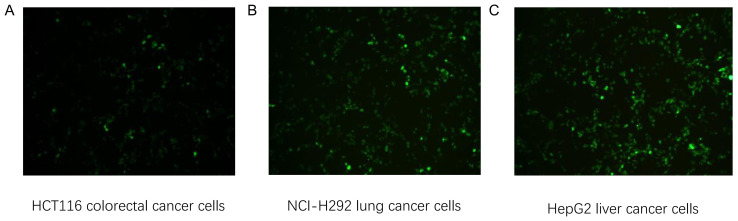
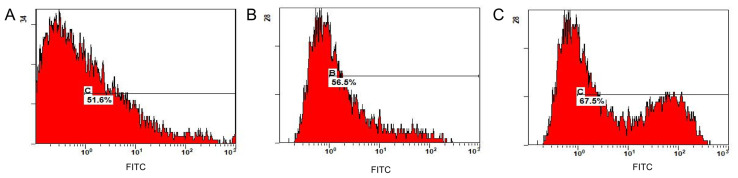
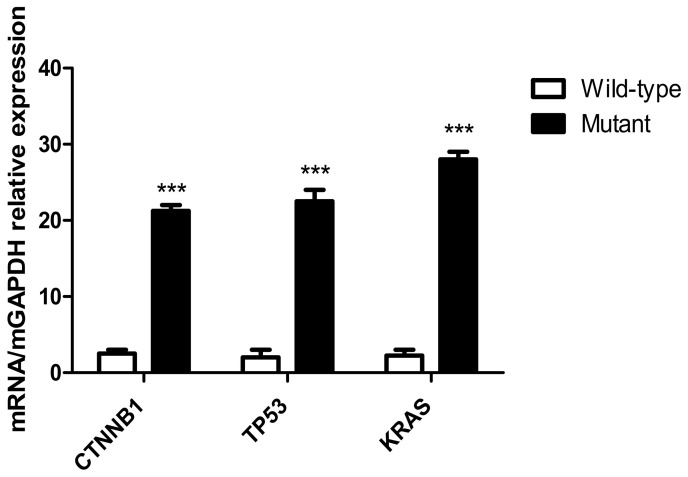
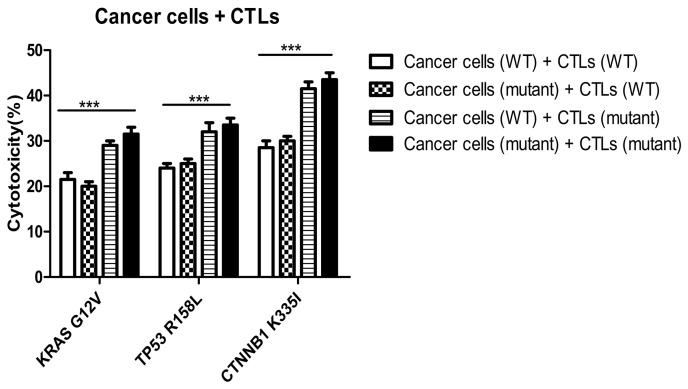
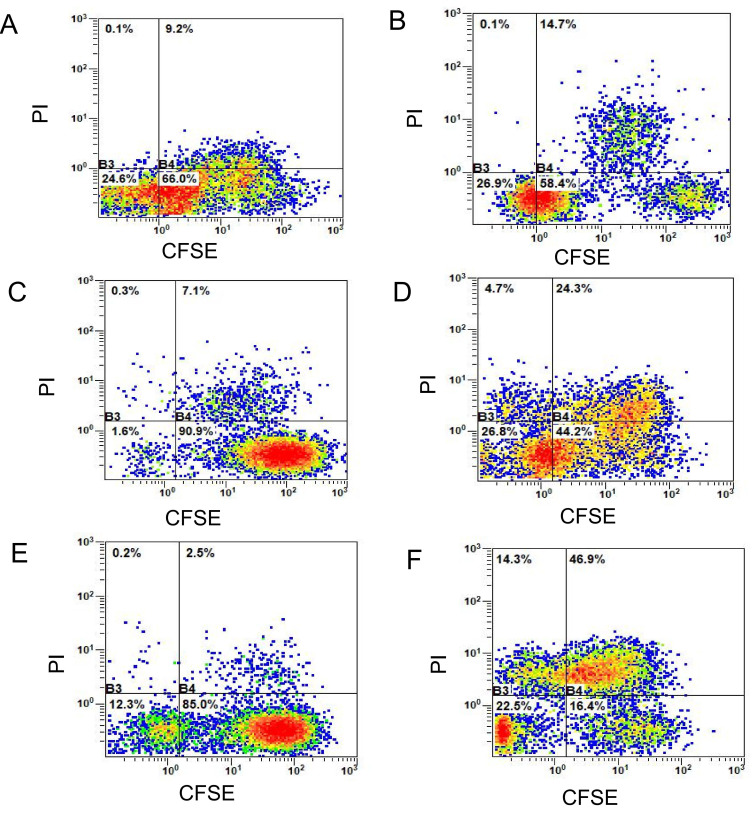
The aim of the present study was to use The Cancer Genome Atlas (TCGA) database to identify tumor neoantigens, combined with a bioinformatics analysis to design and analyze antigen epitope peptides. Epitopes were screened using immunogenicity tests to identify the ideal epitope peptides to target tumor neoantigens, which can specifically activate the immune response of T cells. The high-frequency mutation loci (top 10) of colorectal, lung and liver cancer genes were screened using TCGA database. The antigenic epitope peptides with high affinity for major histocompatibility complex molecules were selected and synthesized using computer prediction algorithms, and were subsequently detected using flow cytometry. The cytotoxicity of specific cytotoxic T lymphocytes (CTLs) on peptide-loaded T2 cells was initially verified using interferon IFN-γ detection and a calcein-acetoxymethyl (Cal-AM) release assay. Tumor cell lines expressing point mutations in and genes were constructed respectively, and the cytotoxicity of peptide-induced specific CTLs on wild-type and mutant tumor cells was verified using a Cal-AM release assay and carboxyfluorescein succinimidyl ester-propidium iodide staining. The high-frequency gene mutation loci of KRAS proto-oncogene (KRAS) G12V, tumor protein p53 (TP53) R158L and catenin β1 (CTNNB1) K335I were identified in TCGA database. A total of 3 groups of wild-type and mutant peptides were screened using a peptide prediction algorithm. The CTNNB1 group had a strong affinity for the human leukocyte antigen-A2 molecule, as determined using flow cytometry. The IFN-γ secretion of specific CTLs in the CTNNB1 group was the highest, followed by the TP53 and the KRAS groups. The killing rate of mutant peptide-induced specific CTLs on peptide-loaded T2 cells in the CTNNB1 group was higher compared with that observed in the other groups. The killing rate of specific CTLs induced by mutant peptides present on tumor cells was higher compared with that induced by wild-type peptides. However, when compared with the TP53 and KRAS groups, specific CTLs induced by mutant peptides in the CTNNB1 group had more potent cytotoxicity towards mutant and wild-type tumor cells. In conclusion, point mutant tumor neoantigens screened in the three groups improved the cytotoxicity of specific T cells, and the mutant peptides in the CTNNB1 group were more prominent, indicating that they may activate the cellular immune response more readily.
本研究的目的是利用癌症基因组图谱(TCGA)数据库识别肿瘤新抗原,并结合生物信息学分析来设计和分析抗原表位肽。通过免疫原性测试筛选表位,以识别靶向肿瘤新抗原的理想表位肽,其可特异性激活T细胞的免疫反应。利用TCGA数据库筛选结直肠癌、肺癌和肝癌基因的高频突变位点(前10位)。使用计算机预测算法选择并合成对主要组织相容性复合体分子具有高亲和力的抗原表位肽,随后使用流式细胞术进行检测。最初使用干扰素IFN-γ检测和钙黄绿素乙酰氧基甲酯(Cal-AM)释放试验验证特异性细胞毒性T淋巴细胞(CTL)对负载肽的T2细胞的细胞毒性。分别构建在 和 基因中表达点突变的肿瘤细胞系,并使用Cal-AM释放试验和羧基荧光素琥珀酰亚胺酯-碘化丙啶染色验证肽诱导的特异性CTL对野生型和突变型肿瘤细胞的细胞毒性。在TCGA数据库中鉴定出KRAS原癌基因(KRAS)G12V、肿瘤蛋白p53(TP53)R158L和连环蛋白β1(CTNNB1)K335I的高频基因突变位点。使用肽预测算法共筛选出3组野生型和突变型肽。通过流式细胞术测定,CTNNB1组对人白细胞抗原-A2分子具有很强的亲和力。CTNNB1组中特异性CTL的IFN-γ分泌最高,其次是TP53组和KRAS组。与其他组相比,CTNNB1组中突变肽诱导的特异性CTL对负载肽的T2细胞的杀伤率更高。肿瘤细胞上存在的突变肽诱导的特异性CTL的杀伤率高于野生型肽诱导的杀伤率。然而,与TP53组和KRAS组相比,CTNNB1组中突变肽诱导的特异性CTL对突变型和野生型肿瘤细胞具有更强的细胞毒性。总之,三组中筛选出的点突变肿瘤新抗原提高了特异性T细胞的细胞毒性,且CTNNB1组中的突变肽更为突出,表明它们可能更容易激活细胞免疫反应。