EverImmune, Villejuif, France.
Gustave Roussy Comprehensive Cancer Institute, Villejuif, France.
Oncoimmunology. 2020 Jun 3;9(1):1774298. doi: 10.1080/2162402X.2020.1774298.
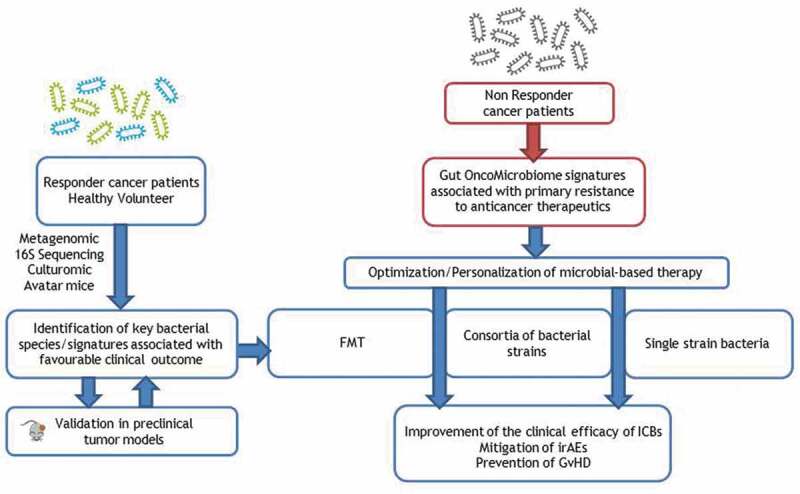
Accumulating evidence demonstrates the decisive role of the gut microbiota in determining the effectiveness of anticancer therapeutics such as immunogenic chemotherapy or immune checkpoint blockade in preclinical tumor models, as well as in cancer patients. In synthesis, it appears that a normal intestinal microbiota supports therapeutic anticancer responses, while a dysbiotic microbiota that lacks immunostimulatory bacteria or contains overabundant immunosuppressive species causes treatment failure. These findings have led to the design of clinical trials that evaluate the capacity of modulation of the gut microbiota to synergize with treatment and hence limit tumor progression. Along the lines of this Trial Watch, we discuss the rationale for harnessing the gut microbiome in support of cancer therapy and the progress of recent clinical trials testing this new therapeutic paradigm in cancer patients.
越来越多的证据表明,肠道微生物群在决定癌症治疗的疗效方面起着决定性作用,如免疫化疗或免疫检查点阻断在临床前肿瘤模型以及癌症患者中的疗效。总之,似乎正常的肠道微生物群支持治疗性抗癌反应,而缺乏免疫刺激细菌或含有过多免疫抑制物种的失调微生物群导致治疗失败。这些发现促使人们设计临床试验,评估调节肠道微生物群以与治疗协同作用从而限制肿瘤进展的能力。基于本临床试验观察,我们讨论了利用肠道微生物组支持癌症治疗的原理以及最近在癌症患者中测试这一新治疗模式的临床试验进展。