Joubert Nicolas, Beck Alain, Dumontet Charles, Denevault-Sabourin Caroline
GICC EA7501, Equipe IMT, Université de Tours, UFR des Sciences Pharmaceutiques, 31 Avenue Monge, 37200 Tours, France.
Institut de Recherche Pierre Fabre, Centre d'Immunologie Pierre Fabre, 5 Avenue Napoléon III, 74160 Saint Julien en Genevois, France.
Pharmaceuticals (Basel). 2020 Sep 14;13(9):245. doi: 10.3390/ph13090245.
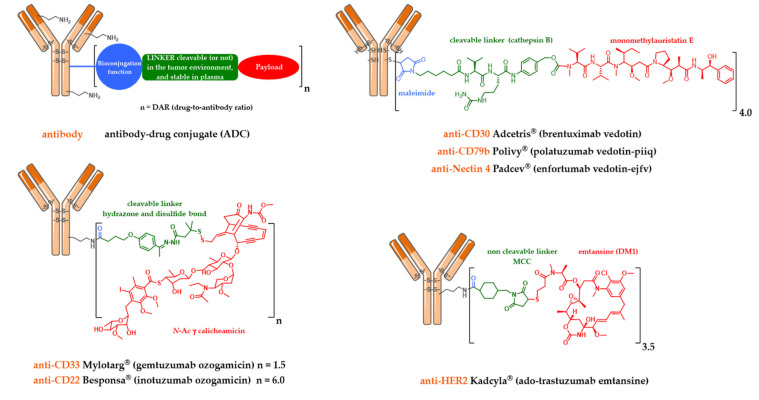
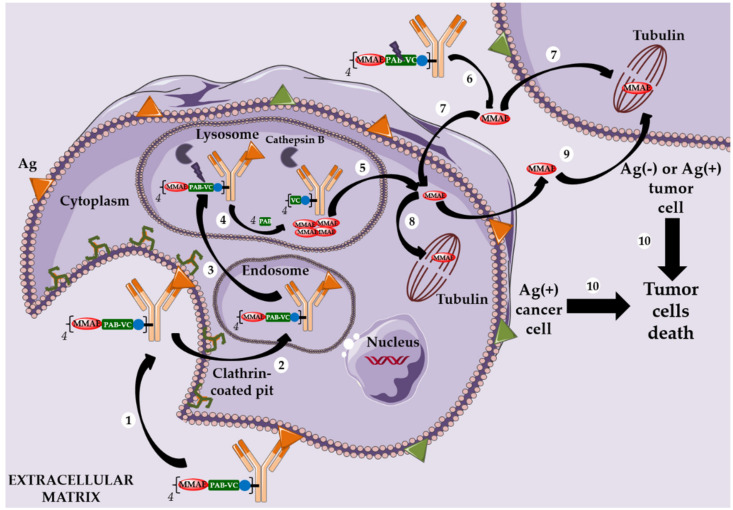
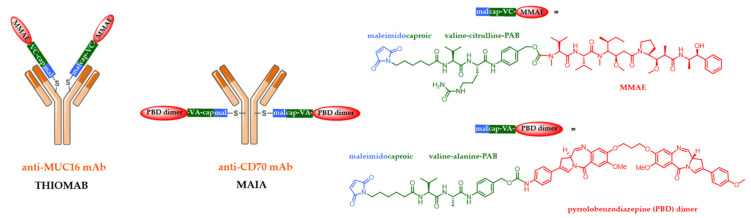
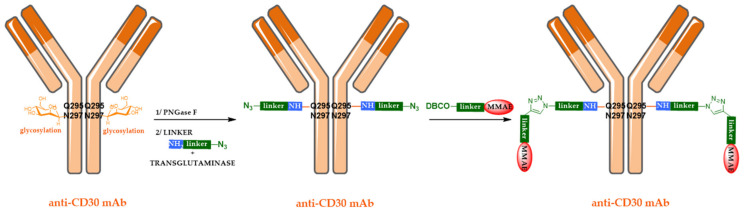
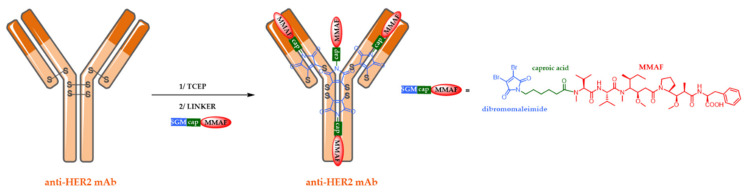
An armed antibody (antibody-drug conjugate or ADC) is a vectorized chemotherapy, which results from the grafting of a cytotoxic agent onto a monoclonal antibody via a judiciously constructed spacer arm. ADCs have made considerable progress in 10 years. While in 2009 only gemtuzumab ozogamicin (Mylotarg) was used clinically, in 2020, 9 Food and Drug Administration (FDA)-approved ADCs are available, and more than 80 others are in active clinical studies. This review will focus on FDA-approved and late-stage ADCs, their limitations including their toxicity and associated resistance mechanisms, as well as new emerging strategies to address these issues and attempt to widen their therapeutic window. Finally, we will discuss their combination with conventional chemotherapy or checkpoint inhibitors, and their design for applications beyond oncology, to make ADCs the magic bullet that Paul Ehrlich dreamed of.
武装抗体(抗体药物偶联物或ADC)是一种载体化化疗药物,它是通过一个精心构建的间隔臂将细胞毒性药物连接到单克隆抗体上而形成的。在过去十年中,ADC取得了显著进展。2009年时仅有吉妥珠单抗奥唑米星(麦罗塔)用于临床,而到了2020年,有9种获得美国食品药品监督管理局(FDA)批准的ADC可供使用,还有80多种正在进行积极的临床研究。本综述将聚焦于FDA批准的以及处于后期阶段的ADC、它们的局限性(包括毒性和相关耐药机制),以及解决这些问题并试图扩大其治疗窗口的新出现策略。最后,我们将讨论它们与传统化疗或检查点抑制剂的联合使用,以及它们在肿瘤学以外领域的应用设计,以使ADC成为保罗·埃尔利希所梦想的神奇子弹。