Department of Laboratory Medicine, Institute of Biomedicine, Sahlgrenska Academy at University of Gothenburg, Gothenburg, Sweden.
Department of Molecular and Clinical Medicine, Institute of Medicine, Sahlgrenska Academy at University of Gothenburg, Gothenburg, Sweden.
PLoS One. 2020 Sep 17;15(9):e0239284. doi: 10.1371/journal.pone.0239284. eCollection 2020.
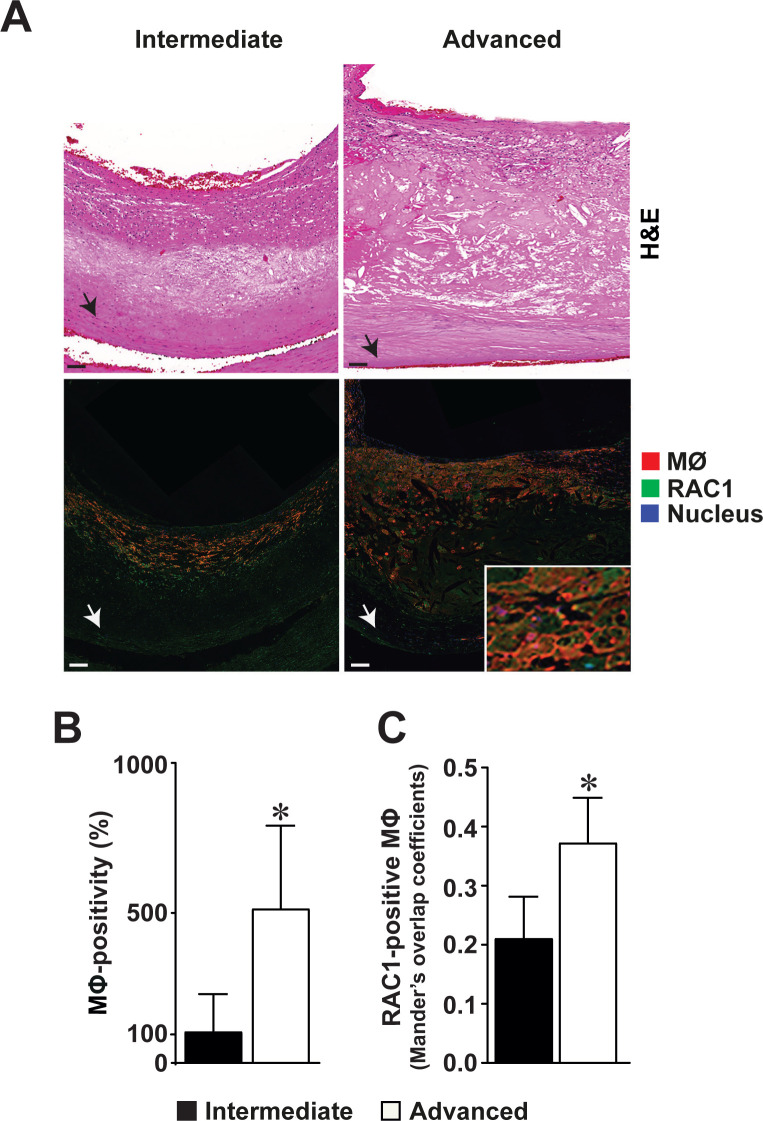
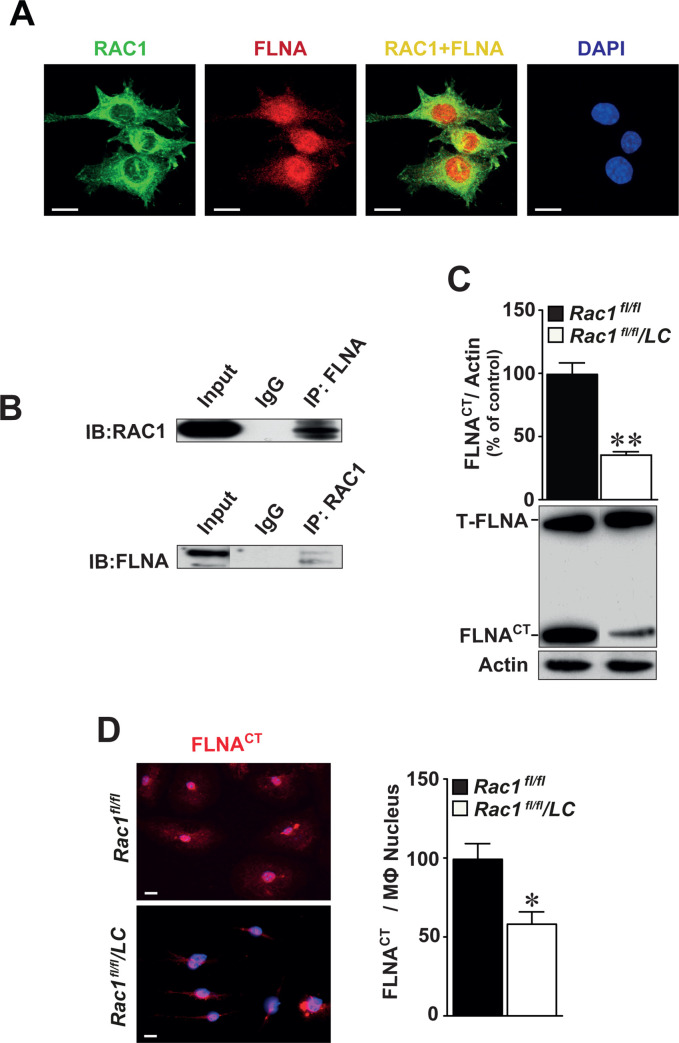
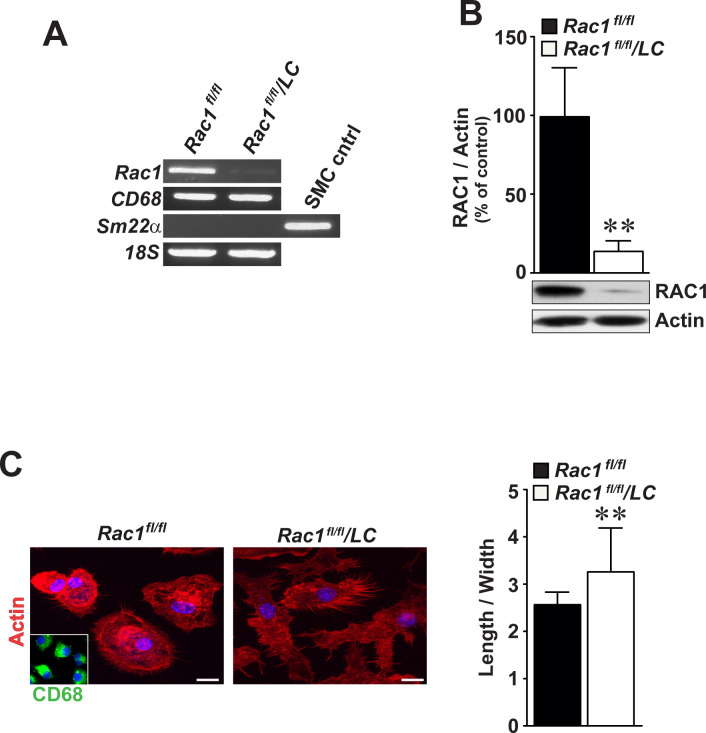
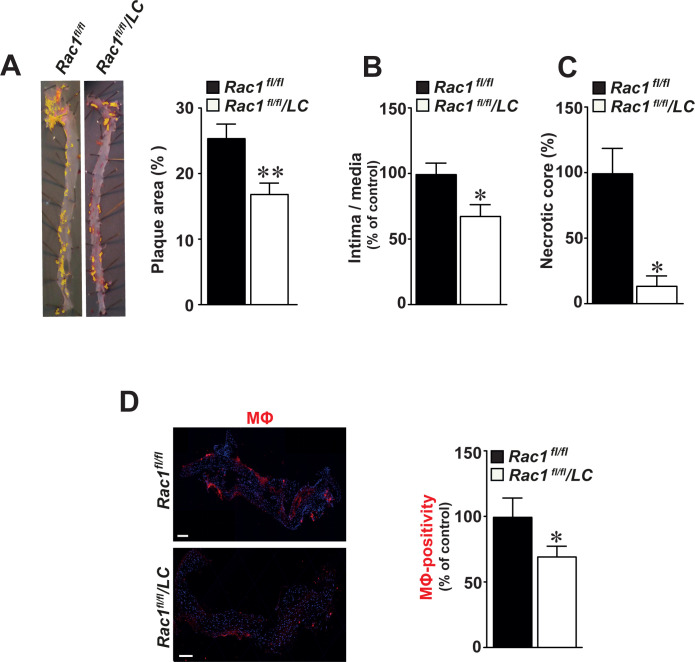
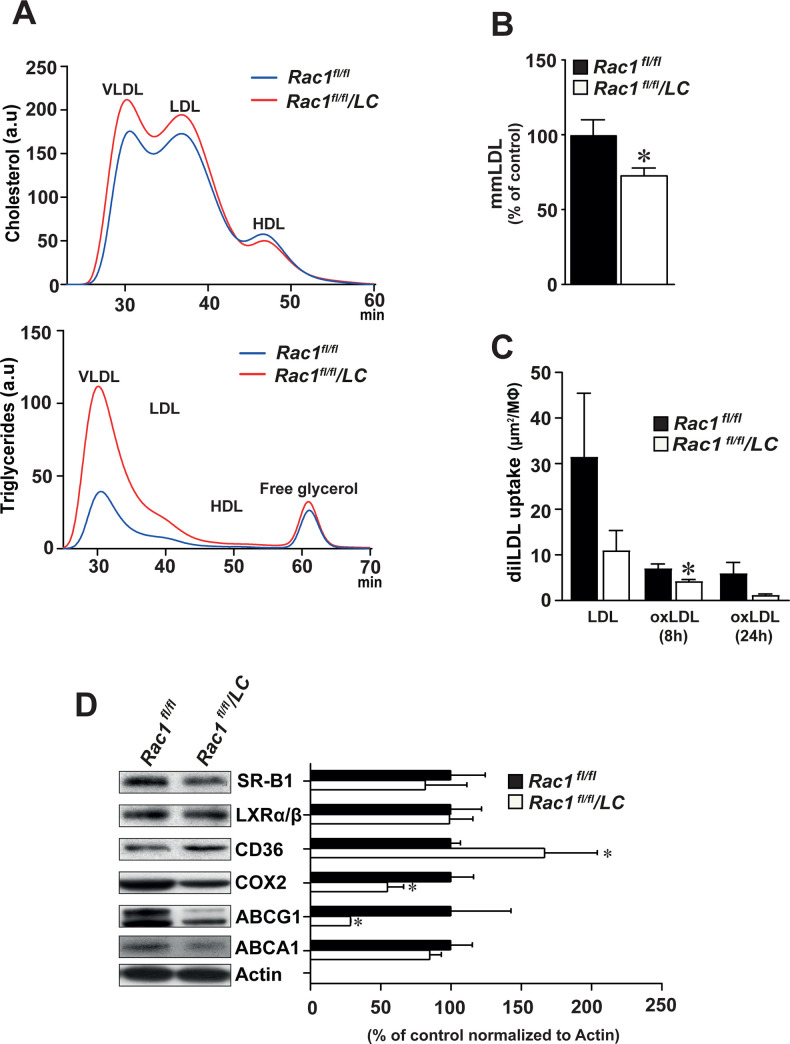
The Rho GTPase RAC1 is an important regulator of cytoskeletal dynamics, but the role of macrophage-specific RAC1 has not been explored during atherogenesis. We analyzed RAC1 expression in human carotid atherosclerotic plaques using immunofluorescence and found higher macrophage RAC1 expression in advanced plaques compared with intermediate human atherosclerotic plaques. We then produced mice with Rac1-deficient macrophages by breeding conditional floxed Rac1 mice (Rac1fl/fl) with mice expressing Cre from the macrophage-specific lysosome M promoter (LC). Atherosclerosis was studied in vivo by infecting Rac1fl/fl and Rac1fl/fl/LC mice with AdPCSK9 (adenoviral vector overexpressing proprotein convertase subtilisin/kexin type 9). Rac1fl/fl/LC macrophages secreted lower levels of IL-6 and TNF-α and exhibited reduced foam cell formation and lipid uptake. The deficiency of Rac1 in macrophages reduced the size of aortic atherosclerotic plaques in AdPCSK9-infected Rac1fl/fl/LC mice. Compare with controls, intima/media ratios, the size of necrotic cores, and numbers of CD68-positive macrophages in atherosclerotic plaques were reduced in Rac1-deficient mice. Moreover, we found that RAC1 interacts with actin-binding filamin A. Macrophages expressed increased RAC1 levels in advanced human atherosclerosis. Genetic inactivation of RAC1 impaired macrophage function and reduced atherosclerosis in mice, suggesting that drugs targeting RAC1 may be useful in the treatment of atherosclerosis.
Rho GTPase RAC1 是细胞骨架动态的重要调节因子,但巨噬细胞特异性 Rac1 在动脉粥样硬化形成过程中的作用尚未得到探索。我们使用免疫荧光法分析了人颈动脉粥样硬化斑块中的 Rac1 表达,发现与中间阶段的人动脉粥样硬化斑块相比,晚期斑块中的巨噬细胞 Rac1 表达更高。然后,我们通过将条件性 floxed Rac1 小鼠(Rac1fl/fl)与表达 Cre 的溶酶体 M 启动子(LC)特异性巨噬细胞小鼠进行繁殖,产生了巨噬细胞特异性 Rac1 缺失的小鼠(Rac1fl/fl/LC)。通过感染 Rac1fl/fl 和 Rac1fl/fl/LC 小鼠的 AdPCSK9(过表达蛋白转化酶枯草溶菌素/柯萨奇蛋白酶 9 的腺病毒载体),在体内研究了动脉粥样硬化。Rac1fl/fl/LC 巨噬细胞分泌的白细胞介素 6 和肿瘤坏死因子-α 水平较低,泡沫细胞形成和脂质摄取减少。巨噬细胞中 Rac1 的缺失减少了 AdPCSK9 感染的 Rac1fl/fl/LC 小鼠主动脉粥样硬化斑块的大小。与对照组相比,Rac1 缺失小鼠的动脉粥样硬化斑块中内膜/中膜比值、坏死核心大小和 CD68 阳性巨噬细胞数量减少。此外,我们发现 RAC1 与肌动蛋白结合蛋白细丝蛋白 A 相互作用。在人动脉粥样硬化的晚期,巨噬细胞表达更高水平的 Rac1。RAC1 的基因失活损害了巨噬细胞的功能并减少了小鼠的动脉粥样硬化,这表明靶向 RAC1 的药物可能对动脉粥样硬化的治疗有用。