Clinical Nutrition, Geneva University Hospital, 1211 Geneva, Switzerland.
Department of Rehabilitation and Geriatrics, Geneva University Hospital, 1211 Geneva, Switzerland.
Nutrients. 2020 Sep 15;12(9):2820. doi: 10.3390/nu12092820.
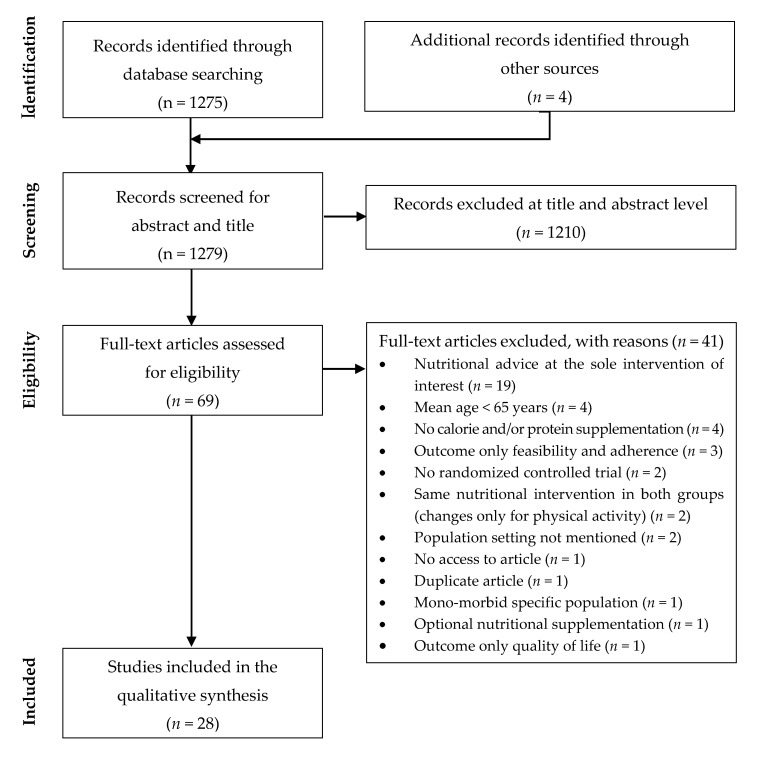
Aging is a global public health concern. From the age of 50, muscle mass, muscle strength and physical performance tend to decline. Sarcopenia and frailty are frequent in community-dwelling older adults and are associated with negative outcomes such as physical disability and mortality. Therefore, the identification of therapeutic strategies to prevent and fight sarcopenia and frailty is of great interest. This systematic review aims to summarize the impact of nutritional interventions alone or combined with other treatment(s) in older community-dwelling adults on (1) the three indicators of sarcopenia, i.e., muscle mass, muscle strength and physical performance; and (2) the hospitalization and readmission rates. The literature search was performed on Medline and included studies published between January 2010 and June 2020. We included randomized controlled trials of nutritional intervention alone or combined with other treatment(s) in community-living subjects aged 65 or older. In total, 28 articles were retained in the final analysis. This systematic review highlights the importance of a multimodal approach, including at least a combined nutritional and exercise intervention, to improve muscle mass, muscle strength and physical performance, in community-dwelling older adults but especially in frail and sarcopenic subjects. Regarding hospitalization and readmission rate, data were limited and inconclusive. Future studies should continue to investigate the effects of such interventions in this population.
衰老是一个全球性的公共卫生问题。从 50 岁开始,肌肉质量、肌肉力量和身体机能往往会下降。社区居住的老年人中经常出现肌少症和衰弱症,与身体残疾和死亡等不良后果相关。因此,确定预防和治疗肌少症和衰弱症的治疗策略具有重要意义。本系统评价旨在总结单独或联合其他治疗方法的营养干预对(1)肌肉质量、肌肉力量和身体机能这三个肌少症指标;(2)住院和再入院率的影响。文献检索在 Medline 上进行,包括 2010 年 1 月至 2020 年 6 月期间发表的研究。我们纳入了针对 65 岁及以上社区居住者的单独营养干预或联合其他治疗的随机对照试验。最终分析共保留了 28 篇文章。本系统评价强调了多模式方法的重要性,包括至少联合营养和运动干预,以改善社区居住的老年人的肌肉质量、肌肉力量和身体机能,但在衰弱和肌少症患者中尤为重要。关于住院和再入院率,数据有限且不明确。未来的研究应继续在这一人群中调查此类干预措施的效果。