Indian Council of Medical Research - National Institute of Research in Tribal Health (ICMR-NIRTH), Jabalpur, Madhya Pradesh, India.
Malaria Elimination Demonstration Project, Mandla, Madhya Pradesh, India.
Malar J. 2020 Sep 17;19(1):339. doi: 10.1186/s12936-020-03402-6.
Many malaria endemic countries are heading towards malaria elimination through the use of case management and vector control strategies, which employ surveillance, improving access to early diagnosis, prompt treatment., and integrated vector control measures. There is a consensus that elimination of malaria is feasible when rapid detection and prompt treatment is combined with mosquito-human contact interruption in an efficient and sustainable manner at community levels. This paper describes results of an integrated case management and vector control strategy for reducing malaria cases in 1233 villages over 3 years in district Mandla, Madhya Pradesh, India.
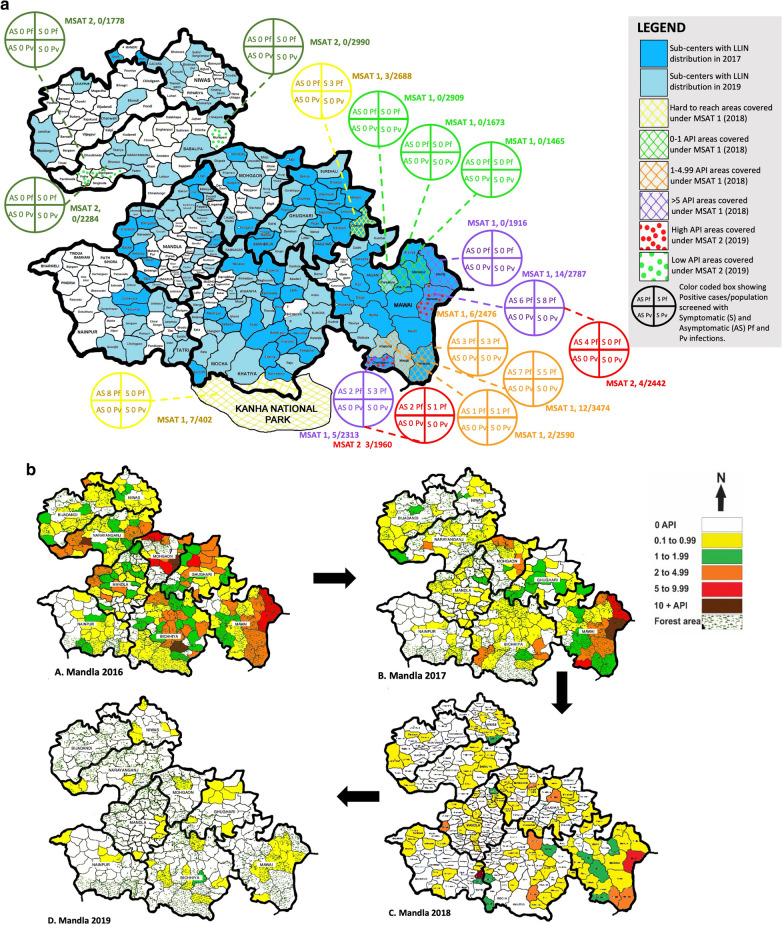
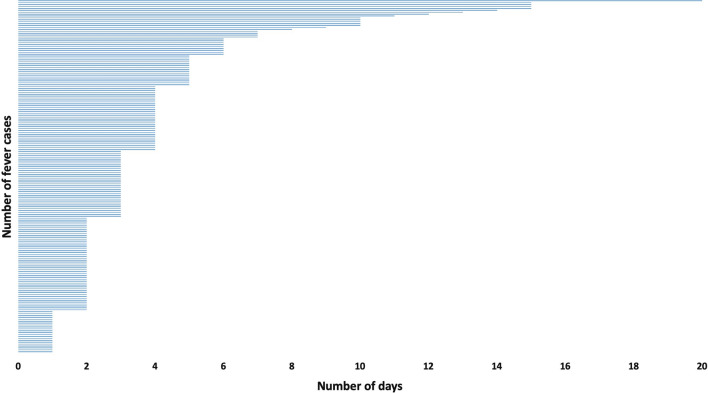
The project enrolled the entire population (1,143,126) of Mandla district for fever surveillance followed by testing of febrile cases and treatment of positive subjects using T4 strategy, which is Track (by fever), Test (by RDTs), Treat (by ACT) and Track (for completion of treatment). In addition to the active and passive surveillance for detection and treatment of febrile cases, the project conducted mass screening and treatment to clear the asymptomatic reservoirs of infection. Febrile cases were also tested in the out-patient department of the District Hospital from June 2018 to September, 2018 and in a community-based medical camp from November 7 to 14, 2019. The project also used vector control measures for interrupting human-mosquito contact, and information, education and communication (IEC) campaigns to increase demand for malaria services at community level.
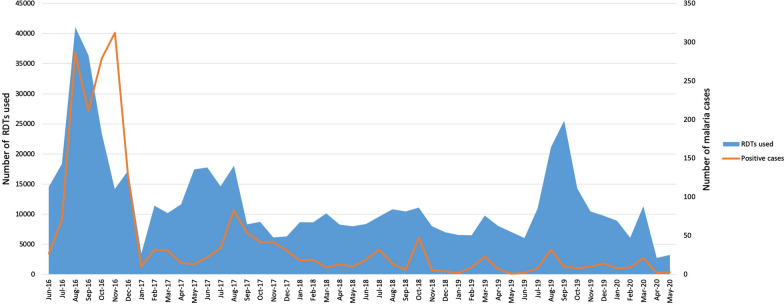
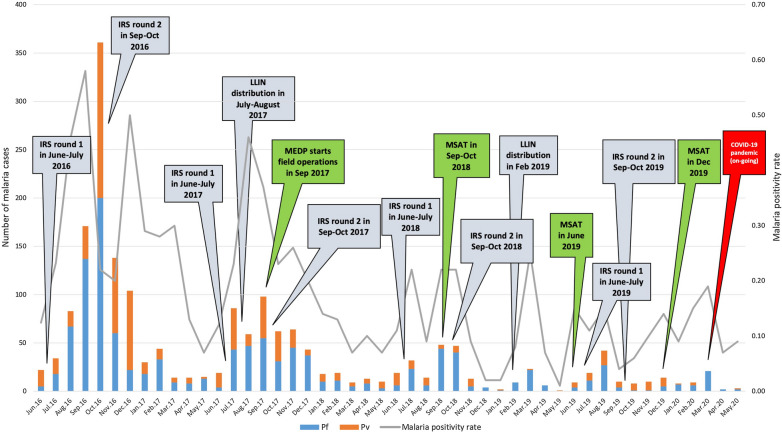
This project has revealed about 91% reduction of indigenous cases of malaria during the period from June 2017 to May 2020, through case management and vector control strategies. A total 357,143 febrile cases were screened, out of which 0.19% were found positive for the presence of malaria parasites, with Plasmodium falciparum and Plasmodium vivax ratio of 62:38. The prevalence of malaria was higher in individuals > 15 years of age (69% cases). The positivity rate was 0.33% in 2017-18, 0.13% in 2018-19, and 0.06% in 2019-20. In all of the 3 years of the project, the peak transmission correlated with rains. Mass screening revealed 0.18% positivity in Sep-Oct 2018, followed by 0.06% in June 2019, and 0.03% in December 2019, and these were mostly asymptomatic cases in the community. Imported cases into the district were mostly contributed by the distant state of Telangana (51.13%). Fever patients tested for malaria parasites in the District Hospital and medical camp revealed zero cases.
Using the current intervention and prevention tools along with optimum utilization of human resources, a 91% reduction in indigenous cases of malaria was seen in the district in 3 years. The reduction was similar in the three high prevalence blocks of the district. These results reveal that malaria elimination is achievable in India within a stipulated time frame. The reduction of malaria at the community level was further validated when zero malaria cases were diagnosed during hospital and community-based studies in Mandla. Prompt detection and treatment of imported/migratory cases may have prevented outbreaks in the district. This project has demonstrated that field programmes backed by adequate technical, management, operational, and financial controls with robust monitoring are needed for achieving malaria elimination.
许多疟疾流行国家正在通过病例管理和病媒控制策略来消除疟疾,这些策略采用监测、改善早期诊断的获取、及时治疗、以及综合病媒控制措施。人们普遍认为,当快速检测和及时治疗与在社区层面以高效和可持续的方式结合起来,中断蚊子与人的接触时,消除疟疾是可行的。本文描述了在印度中央邦 Mandla 区 3 年内,通过综合病例管理和病媒控制策略来减少 1233 个村庄疟疾病例的结果。
该项目对 Mandla 区的全部人口(1,143,126 人)进行发热监测,随后对发热病例进行检测,并使用 T4 策略对阳性病例进行治疗,T4 策略是通过发热进行追踪、通过 RDTs 进行检测、通过 ACT 进行治疗、以及通过完成治疗进行追踪。除了主动和被动监测以发现和治疗发热病例外,该项目还进行了大规模筛查和治疗,以清除无症状感染的储存库。发热病例还在 2018 年 6 月至 9 月期间在区医院的门诊部和 2019 年 11 月 7 日至 14 日的社区医疗营进行了检测。该项目还使用病媒控制措施来中断人与蚊子的接触,并开展信息、教育和宣传(IEC)活动,以增加社区对疟疾服务的需求。
通过病例管理和病媒控制策略,该项目在 2017 年 6 月至 2020 年 5 月期间发现疟疾病例减少了约 91%。共筛查了 357,143 例发热病例,其中 0.19%的病例被发现疟原虫呈阳性,疟原虫种类中恶性疟原虫和间日疟原虫的比例为 62:38。疟疾的流行率在年龄大于 15 岁的人群中较高(69%的病例)。2017-18 年的阳性率为 0.33%,2018-19 年为 0.13%,2019-20 年为 0.06%。在项目的 3 年中,传播高峰都与降雨有关。大规模筛查显示,2018 年 9 月至 10 月的阳性率为 0.18%,随后在 2019 年 6 月为 0.06%,2019 年 12 月为 0.03%,这些病例大多为社区中的无症状病例。输入到该地区的病例主要来自遥远的 Telangana 邦(51.13%)。在区医院和医疗营检测疟原虫的发热患者没有发现疟疾病例。
通过使用当前的干预和预防工具,并优化人力资源的利用,该地区在 3 年内疟疾病例减少了 91%。在该地区三个高流行率的街区,这种减少是相似的。这些结果表明,在规定的时间框架内,印度可以实现消除疟疾。在 Mandla 进行的医院和社区研究中没有发现疟疾病例,进一步证实了社区层面的疟疾减少。及时发现和治疗输入/迁移病例可能防止了该地区的爆发。本项目表明,需要有充分的技术、管理、运营和财务控制以及强大的监测的现场项目,以实现消除疟疾。