Department of Urology, Ludwig-Maximilians University, Munich, Germany.
Kidney Cancer Research Alliance (KCCure), Alexandria, VA, USA.
Eur Urol Focus. 2021 Nov;7(6):1355-1362. doi: 10.1016/j.euf.2020.09.002. Epub 2020 Sep 11.
While providers are challenged with treatment decisions during the coronavirus disease 2019 (COVID-19) crisis, decision making ultimately falls in the hands of patients-at present, their perspective is poorly understood.
To ascertain renal cell carcinoma (RCC) patients' perspectives on COVID-19 and understand the associated implications for treatment.
DESIGN, SETTING, AND PARTICIPANTS: An online survey of RCC patients was conducted from March 22 to March 25, 2020, disseminated through social media and patient networking platforms. The survey comprised 45 items, including baseline demographic, clinicopathologic, and treatment-related information. Patients were additionally queried regarding their anxiety level related to COVID-19 and associated implications for their cancer diagnosis.
An online survey study.
Descriptive statistics with graphical outputs were used to characterize survey results.
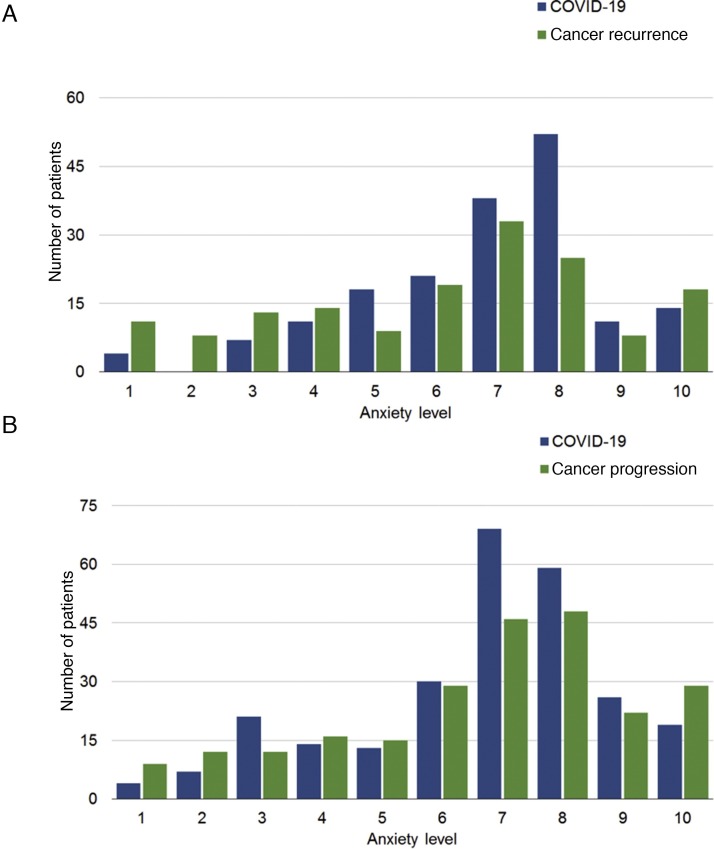
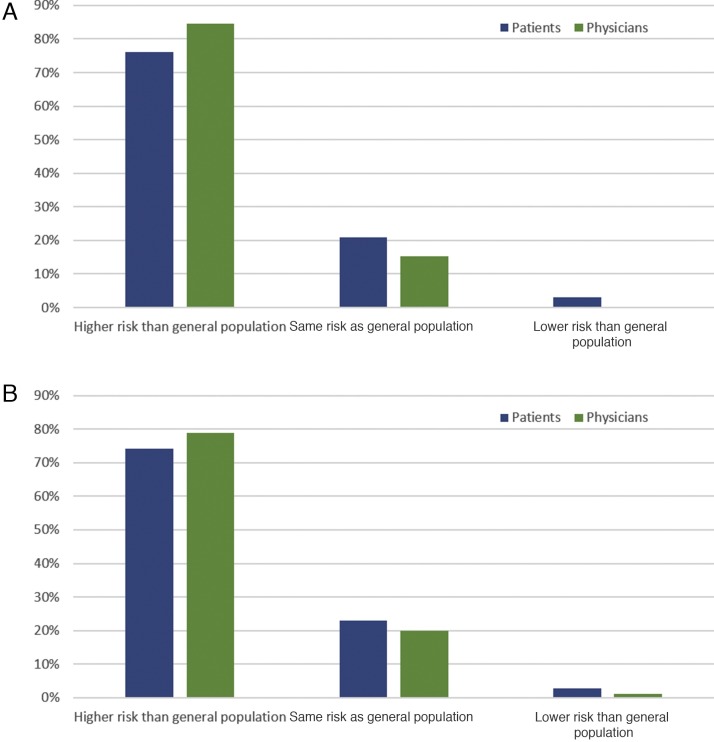
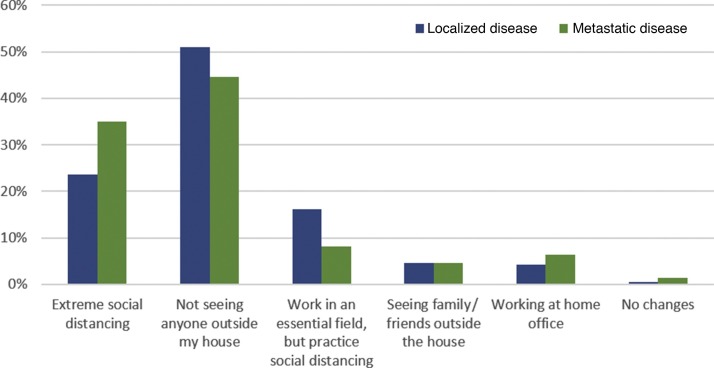
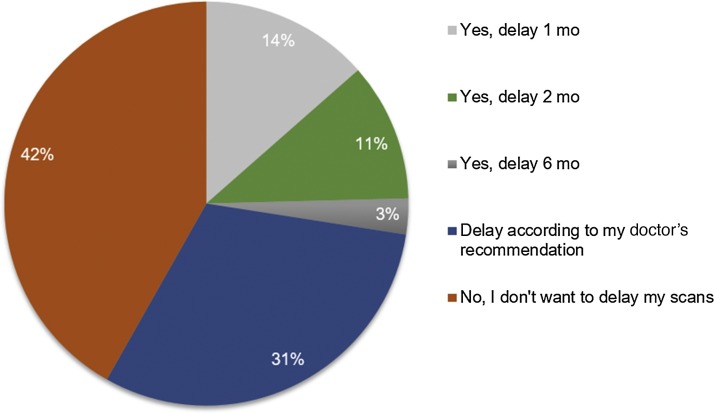
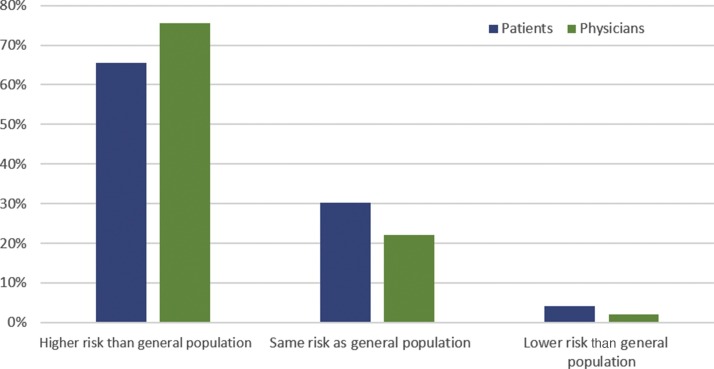
A total of 539 patients (male:female 39%:58%) from 14 countries responded. Of them, 71% felt that their risk of COVID-19 infection was higher than the general population, and 27% contacted their physician to establish this. Among patients with localized disease (40%), most (42%) had scheduled surveillance scans within 6 wk-65% were unwilling to delay scans. Among patients with metastatic disease, 76% were receiving active therapy. While most patients preferred not to defer therapy (51%), patients receiving immune therapy regimens were less amenable to deferring therapy than those receiving targeted treatment (20% vs 47%).
Despite high levels of anxiety surrounding COVID-19, many patients with RCC were inclined to adhere to existing schedules of surveillance (localized disease) and systemic treatment (metastatic disease).
The coronavirus disease 2019 (COVID-19) pandemic has prompted many doctors to develop different treatment strategies for cancer and other chronic conditions. Given the importance of the patient voice in these strategies, we conducted a survey of patients with kidney cancer to determine their treatment preferences. Our survey highlighted that most patients prefer to continue their current strategies of kidney cancer treatment and monitoring.
在新冠病毒病 2019(COVID-19)危机期间,医疗服务提供者面临着治疗决策的挑战,但最终的决策权掌握在患者手中——目前,人们对患者的观点知之甚少。
确定肾细胞癌(RCC)患者对 COVID-19 的看法,并了解其对治疗的影响。
设计、地点和参与者:2020 年 3 月 22 日至 3 月 25 日,通过社交媒体和患者网络平台进行了一项针对 RCC 患者的在线调查。该调查包括 45 个项目,包括基线人口统计学、临床病理学和治疗相关信息。还询问了患者对 COVID-19 的焦虑程度以及对癌症诊断的影响。
在线调查研究。
使用描述性统计和图形输出来描述调查结果。
共有来自 14 个国家的 539 名患者(男性:女性 39%:58%)做出了回应。其中,71%的患者认为自己感染 COVID-19 的风险高于一般人群,27%的患者联系医生进行了确认。在局部疾病患者(40%)中,大多数(42%)计划在 6 周内进行监测扫描——65%的患者不愿意推迟扫描。在转移性疾病患者中,76%的患者正在接受积极治疗。虽然大多数患者(51%)更愿意不推迟治疗,但接受免疫治疗方案的患者比接受靶向治疗的患者更不愿意推迟治疗(20%比 47%)。
尽管 COVID-19 引发了高度焦虑,但许多 RCC 患者倾向于坚持现有的监测(局部疾病)和系统治疗(转移性疾病)计划。
新冠病毒病 2019(COVID-19)大流行促使许多医生为癌症和其他慢性疾病制定了不同的治疗策略。鉴于患者在这些策略中的意见至关重要,我们对肾癌患者进行了一项调查,以确定他们的治疗偏好。我们的调查结果表明,大多数患者更愿意继续目前的肾癌治疗和监测策略。