Zhang Hao, Yin Jianhao, Wang Xin, Yuan Dawei, Zhu Kun, Li Kang, Xu Gang, Dang Chengxue, Jia Rui, Zhang Yong
Department of Surgical Oncology, The First Affiliated Hospital of Xi'an Jiaotong University, Xi'an, Shaanxi 710061, People's Republic of China.
Department of General Surgery, The Second Hospital of Weinan, Weinan, Shaanxi 714000, People's Republic of China.
Cancer Manag Res. 2021 Jan 13;13:351-358. doi: 10.2147/CMAR.S274525. eCollection 2021.
This cross-sectional study aimed to describe the responses of cancer patients' indifferent chemotherapy cycles to the unstructured treatment interruption during the COVID-19 pandemic in China.
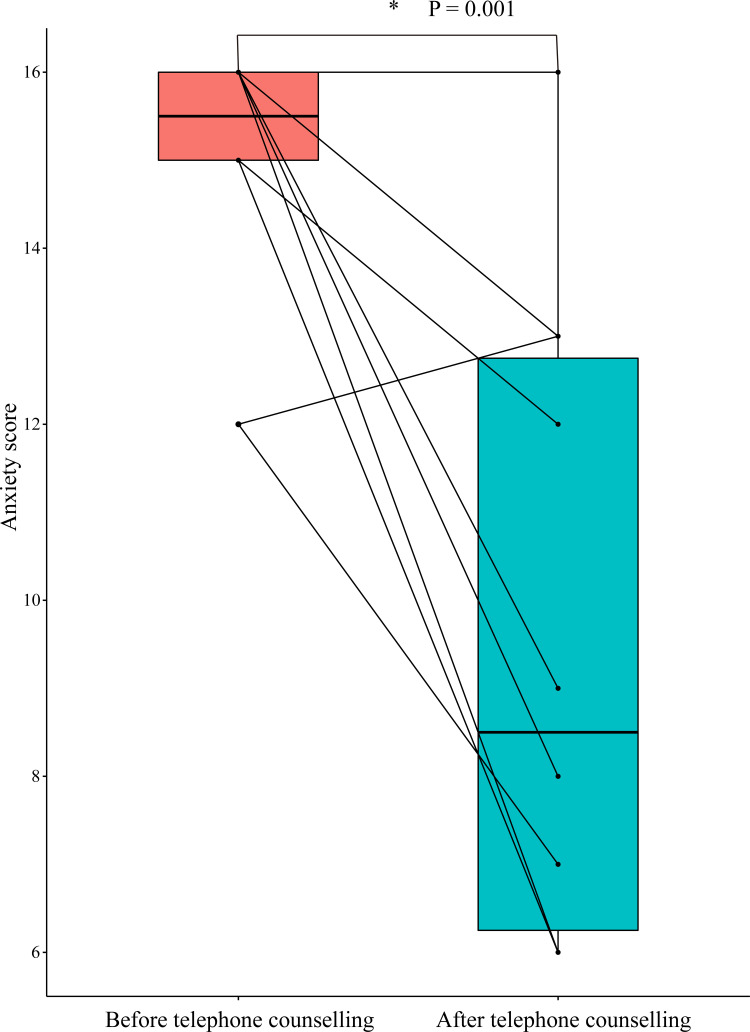
Data from 156 adult patients with common solid tumors undergoing chemotherapy or ready to begin chemotherapy after surgery before the COVID-19 outbreak were analyzed in the study. Patients' responses to the chemotherapy interruption and their anxiety were assessed.
Overall, 141 (90%) patients completed the study, and 115 (81.6%) accepted a switch from their previous intravenous chemotherapy to oral chemotherapy. Of these, 29 (65.9%) patients with lung cancer, 25 (86.2%) with gastric cancer, 33 (89.2%) with colorectal cancer and 28 (90.3%) with breast cancer switched from intravenous to oral treatment, heeding their doctor's advice. Of the participants, 85 (60.3%) patients reported that they had taken at least one kind of complementary and alternative medicine (CAM). The hospital anxiety and depression scale (HADS) scores increased in patients with advanced refractory cancer compared with the scores of adjuvant chemotherapy patients ( < 0.05). The prevalence of anxiety was high in cancer patients aged 60 years or older. Furthermore, anxiety was associated with advanced incurable cancer (< 0.05), and this finding remained after adjusting for chronic pain. In addition, there were significantly increased scores of anxiety in patients with lung cancer (<0 0.05).
Our study shows that most cancer patients remained relatively stable and had switched from intravenous to oral treatment at home. Among them, an increasing number of patients began to seek CAM as a complementary therapeutic approach. Patients with advanced refractory cancer were more likely to experience anxiety, and lung cancer patients should receive special attention.
本横断面研究旨在描述中国新冠疫情期间癌症患者在非结构化治疗中断情况下对化疗周期的反应。
本研究分析了156例在新冠疫情爆发前接受化疗或术后准备开始化疗的成年常见实体瘤患者的数据。评估了患者对化疗中断的反应及其焦虑情况。
总体而言,141例(90%)患者完成了研究,115例(81.6%)接受了从之前的静脉化疗转为口服化疗。其中,29例(65.9%)肺癌患者、25例(86.2%)胃癌患者、33例(89.2%)结直肠癌患者和28例(90.3%)乳腺癌患者听从医生建议从静脉治疗转为口服治疗。在参与者中,85例(60.3%)患者报告至少使用过一种补充和替代医学(CAM)。与辅助化疗患者相比,晚期难治性癌症患者的医院焦虑抑郁量表(HADS)评分升高(<0.05)。60岁及以上癌症患者的焦虑患病率较高。此外,焦虑与晚期不可治愈癌症相关(<0.05),在调整慢性疼痛因素后这一发现仍然存在。此外,肺癌患者的焦虑评分显著升高(<0.05)。
我们的研究表明,大多数癌症患者保持相对稳定,并在家中从静脉治疗转为口服治疗。其中,越来越多的患者开始寻求补充和替代医学作为辅助治疗方法。晚期难治性癌症患者更容易出现焦虑,肺癌患者应受到特别关注。