Li Yuanyuan, Du Lingbin, Wang Youqing, Gu Yuxuan, Zhen Xuemei, Hu Xiaoqian, Sun Xueshan, Dong Hengjin
Center for Health Policy Studies, School of Public Health, Zhejiang University School of Medicine, 866 Yuhangtang Rd., 310058 Hangzhou, Zhejiang China.
Department of Cancer Prevention, Institute of Cancer Research and Basic Medical Science of Chinese Academy of Sciences, Cancer Hospital of University of Chinese Academy of Sciences, Zhejiang Cancer Hospital, 38 Banshan Guangqiao Rd., 310022 Hangzhou, Zhejiang China.
Cost Eff Resour Alloc. 2020 Sep 10;18:33. doi: 10.1186/s12962-020-00230-y. eCollection 2020.
This study aimed to examine the cost-effectiveness of one-time standard endoscopic screening with Lugol's iodine staining for esophageal cancer (EC) in China.
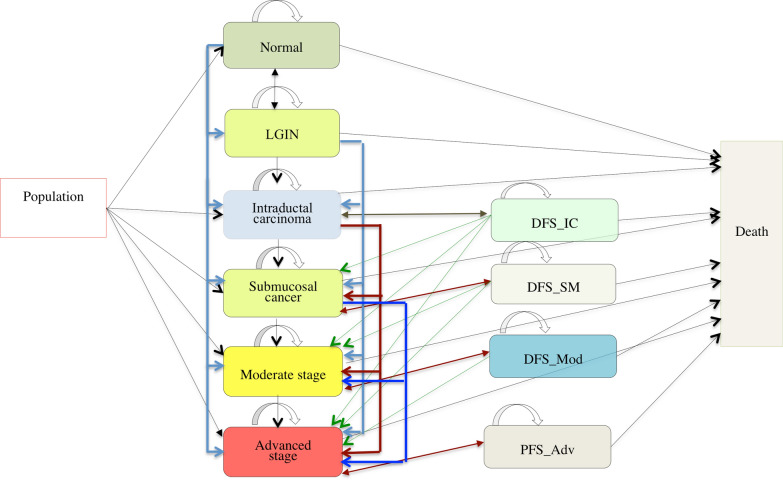
A Markov decision analysis model with eleven states was built. Individuals aged 40 to 69 years were classified into six age groups in five-year intervals. Three different strategies were adopted for each cohort: (1) no screening; (2) one-time endoscopic screening with Lugol's iodine staining with an annual follow-up for low-grade intraepithelial neoplasia (LGIN); and (3) one-time endoscopic screening with Lugol's iodine staining without follow-up. Quality-adjusted life-years (QALYs) indicated the effectiveness of the model. The incremental cost-effectiveness ratio (ICER) was used as the evaluation indicator. Sensitivity analysis was performed to assess the robustness of the model.
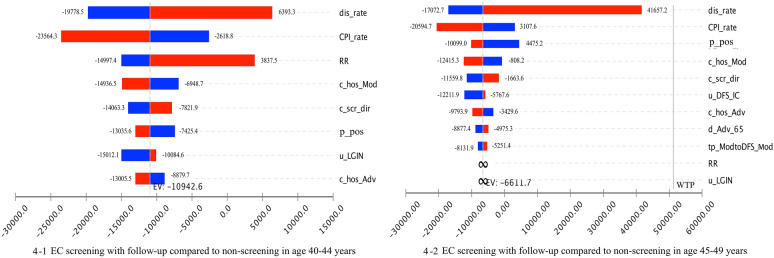
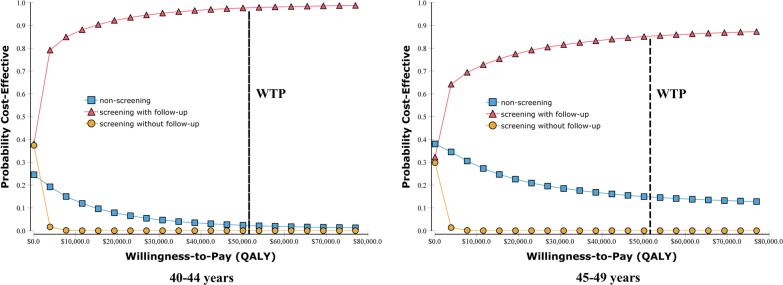
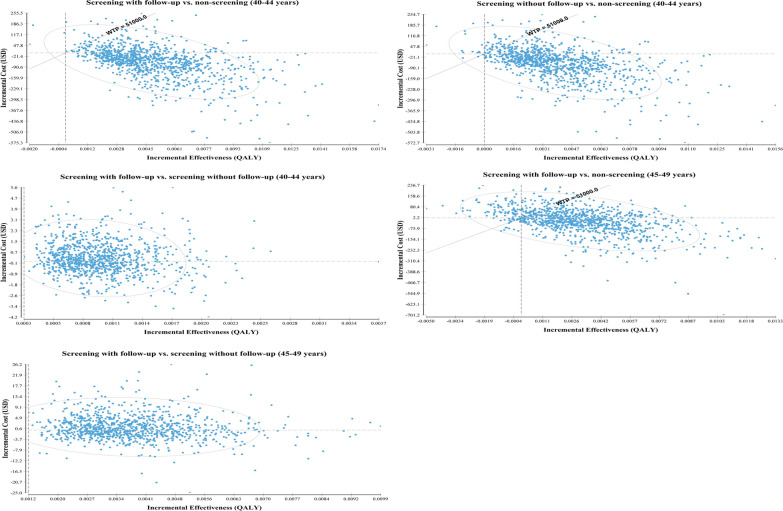
One-time screening with follow-up was the undominated strategy for individuals aged 40-44 and 45-49 years, which saved USD 10,942.57 and USD 6611.73 per QALY gained . For those aged 50-69 years, the nonscreening scenarios were undominated. One-time screening without follow-up was the extended dominated strategy. Compared to screening strategies without follow-up, all the screening strategies with follow-up were more cost-effective, with the ICER increasing from 299.57 USD/QALY for individuals aged 40-44 years to 1617.72 USD/QALY for individuals aged 65-69 years. Probabilistic sensitivity analysis (PSA) supported the results of the base case analysis.
One-time EC screening with follow-up targeting individuals aged 40-49 years was the most cost-effective strategy.
本研究旨在探讨在中国一次性采用卢戈氏碘染色进行标准内镜筛查食管癌(EC)的成本效益。
构建了一个具有11个状态的马尔可夫决策分析模型。将40至69岁的个体按五年间隔分为六个年龄组。每个队列采用三种不同策略:(1)不筛查;(2)一次性采用卢戈氏碘染色进行内镜筛查,并对低级别上皮内瘤变(LGIN)进行年度随访;(3)一次性采用卢戈氏碘染色进行内镜筛查,不进行随访。质量调整生命年(QALYs)表明模型的有效性。增量成本效益比(ICER)用作评估指标。进行敏感性分析以评估模型的稳健性。
对于40 - 44岁和45 - 49岁的个体,一次性筛查并随访是优势策略,每获得一个QALY分别节省10,942.57美元和6611.73美元。对于50 - 69岁的个体,不筛查方案是优势方案。一次性筛查不随访是扩展劣势策略。与不随访的筛查策略相比,所有随访的筛查策略更具成本效益,ICER从40 - 44岁个体的299.57美元/QALY增加到65 - 69岁个体的1617.72美元/QALY。概率敏感性分析(PSA)支持了基础病例分析的结果。
针对40 - 49岁个体进行一次性食管癌筛查并随访是最具成本效益的策略。