Kawasaki Yuya, Li Yun-Shan, Ootsuyama Yuko, Nagata Kazuhiko, Yamato Hiroshi, Kawai Kazuaki
Department of Environmental Oncology, Institute of Industrial Ecological Sciences, University of Occupational and Environmental Health, Japan, 1-1 Iseigaoka, Yahatanishi-ku, Kitakyushu, Fukuoka, 807-8555 Japan.
Nagata Medical Clinic, 4-3-1 Takasu Higashi, Wakamatsu-ku, Kitakyushu, Fukuoka, 808-0144 Japan.
Genes Environ. 2020 Sep 11;42:26. doi: 10.1186/s41021-020-00165-z. eCollection 2020.
Urinary nicotine and cotinine levels are often measured as biomarkers for tobacco smoke exposure. However, these biomarkers are not appropriate to evaluate the effects of quitting smoking for several days, because of their short half-lives. In this study, we focused on the changes in the urinary 4-(methylnitrosamino)-1-(3-pyridyl)-1-butanol (NNAL) levels of 55 patients in a smoking cessation program, because of the long half-life. At the same time, urinary 7-methylguanine (mGua) and 8-hydroxy-2'-deoxyguanosine (8-OHdG), as DNA damage markers of cigarette smoking, were also measured.
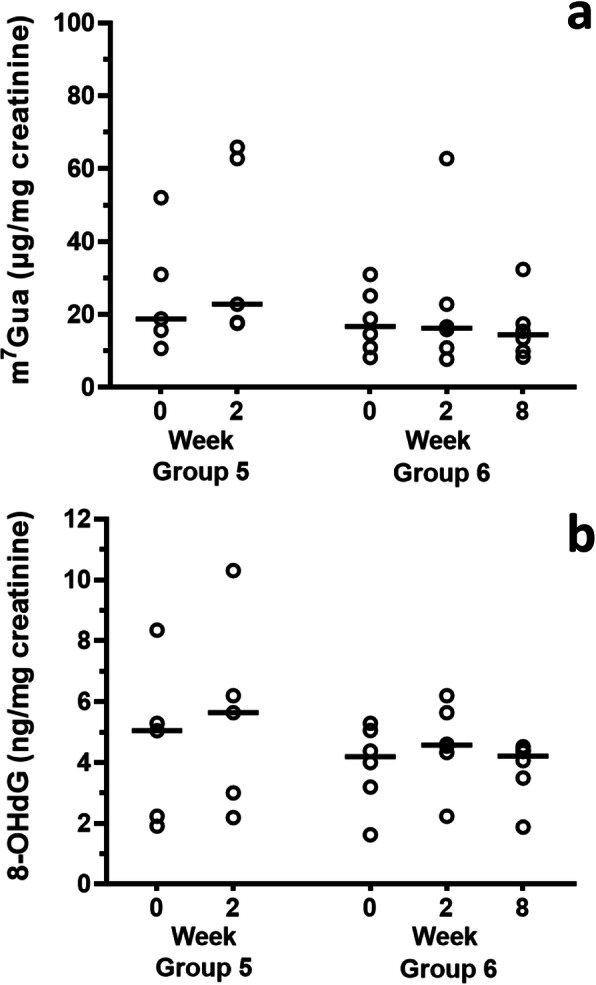
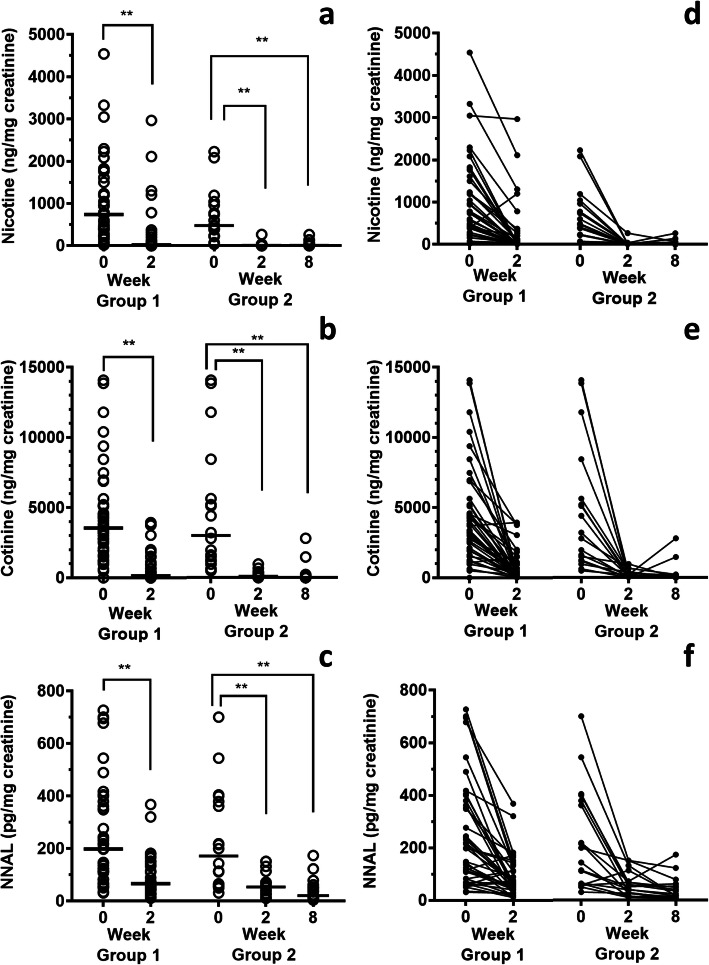
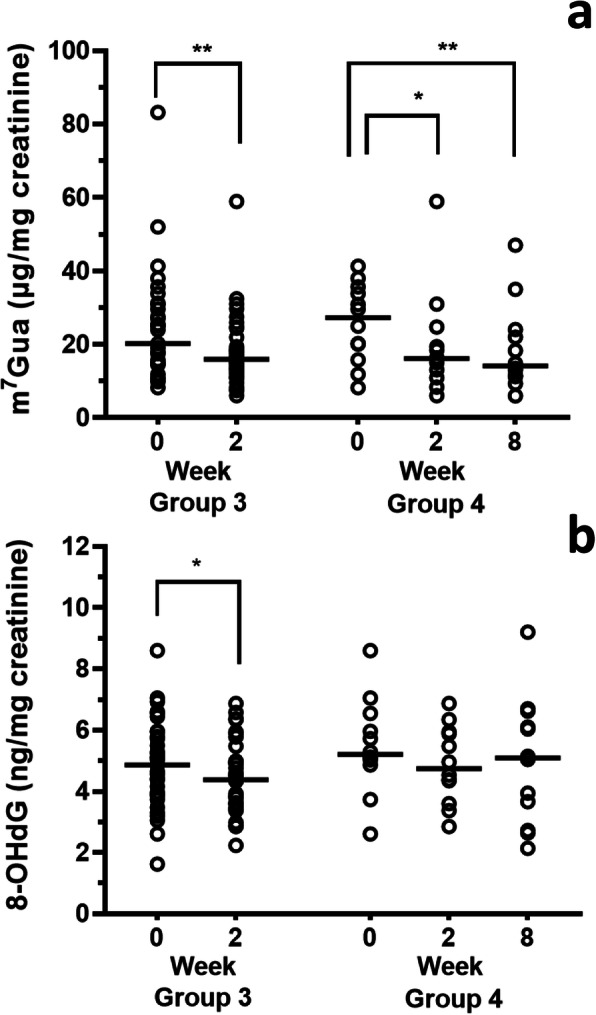
In the subjects who completed the quit-smoking program (18 subjects out of 55), the urinary nicotine and cotinine levels decreased to 1.7 and 0.2% at 8 weeks after the first visit to the clinic. By contrast, the NNAL levels decreased to 12.3% at 8 weeks after quitting smoking. During the same period, the urinary mGua levels significantly decreased, from 27.32 μg/mg creatinine to 14.17 μg/mg creatinine by the elimination of subjects who showed increased levels of NNAL during the smoking cessation program. The 8-OHdG levels were also reduced within the same period, but were not significantly different. From the all data analysis, the urinary levels of cotinine and NNAL positively correlated with the level of mGua.
NNAL may be an appropriate exposure marker for evaluating the smoking status of patients in a smoking cessation program. The urinary cotinine and NNAL levels positively correlated with the mGua levels.
尿中尼古丁和可替宁水平常作为烟草烟雾暴露的生物标志物进行测量。然而,由于这些生物标志物半衰期较短,不适用于评估戒烟数天的效果。在本研究中,我们关注了55名戒烟项目患者尿中4-(甲基亚硝胺基)-1-(3-吡啶基)-1-丁醇(NNAL)水平的变化,因为其半衰期较长。同时,还测量了作为吸烟DNA损伤标志物的尿7-甲基鸟嘌呤(mGua)和8-羟基-2'-脱氧鸟苷(8-OHdG)。
在完成戒烟项目的受试者(55名中的18名)中,首次就诊后8周时尿尼古丁和可替宁水平分别降至1.7%和0.2%。相比之下,戒烟后8周时NNAL水平降至12.3%。在此期间,尿mGua水平显著下降,通过排除戒烟项目期间NNAL水平升高的受试者,从27.32μg/mg肌酐降至14.17μg/mg肌酐。同期8-OHdG水平也有所降低,但差异不显著。从所有数据分析来看,尿中可替宁和NNAL水平与mGua水平呈正相关。
NNAL可能是评估戒烟项目患者吸烟状况的合适暴露标志物。尿可替宁和NNAL水平与mGua水平呈正相关。