Biosciences Laboratory, Istituto Scientifico Romagnolo per lo Studio e la Cura dei Tumori (IRST) IRCCS, I‑47014 Meldola, Italy.
Department of Experimental, Diagnostic and Specialty Medicine, University of Bologna and Institute of Hematology 'L. e A. Seràgnoli', I‑40138 Bologna, Italy.
Oncol Rep. 2020 Oct;44(4):1561-1573. doi: 10.3892/or.2020.7730. Epub 2020 Aug 11.
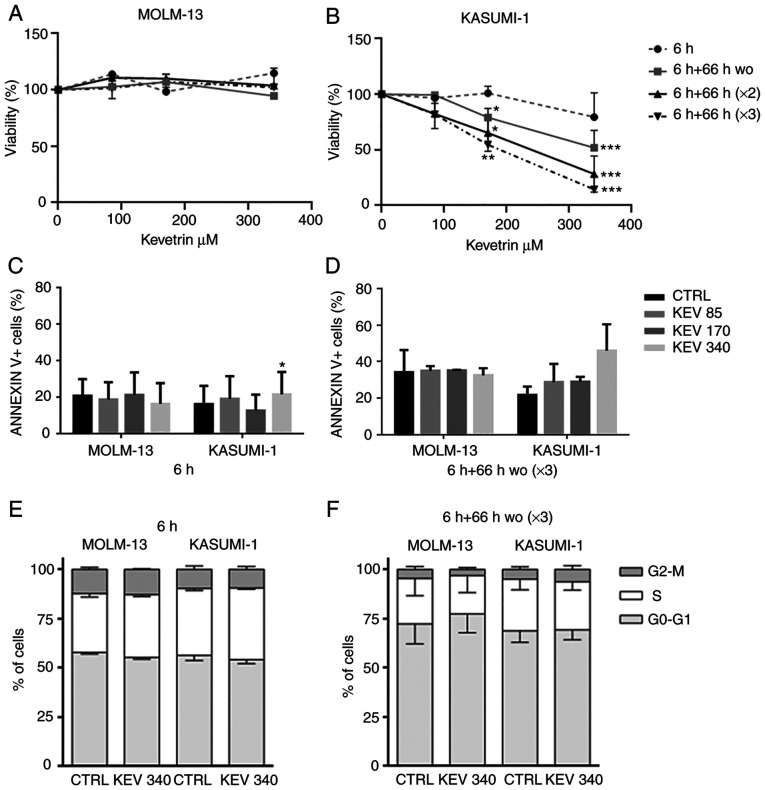
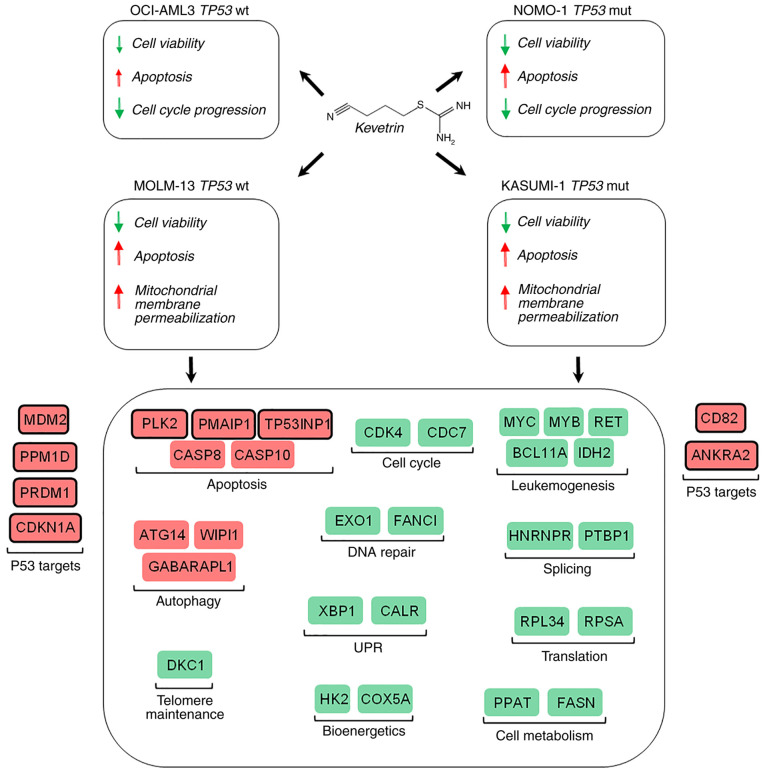
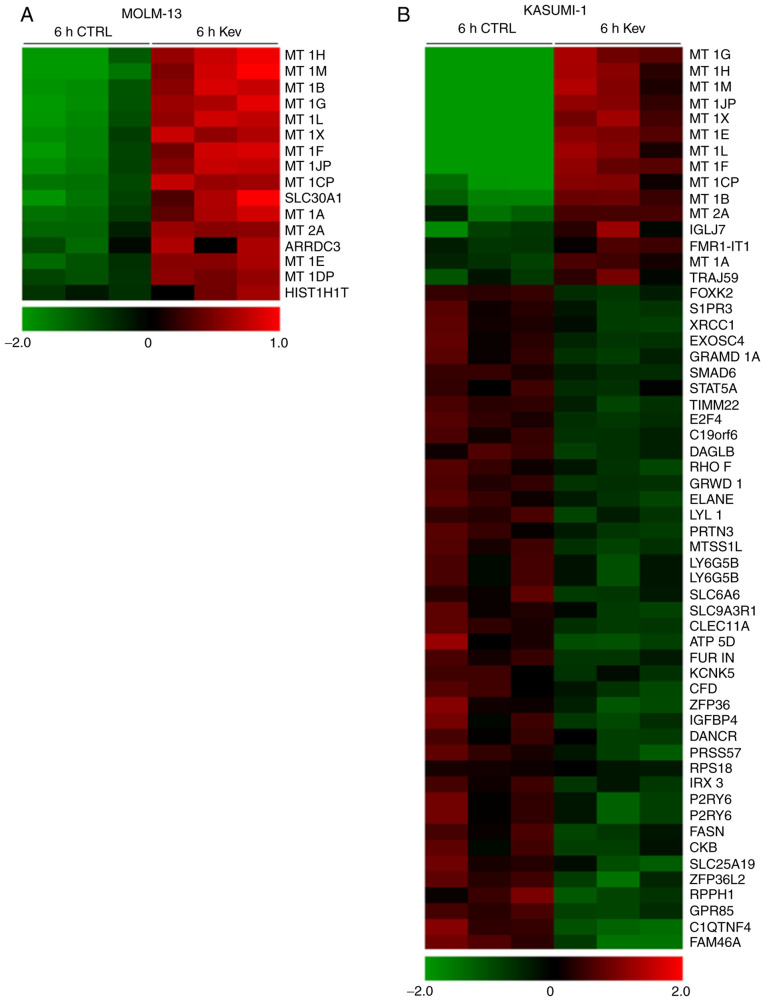
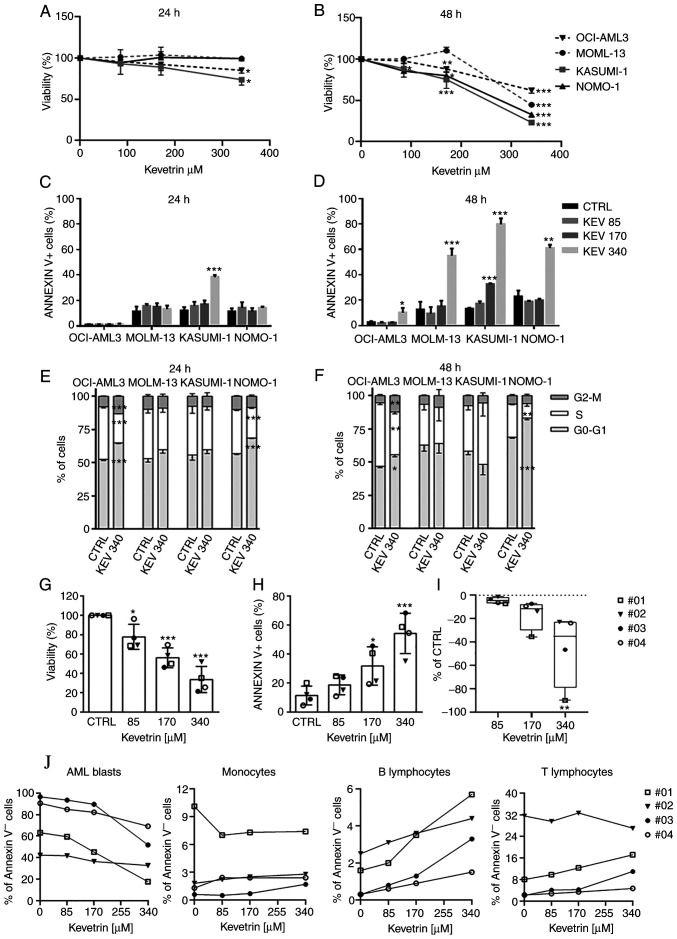
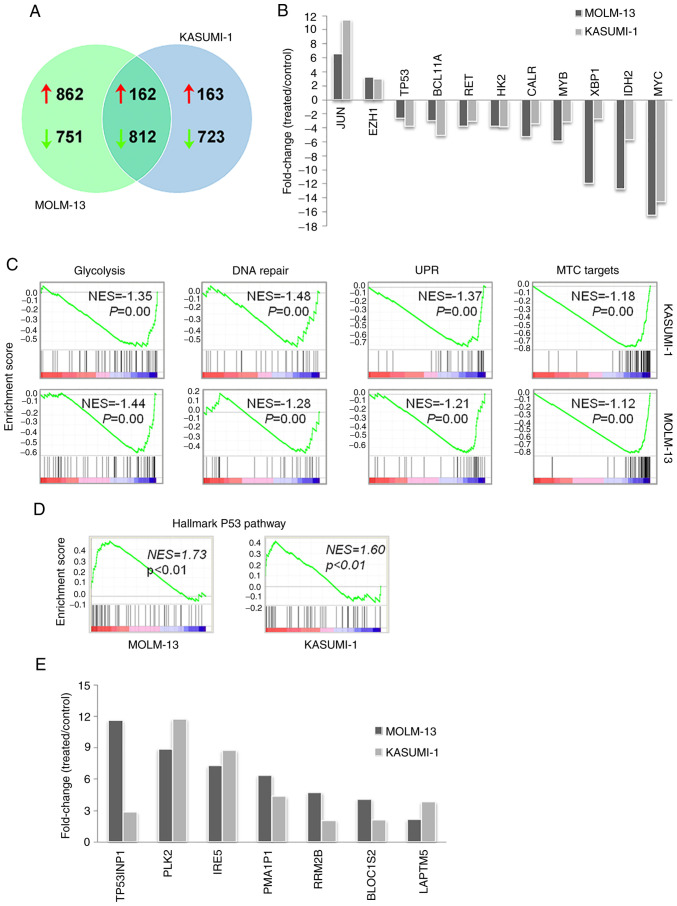
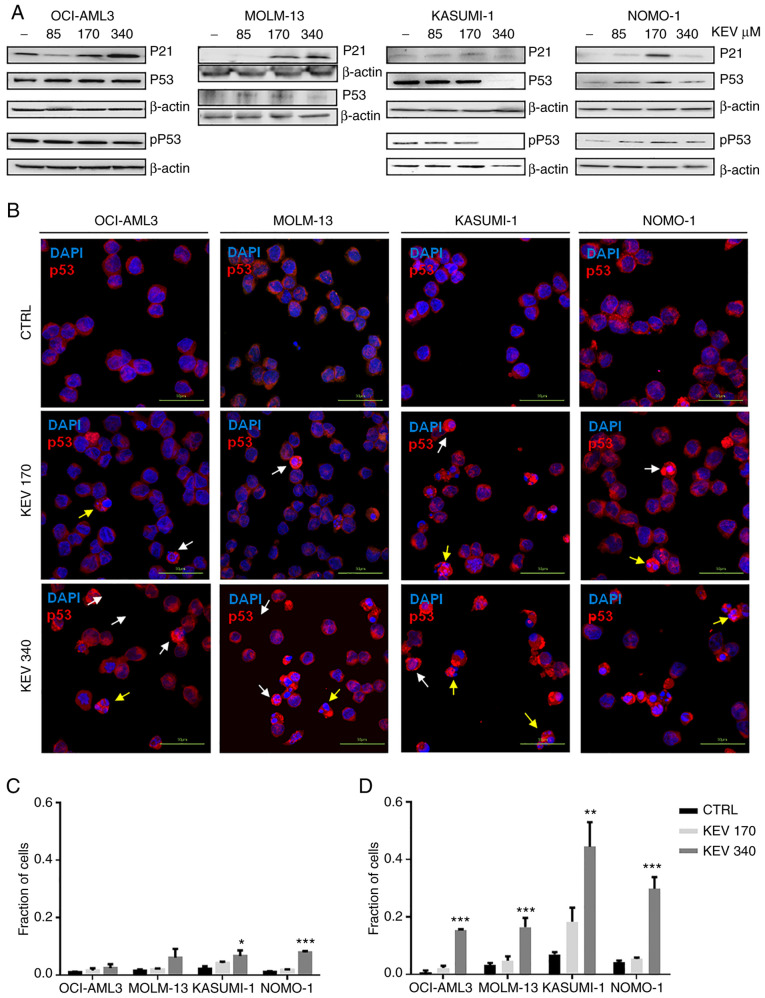
Tumor protein p53 is a key regulator of several cellular pathways, including DNA repair, cell cycle and angiogenesis. Kevetrin exhibits p53‑dependent as well as‑independent activity in solid tumors, while its effects on leukemic cells remain unknown. The aim of the present study was to analyze the response of acute myeloid leukemia (AML) cell lines (TP53 wild‑type: OCI‑AML3 and MOLM‑13; and TP53‑mutant: KASUMI‑1 and NOMO‑1) to kevetrin at a concentration range of 85‑340 µM. The cellular and molecular effects of the treatment were analyzed in terms of cell growth, viability [Annexin V‑propidium iodide (PI) staining] and cell cycle alterations (PI staining). Gene expression profiling, western blotting and immunofluorescence were performed to elucidate the pathways underlying kevetrin activity. Pulsed exposure exerted no effect on the wild‑type cells, but was effective on mutant cells. After continuous treatment, significant cell growth arrest and apoptosis were observed in all cell lines, with TP53‑mutant models displaying a higher sensitivity and p53 induction. Kevetrin also displayed efficacy against TP53 wild‑type and mutant primary AML, with a preferential cytotoxic activity against blast cells. Gene expression profiling revealed a common core transcriptional program altered by drug exposure and the downregulation of glycolysis, DNA repair and unfolded protein response signatures. These findings suggest that kevetrin may be a promising therapeutic option for patients with both wild‑type and TP53‑mutant AML.
肿瘤蛋白 p53 是多种细胞途径的关键调节剂,包括 DNA 修复、细胞周期和血管生成。Kevetrin 在实体瘤中表现出 p53 依赖性和非依赖性活性,而其对白血病细胞的影响尚不清楚。本研究旨在分析急性髓系白血病(AML)细胞系(野生型 TP53:OCI-AML3 和 MOLM-13;和突变型 TP53:KASUMI-1 和 NOMO-1)对浓度范围为 85-340μM 的 Kevetrin 的反应。从细胞生长、活力[Annexin V-碘化丙啶(PI)染色]和细胞周期改变(PI 染色)方面分析治疗的细胞和分子效应。进行基因表达谱分析、western blot 和免疫荧光染色,以阐明 Kevetrin 活性的相关途径。脉冲暴露对野生型细胞没有影响,但对突变型细胞有效。连续治疗后,所有细胞系均观察到明显的细胞生长停滞和凋亡,TP53 突变模型显示出更高的敏感性和 p53 诱导。Kevetrin 对野生型和突变型原发性 AML 也有效,对原始细胞具有优先的细胞毒性活性。基因表达谱分析显示,药物暴露改变了一个共同的核心转录程序,同时下调了糖酵解、DNA 修复和未折叠蛋白反应特征。这些发现表明,Kevetrin 可能是治疗野生型和 TP53 突变型 AML 患者的一种有前途的治疗选择。