Department of Hematology, The First Hospital, Harbin Medical University, 23 Youzheng Street, Nangang District, Harbin 150001, China; The Key Laboratory of Myocardial Ischemia, Ministry of Education, Heilongjiang Province, Harbin, China.
Department of Hematology, The First Hospital, Harbin Medical University, 23 Youzheng Street, Nangang District, Harbin 150001, China.
EBioMedicine. 2020 Oct;60:102992. doi: 10.1016/j.ebiom.2020.102992. Epub 2020 Sep 16.
The role of vascular endothelium in acute promyelocytic leukaemia (APL) remains unknown. We aimed to investigate the mechanisms by which APL cells interact with endothelial cells (ECs) and to further explore how the endothelium affects bleeding as well as therapeutic interventions.
APL cells and an original APL cell line, NB4 cells, were used for experiments. The effects of leukaemic cells on ECs were analyzed in vitro and in vivo. Moreover, the endothelial barrier function and procoagulant activity were detected. An APL mouse model was established for in vivo studies.
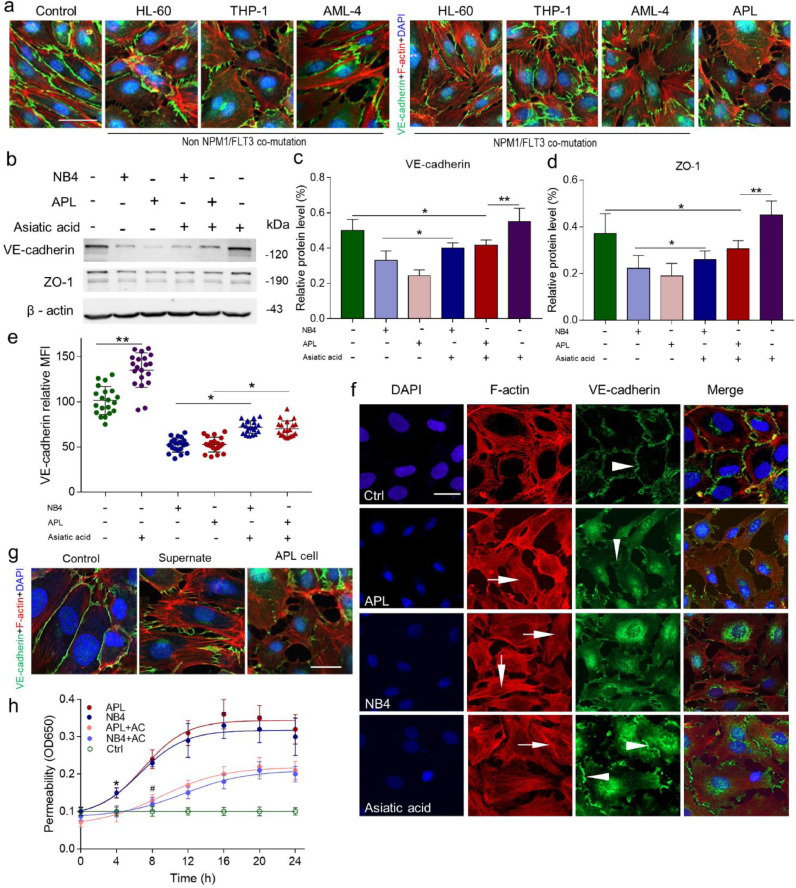
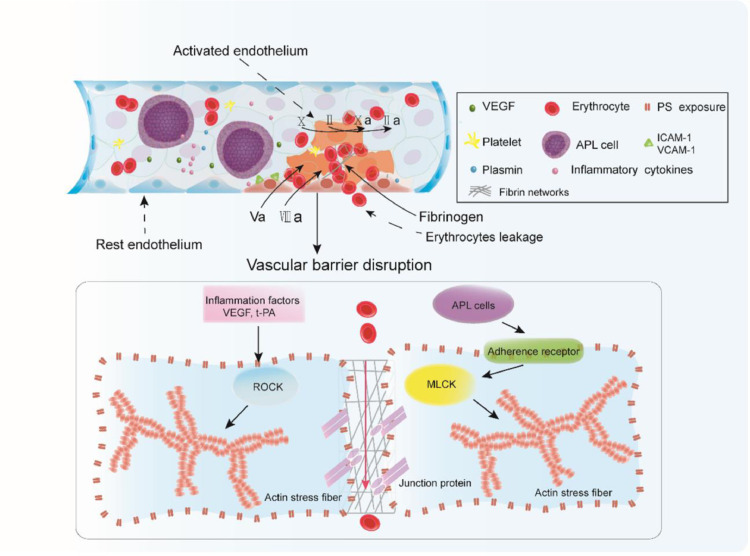
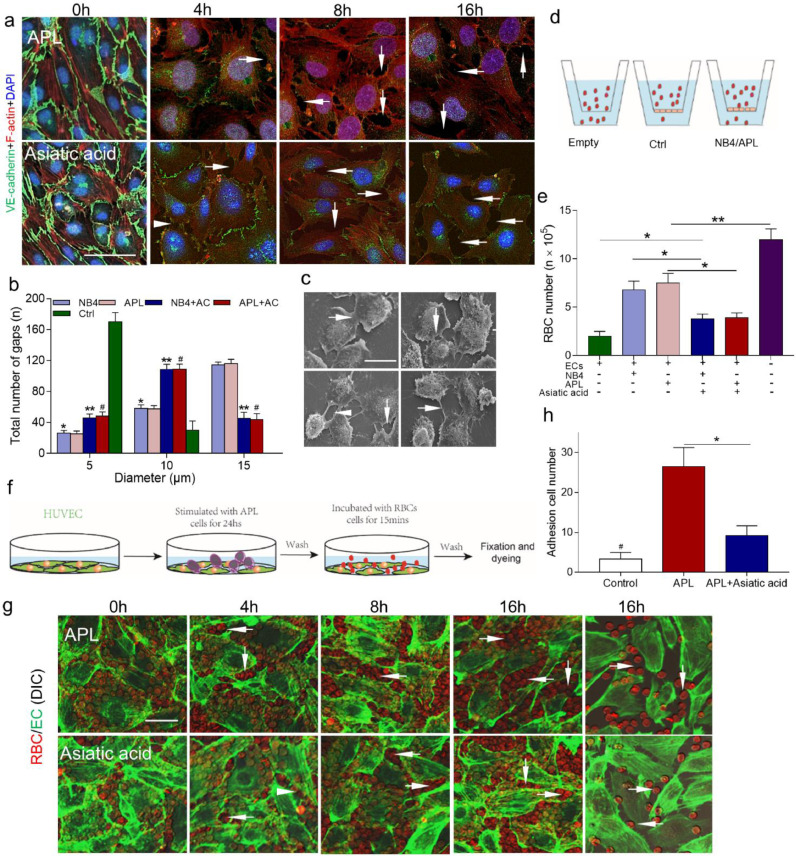
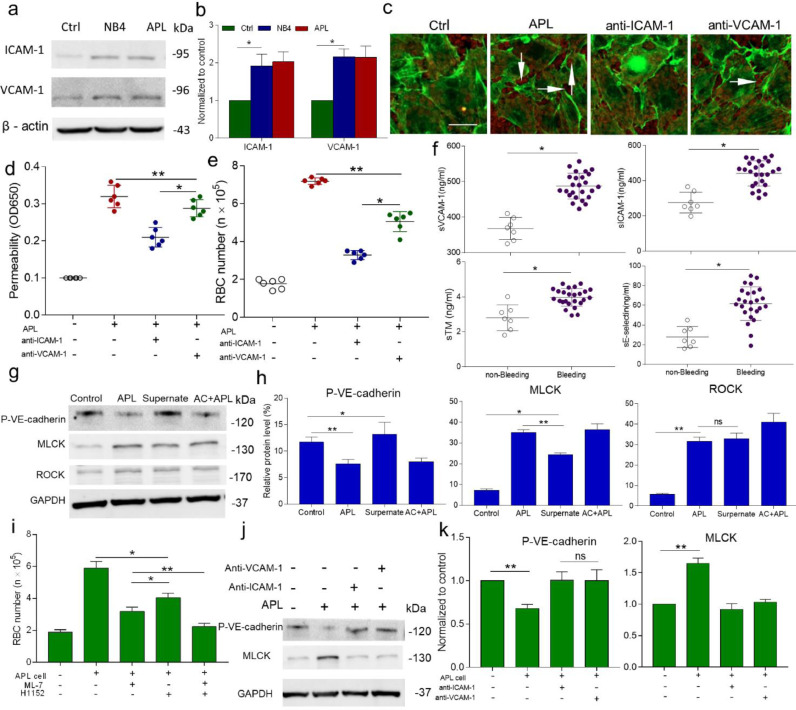
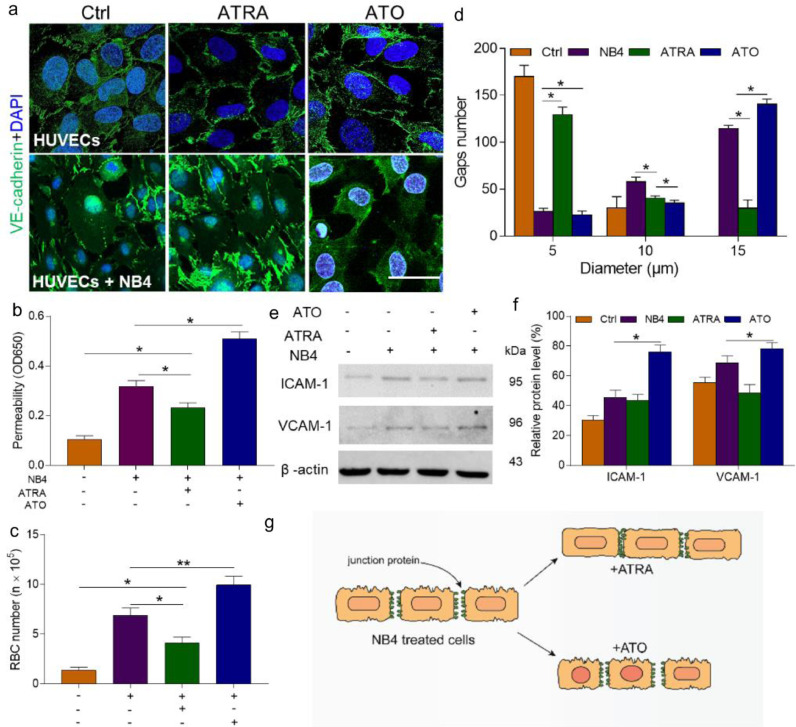
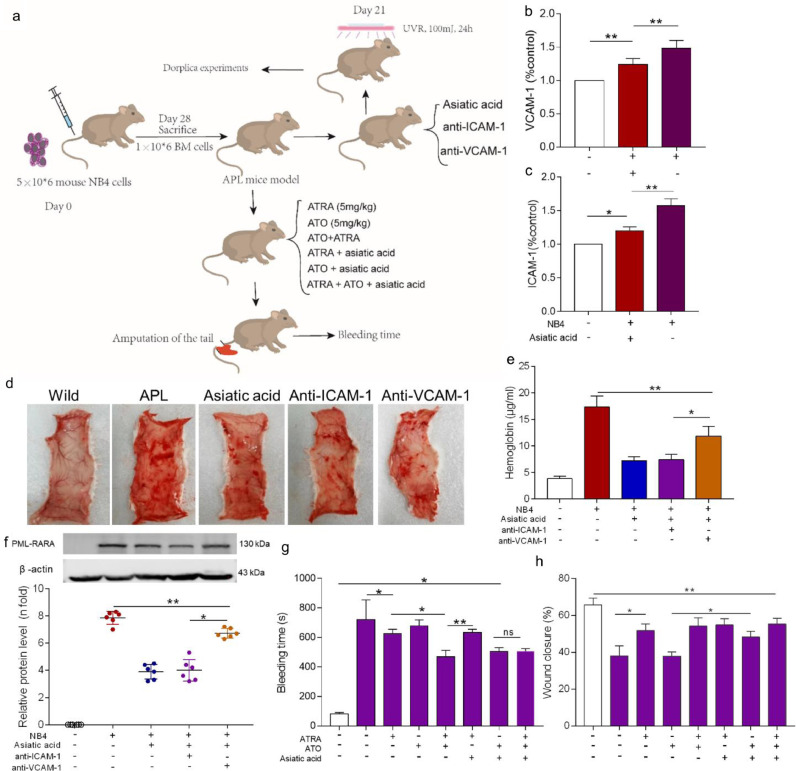
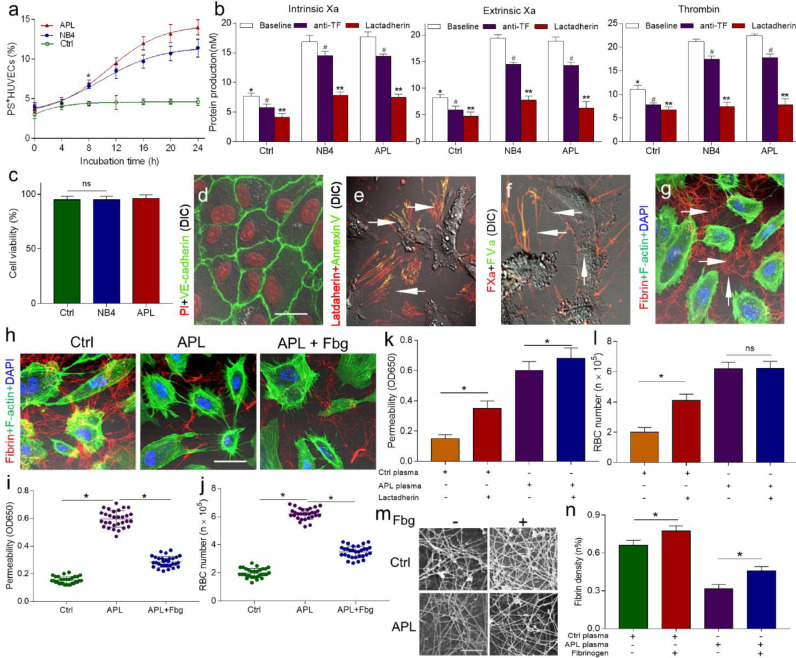
APL cells interacted with ECs via ICAM-1 and VCAM-1 receptors to disrupt endothelial integrity. This binding activated MLCK signaling, resulting in the trans-endothelial passage of protein and red blood cells (RBCs). Combined treatment with asiatic acid or anti-adhesion receptor antibody inhibited the response of ECs to APL cells, thereby preventing APL-associated haemorrhage in vitro and in vivo. Activated ECs exhibited a procoagulant phenotype after phosphatidylserine exposure. Plasma from APL patients formed a thin fibrin network between procoagulant ECs, and this intercellular fibrin decreased the passage of albumin and RBCs. Ex vivo addition of fibrinogen further enhanced this barrier function in a dose-dependent manner.
Endothelial damage induced by leukaemic cell adherence promotes haemorrhaging in APL. Stabilization of ECs, decreasing adhesion receptor expression, and increasing fibrinogen transfusion levels may be a new therapeutic avenue to alleviate this fatal bleeding complication.
National Science Foundation of China (81670128, 81873433).
血管内皮细胞在急性早幼粒细胞白血病(APL)中的作用尚不清楚。本研究旨在探讨APL 细胞与内皮细胞(EC)相互作用的机制,并进一步探讨内皮细胞如何影响出血以及治疗干预措施。
本研究使用 APL 细胞和原始 APL 细胞系 NB4 细胞进行实验。分析白血病细胞对 EC 的影响,包括在体外和体内。此外,还检测了内皮屏障功能和促凝活性。建立 APL 小鼠模型进行体内研究。
APL 细胞通过 ICAM-1 和 VCAM-1 受体与 EC 相互作用,破坏内皮完整性。这种结合激活了 MLCK 信号通路,导致蛋白质和红细胞(RBC)穿过内皮细胞。用齐墩果酸或抗黏附受体抗体联合治疗可抑制 EC 对 APL 细胞的反应,从而防止体外和体内 APL 相关出血。激活的 EC 暴露于磷脂酰丝氨酸后表现出促凝表型。APL 患者的血浆在促凝 EC 之间形成薄的纤维蛋白网络,细胞间纤维蛋白减少白蛋白和 RBC 的通过。体外添加纤维蛋白原可进一步以剂量依赖的方式增强这种屏障功能。
白血病细胞黏附诱导的内皮损伤促进 APL 出血。稳定 EC、降低黏附受体表达以及增加纤维蛋白原输注水平可能是减轻这种致命出血并发症的新治疗途径。
国家自然科学基金(81670128、81873433)。