Bravata Nicholas, Kelly Dylan, Eickholt Jesse, Bryan Janine, Miehls Scott, Zielinski Dan
Department of Computer Science Central Michigan University Mount Pleasant MI USA.
Whooshh Innovations, Inc. Seattle WA USA.
Ecol Evol. 2020 Aug 4;10(17):9313-9325. doi: 10.1002/ece3.6618. eCollection 2020 Sep.
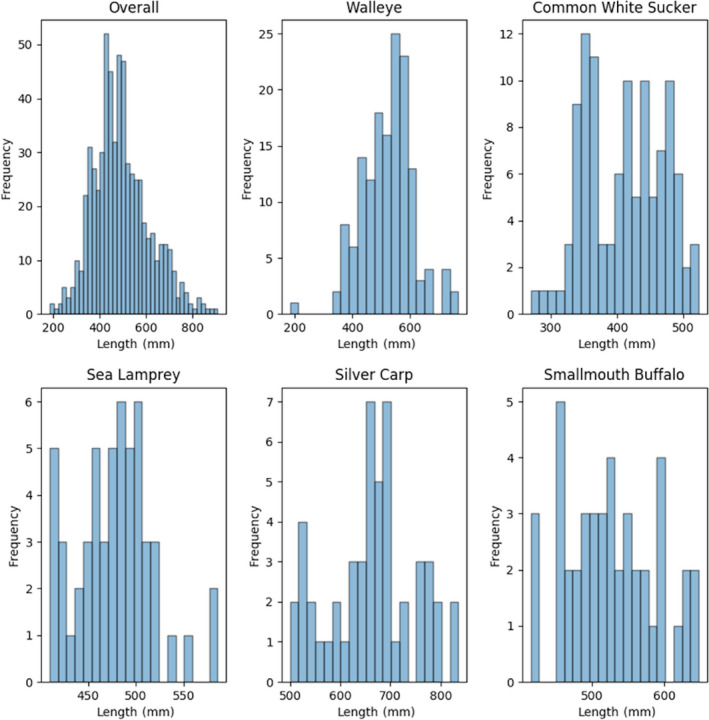
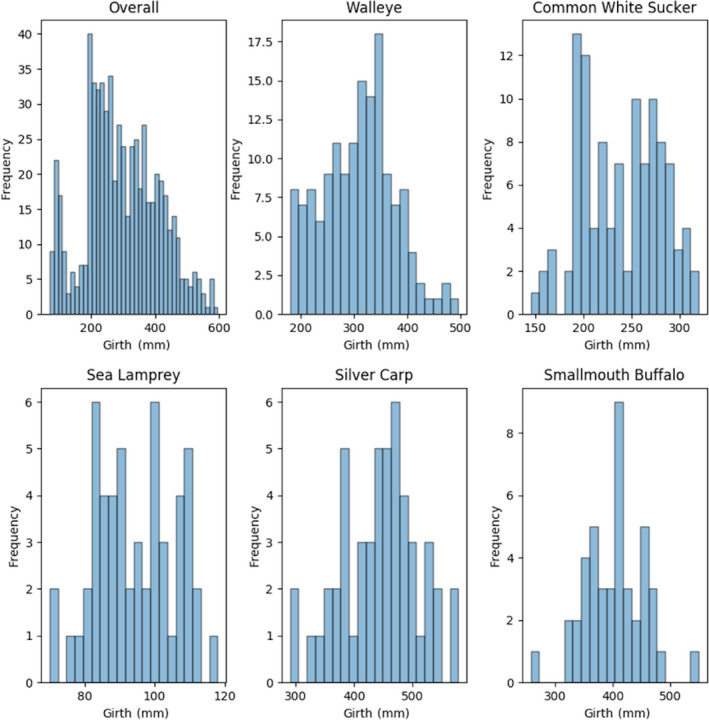
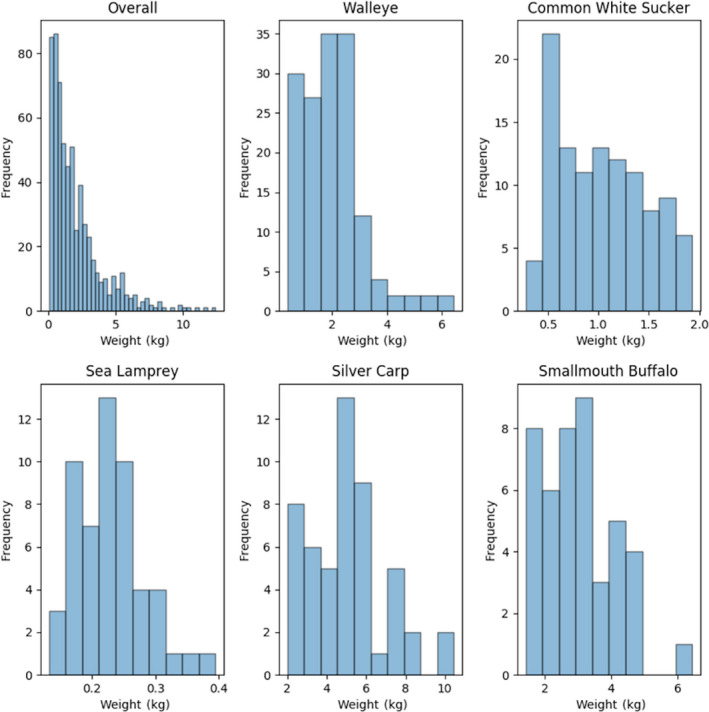
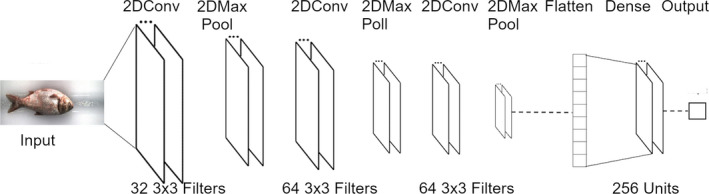
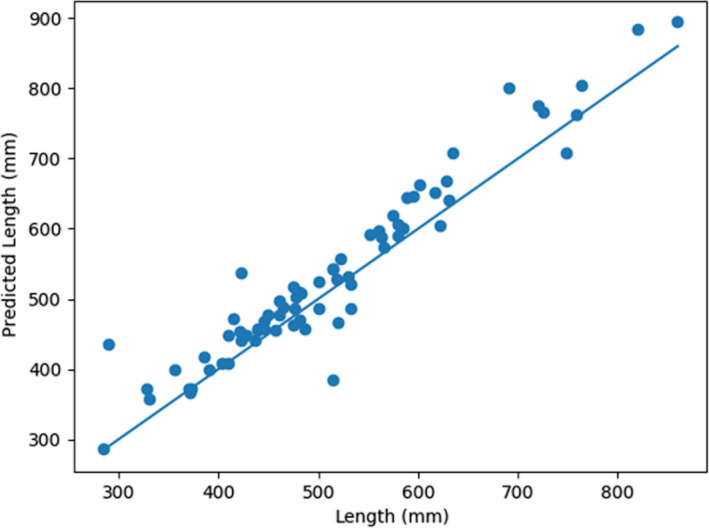
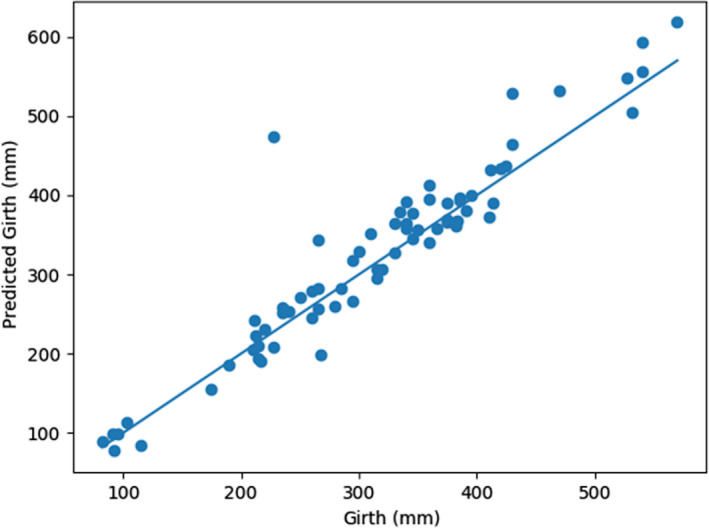
Simple biometric data of fish aid fishery management tasks such as monitoring the structure of fish populations and regulating recreational harvest. While these data are foundational to fishery research and management, the collection of length and weight data through physical handling of the fish is challenging as it is time consuming for personnel and can be stressful for the fish. Recent advances in imaging technology and machine learning now offer alternatives for capturing biometric data. To investigate the potential of deep convolutional neural networks to predict biometric data, several regressors were trained and evaluated on data stemming from the FishL™ Recognition System and manual measurements of length, girth, and weight. The dataset consisted of 694 fish from 22 different species common to Laurentian Great Lakes. Even with such a diverse dataset and variety of presentations by the fish, the regressors proved to be robust and achieved competitive mean percent errors in the range of 5.5 to 7.6% for length and girth on an evaluation dataset. Potential applications of this work could increase the efficiency and accuracy of routine survey work by fishery professionals and provide a means for longer-term automated collection of fish biometric data.
鱼类的简单生物特征数据有助于渔业管理任务,如监测鱼群结构和规范休闲捕捞量。虽然这些数据是渔业研究和管理的基础,但通过对鱼进行物理处理来收集长度和重量数据具有挑战性,因为这对工作人员来说耗时较长,而且可能给鱼带来压力。成像技术和机器学习的最新进展现在为获取生物特征数据提供了替代方法。为了研究深度卷积神经网络预测生物特征数据的潜力,对几个回归器进行了训练,并根据来自FishL™识别系统的数据以及长度、周长和重量的手动测量数据进行了评估。该数据集由来自劳伦森五大湖常见的22个不同物种的694条鱼组成。即使有如此多样的数据集和鱼的各种呈现方式,回归器在评估数据集上的长度和周长平均百分比误差在5.5%至7.6%范围内,证明是稳健的,并取得了有竞争力的结果。这项工作的潜在应用可以提高渔业专业人员日常调查工作的效率和准确性,并提供一种长期自动收集鱼类生物特征数据的方法。