Panzenboeck Lisa, Troppmair Nina, Schlachter Sara, Koellensperger Gunda, Hartler Jürgen, Rampler Evelyn
Department of Analytical Chemistry, Faculty of Chemistry, University of Vienna, Waehringer Str. 38, 1090 Vienna, Austria.
Vienna Metabolomics Center (VIME), University of Vienna, Althanstraße 14, 1090 Vienna, Austria.
Metabolites. 2020 Sep 19;10(9):375. doi: 10.3390/metabo10090375.
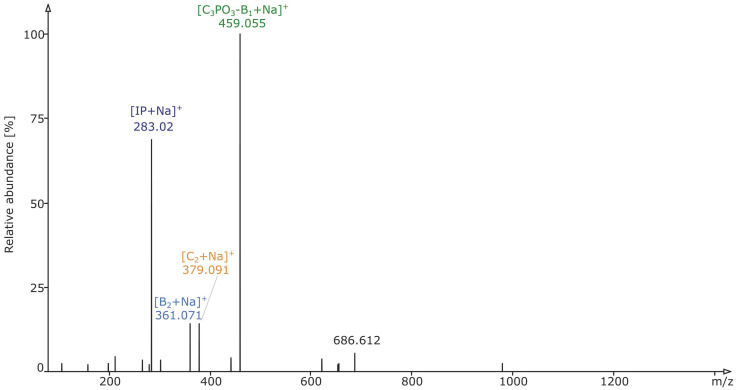
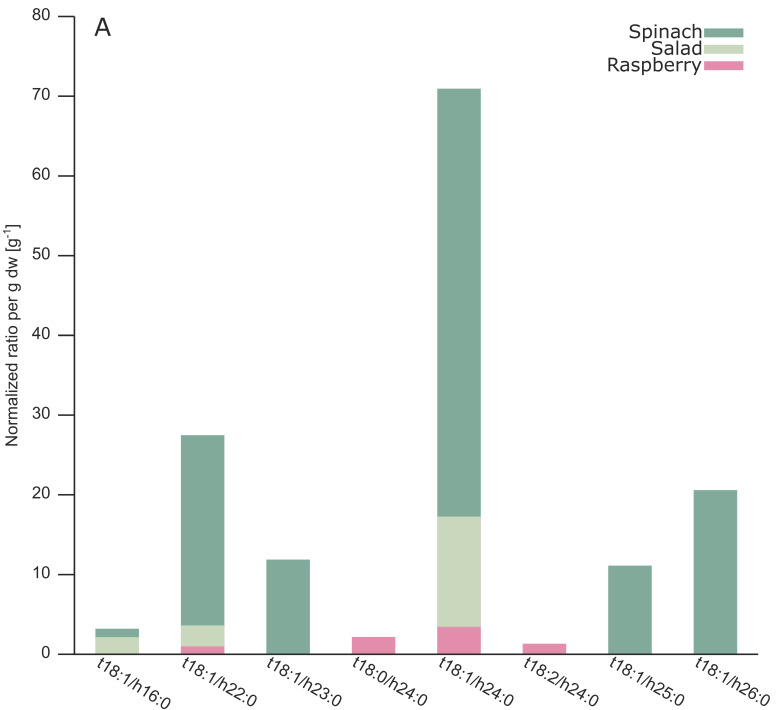
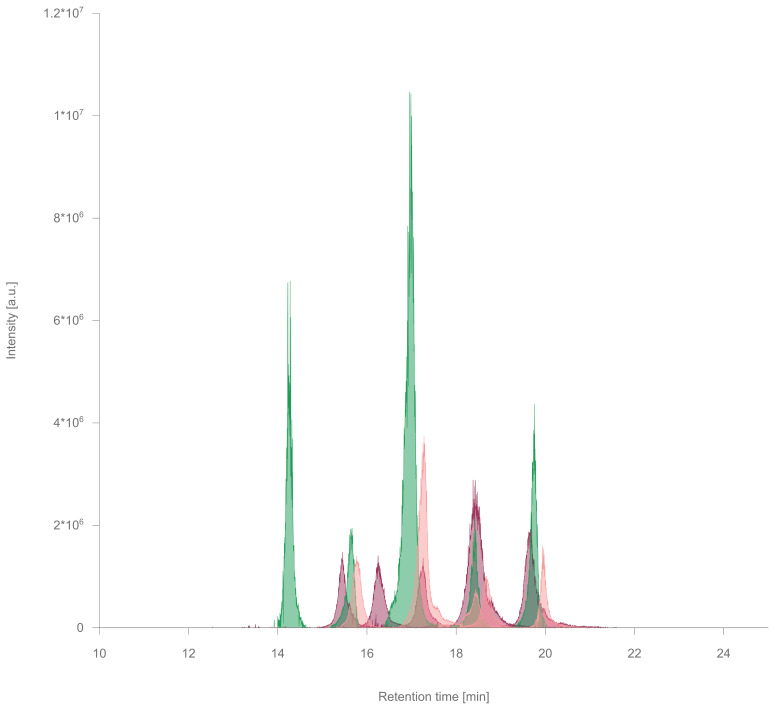
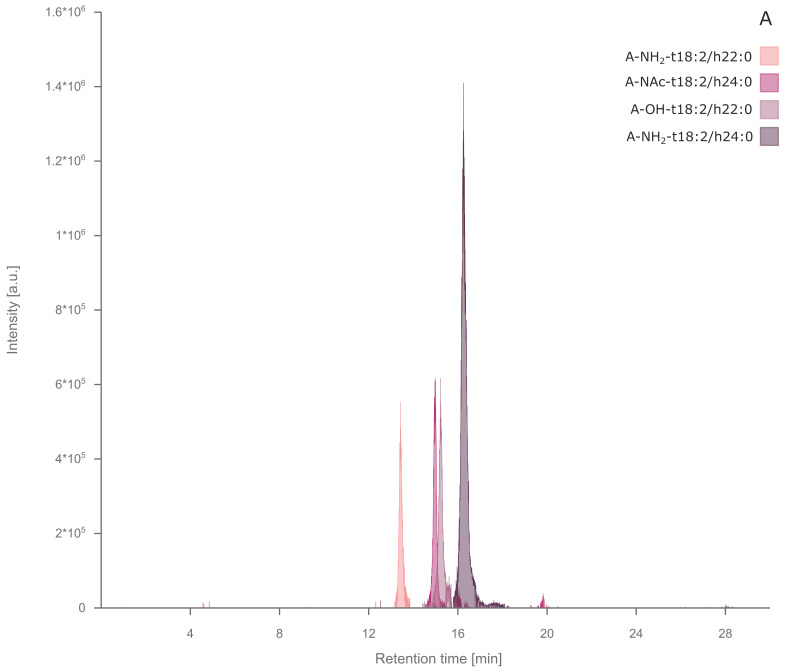
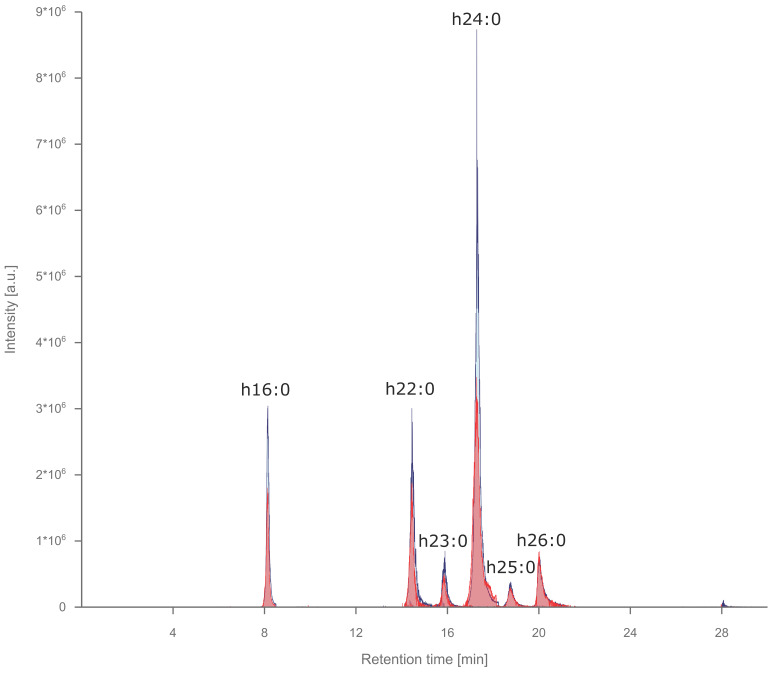
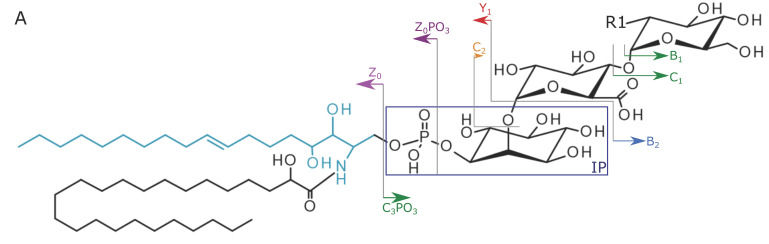
Glycosyl inositol phospho ceramides (GIPCs) are the major sphingolipids on earth, as they account for a considerable fraction of the total lipids in plants and fungi, which in turn represent a large portion of the biomass on earth. Despite their obvious importance, GIPC analysis remains challenging due to the lack of commercial standards and automated annotation software. In this work, we introduce a novel GIPC glycolipidomics workflow based on reversed-phase ultra-high pressure liquid chromatography coupled to high-resolution mass spectrometry. For the first time, automated GIPC assignment was performed using the open-source software Lipid Data Analyzer (LDA), based on platform-independent decision rules. Four different plant samples (salad, spinach, raspberry, and strawberry) were analyzed and the results revealed 64 GIPCs based on accurate mass, characteristic MS2 fragments and matching retention times. Relative quantification using lactosyl ceramide for internal standardization revealed GIPC t18:1/h24:0 as the most abundant species in all plants. Depending on the plant sample, GIPCs contained mainly amine, N-acetylamine or hydroxyl residues. Most GIPCs revealed a Hex-HexA-IPC core and contained a ceramide part with a trihydroxylated t18:0 or a t18:1 long chain base and hydroxylated fatty acid chains ranging from 16 to 26 carbon atoms in length (h16:0-h26:0). Interestingly, four GIPCs containing t18:2 were observed in the raspberry sample, which was not reported so far. The presented workflow supports the characterization of different plant samples by automatic GIPC assignment, potentially leading to the identification of new GIPCs. For the first time, automated high-throughput profiling of these complex glycolipids is possible by liquid chromatography-high-resolution tandem mass spectrometry and subsequent automated glycolipid annotation based on decision rules.
糖基肌醇磷酸神经酰胺(GIPCs)是地球上主要的鞘脂类,因为它们在植物和真菌的总脂质中占相当大的比例,而植物和真菌又是地球上生物量的很大一部分。尽管它们具有明显的重要性,但由于缺乏商业标准和自动化注释软件,GIPC分析仍然具有挑战性。在这项工作中,我们引入了一种基于反相超高压液相色谱与高分辨率质谱联用的新型GIPC糖脂组学工作流程。首次使用开源软件脂质数据分析器(LDA),基于与平台无关的决策规则进行自动GIPC分配。对四种不同的植物样品(沙拉、菠菜、覆盆子和草莓)进行了分析,结果基于精确质量、特征性MS2碎片和匹配的保留时间,鉴定出64种GIPCs。使用乳糖基神经酰胺作为内标进行相对定量分析表明,GIPC t18:1/h24:0是所有植物中含量最丰富的种类。根据植物样品的不同,GIPCs主要含有胺基、N - 乙酰胺基或羟基残基。大多数GIPCs呈现Hex - HexA - IPC核心,并且含有一个神经酰胺部分,其具有三羟基化的t18:0或t18:1长链碱基以及长度为16至26个碳原子的羟基化脂肪酸链(h16:0 - h26:0)。有趣的是,在覆盆子样品中观察到了四种含有t18:2的GIPCs,这在之前尚未见报道。所提出的工作流程通过自动GIPC分配支持对不同植物样品的表征,有可能导致鉴定出新的GIPCs。首次通过液相色谱 - 高分辨率串联质谱以及随后基于决策规则的自动糖脂注释,实现了对这些复杂糖脂的自动化高通量分析。