Cell Biology and Biotherapy Unit, Istituto Nazionale Tumori-IRCCS-Fondazione G. Pascale, 80131 Naples, Italy.
Clinical Trials Unit, Istituto Nazionale Tumori-IRCCS-Fondazione G. Pascale, 80131 Naples, Italy.
Int J Mol Sci. 2020 Sep 18;21(18):6856. doi: 10.3390/ijms21186856.
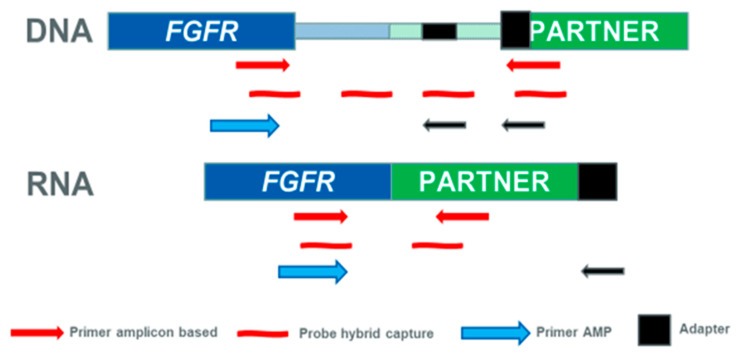
Fibroblast growth factor receptors (FGFRs) are tyrosine kinase receptors involved in many biological processes. Deregulated FGFR signaling plays an important role in tumor development and progression in different cancer types. genomic alterations, including gene fusions that originate by chromosomal rearrangements, represent a promising therapeutic target. Next-generation-sequencing (NGS) approaches have significantly improved the discovery of gene fusions and their detection in clinical samples. A variety of FGFR inhibitors have been developed, and several studies are trying to evaluate the efficacy of these agents in molecularly selected patients carrying genomic alterations. In this review, we describe the most frequent aberrations in human cancer. We also discuss the different approaches employed for the detection of fusions and the potential role of these genomic alterations as prognostic/predictive biomarkers.
成纤维细胞生长因子受体(FGFRs)是酪氨酸激酶受体,参与许多生物学过程。FGFR 信号的失调在不同癌症类型的肿瘤发生和进展中起着重要作用。基因组改变,包括染色体重排引起的基因融合,代表了一个有前途的治疗靶点。下一代测序(NGS)方法显著提高了基因融合的发现及其在临床样本中的检测。已经开发了多种 FGFR 抑制剂,并且正在进行多项研究以评估这些药物在携带基因组改变的分子选择患者中的疗效。在这篇综述中,我们描述了人类癌症中最常见的异常。我们还讨论了用于检测融合的不同方法以及这些基因组改变作为预后/预测生物标志物的潜在作用。