Faculty of Industrial Chemistry and Environmental Engineering, Politehnica University Timisoara, Bd. V. Parvan No. 6, 300223 Timisoara, Romania.
Research Institute for Renewable Energy of the Politehnica University Timisoara, 138 Musicescu Street, 300774 Timisoara, Romania.
Int J Environ Res Public Health. 2020 Sep 20;17(18):6868. doi: 10.3390/ijerph17186868.
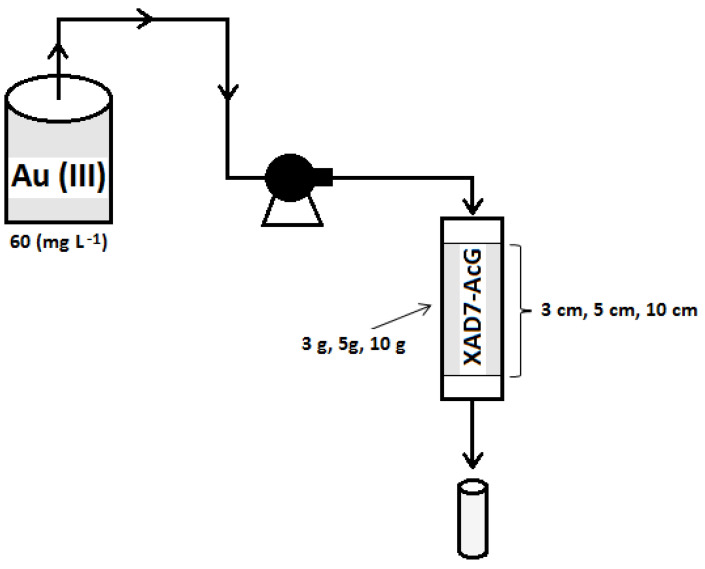
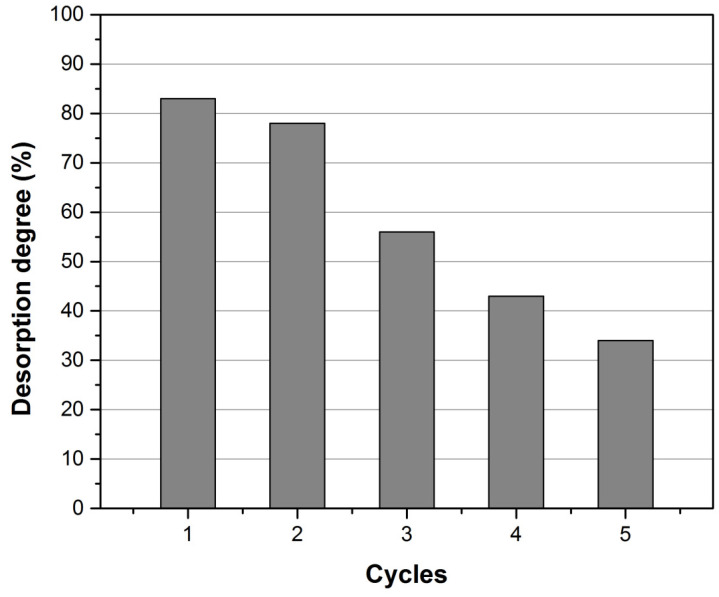
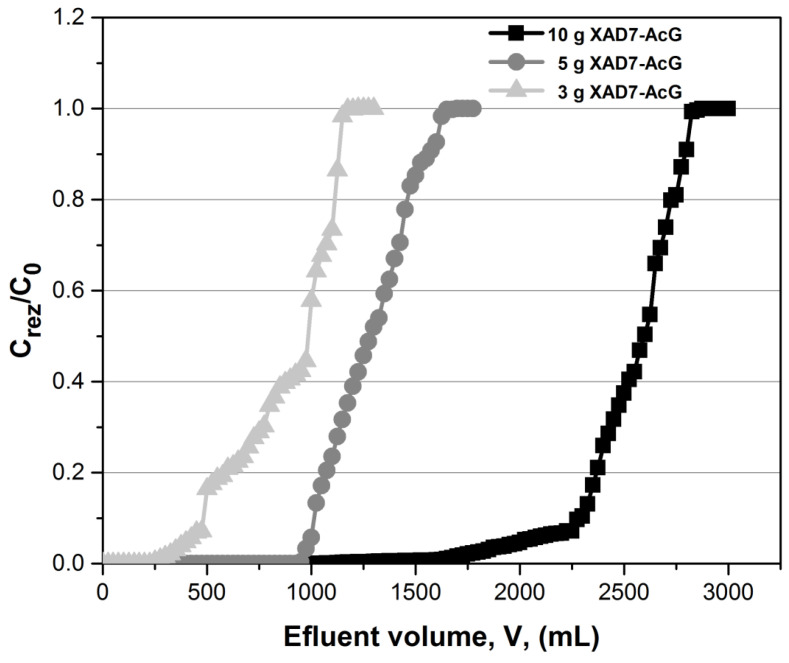
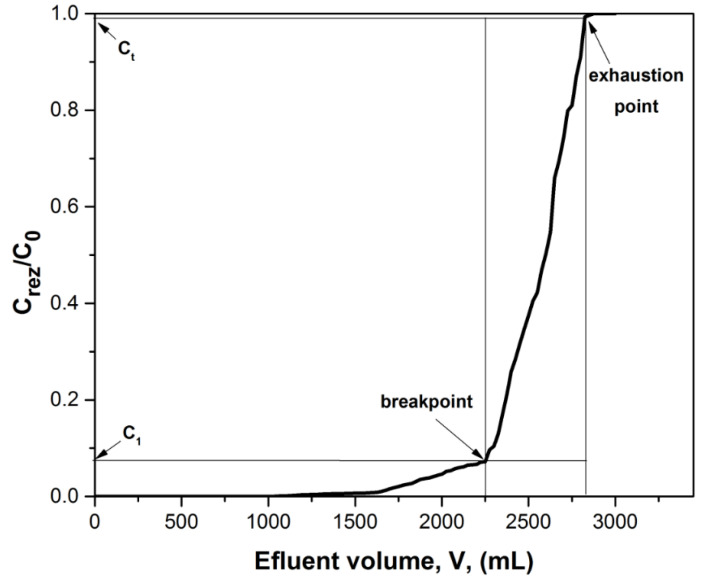
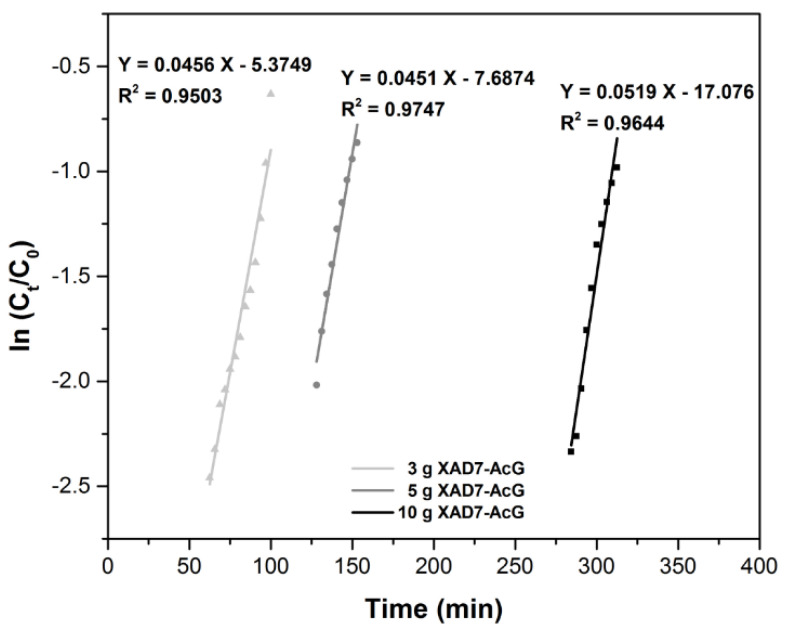
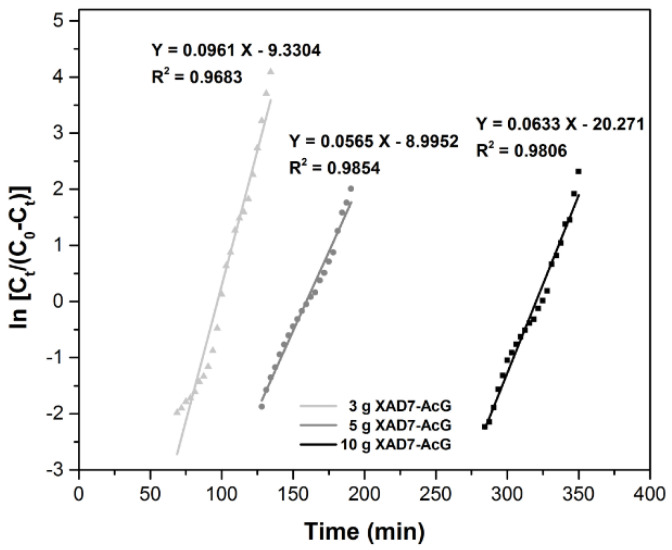
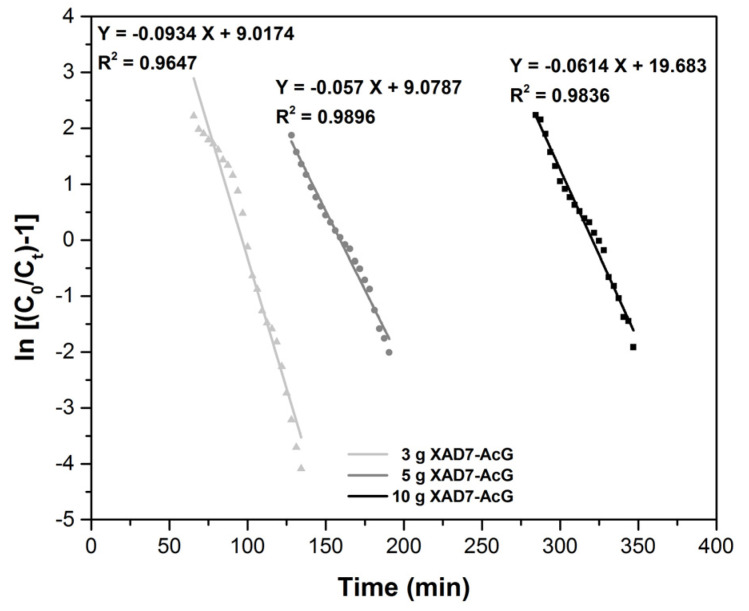
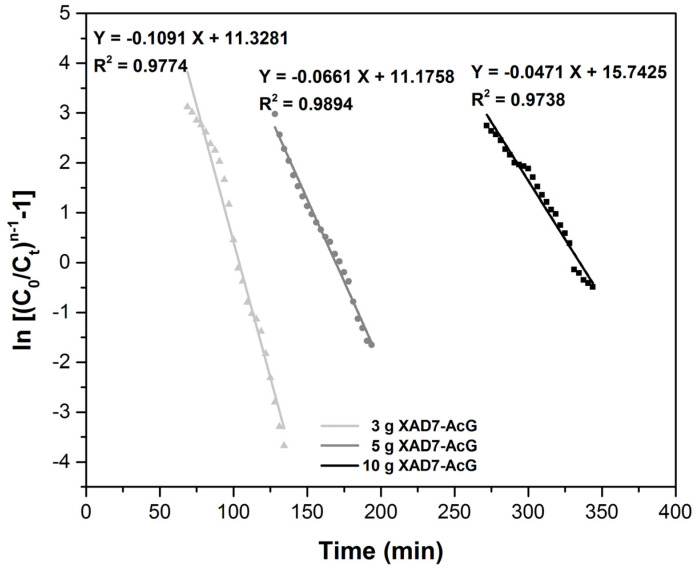
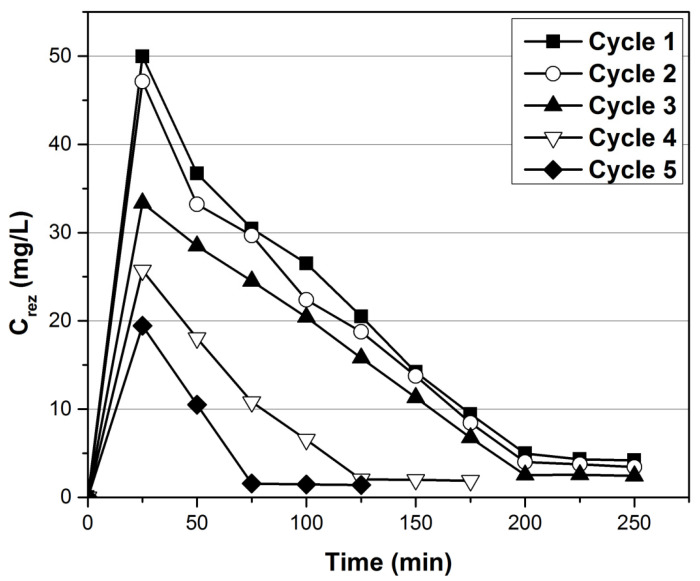
The objective of this paper was to evaluate the potential of a new adsorbent material to recover Au (III) from real wastewater, in a column with a fixed bed in a dynamic regime. The material was obtained through functionalization, by impregnation of the commercial resin, Amberlite XAD 7 type, with L-glutamic acid, which has active groups -NH and -COOH. The goal of the experiments was to follow the correlation of fixed-bed column specific adsorption parameters (the effluent volume, the amounts of adsorbent, heights of the adsorbent layer in column) with the time necessary to cross the column. The experimental data obtained were modeled, using the Bohart-Adams, Yoon-Nelson Thomas and Clark models, to establish the mechanism of the Au (III) recovery process, in a dynamic regime. Also, we established the number of cycles for adsorption-desorption for which the new material can be used. We used 5% HNO (5%) as desorption agent in five adsorption-desorption cycles, until the process was no longer efficient. The degree of desorption varied between 84% and 34% from cycle 1 to cycle 5.
本文旨在评估一种新型吸附材料在动态固定床柱中从实际废水中回收 Au(III)的潜力。该材料是通过功能化制备的,即将商业树脂 Amberlite XAD-7 浸渍在 L-谷氨酸中,L-谷氨酸具有活性基团 -NH 和 -COOH。实验的目的是跟踪固定床柱特定吸附参数(流出体积、吸附剂用量、柱中吸附剂层的高度)与穿过柱所需时间之间的相关性。使用 Bohart-Adams、Yoon-Nelson Thomas 和 Clark 模型对获得的实验数据进行建模,以确定 Au(III)在动态条件下的回收过程的机理。此外,我们还确定了新的吸附材料可以使用的吸附-解吸循环次数。我们使用 5% HNO 3(5%)作为解吸剂,进行了五个吸附-解吸循环,直到该过程不再有效。从第 1 个循环到第 5 个循环,解吸程度在 84%到 34%之间变化。