• 文献检索
  • 文档翻译
  • 深度研究
  • 学术资讯
  • Suppr Zotero 插件Zotero 插件
  • 邀请有礼
  • 套餐&价格
  • 历史记录
应用&插件
Suppr Zotero 插件Zotero 插件浏览器插件Mac 客户端Windows 客户端微信小程序
定价
高级版会员购买积分包购买API积分包
服务
文献检索文档翻译深度研究API 文档MCP 服务
关于我们
关于 Suppr公司介绍联系我们用户协议隐私条款
关注我们

Suppr 超能文献

核心技术专利:CN118964589B侵权必究
粤ICP备2023148730 号-1Suppr @ 2026

文献检索

告别复杂PubMed语法,用中文像聊天一样搜索,搜遍4000万医学文献。AI智能推荐,让科研检索更轻松。

立即免费搜索

文件翻译

保留排版,准确专业,支持PDF/Word/PPT等文件格式,支持 12+语言互译。

免费翻译文档

深度研究

AI帮你快速写综述,25分钟生成高质量综述,智能提取关键信息,辅助科研写作。

立即免费体验

从工业溶液中回收金的全因子设计

Full Factorial Design for Gold Recovery from Industrial Solutions.

作者信息

Mihăilescu Maria, Negrea Adina, Ciopec Mihaela, Negrea Petru, Duțeanu Narcis, Grozav Ion, Svera Paula, Vancea Cosmin, Bărbulescu Alina, Dumitriu Cristian Ștefan

机构信息

Research Institute for Renewable Energies, Politehnica University Timişoara, 2, P-ța Victoriei, 300006 Timişoara, Romania.

Faculty of Industrial Chemistry and Environmental Enginering, Politehnica University Timişoara, 2, P-ța Victoriei, 300006 Timişoara, Romania.

出版信息

Toxics. 2021 May 20;9(5):111. doi: 10.3390/toxics9050111.

DOI:10.3390/toxics9050111
PMID:34065249
原文链接:https://pmc.ncbi.nlm.nih.gov/articles/PMC8160989/
Abstract

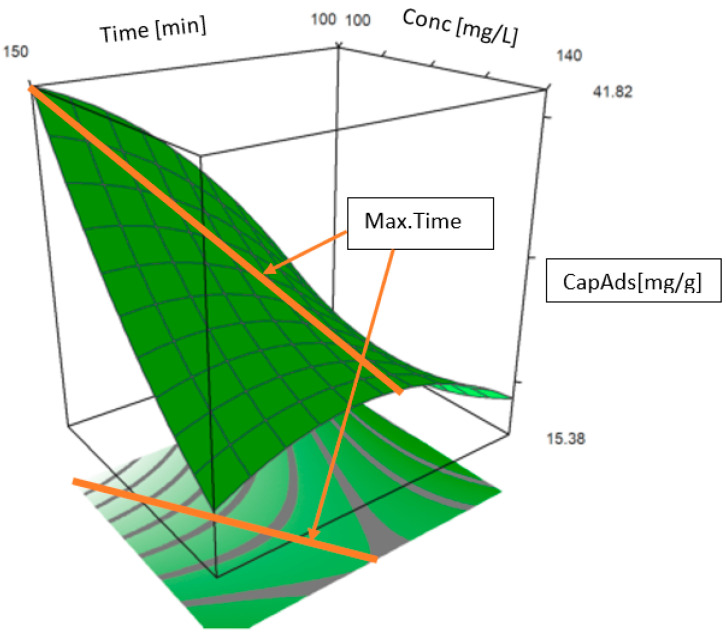
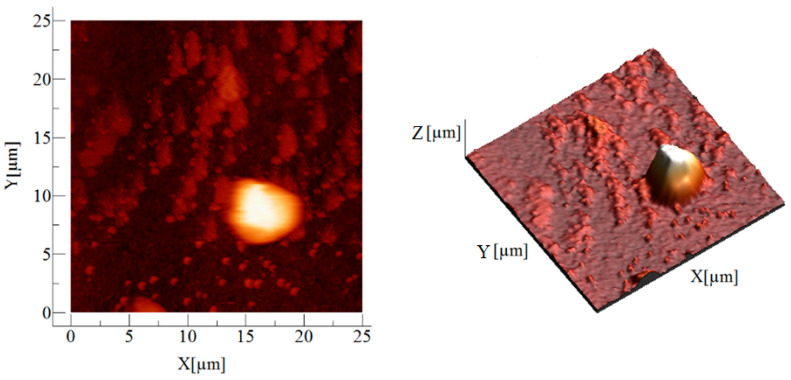
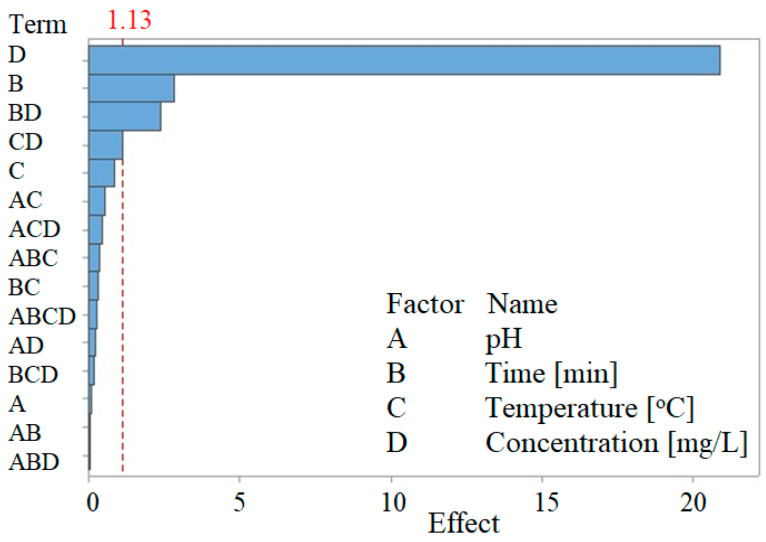
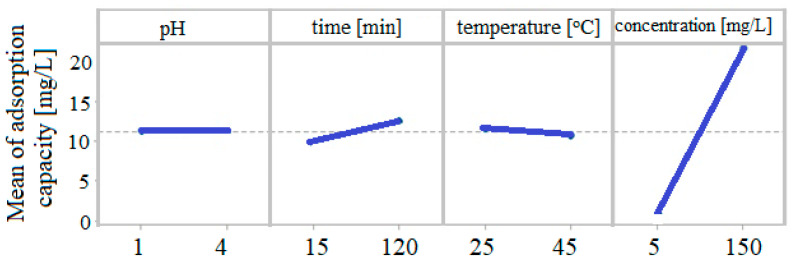
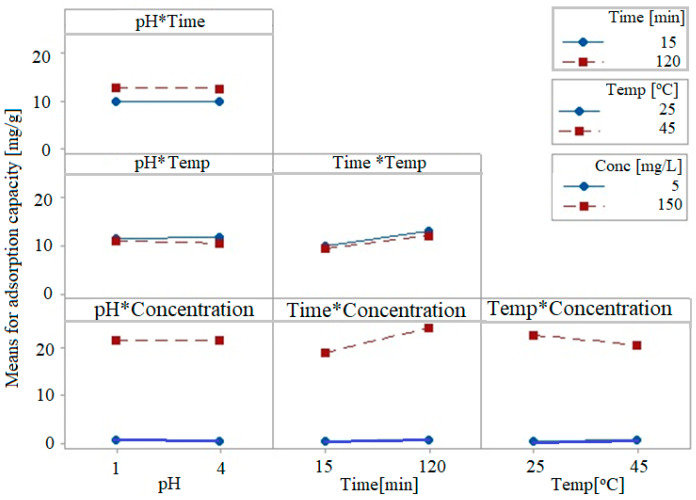
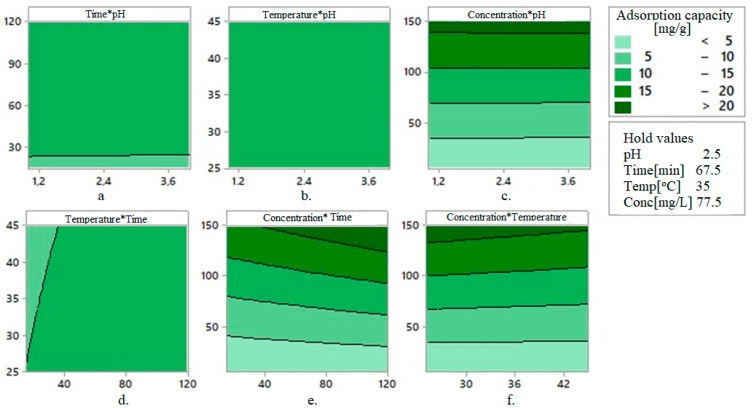
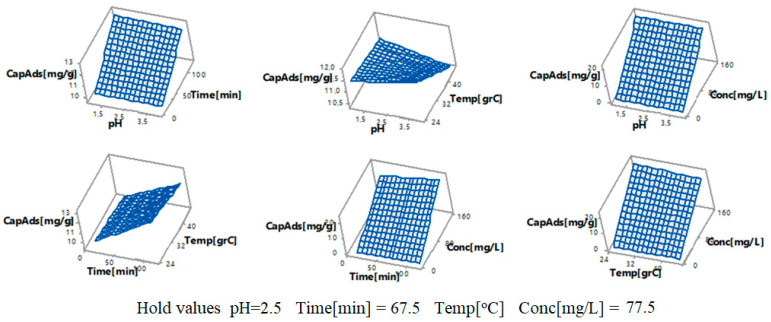
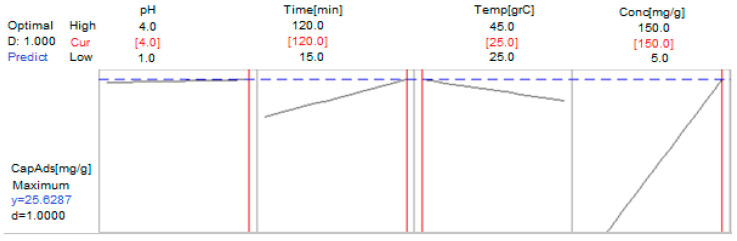
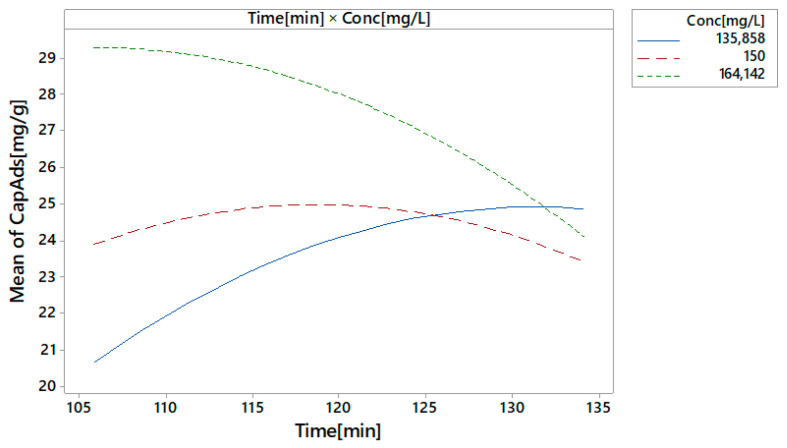
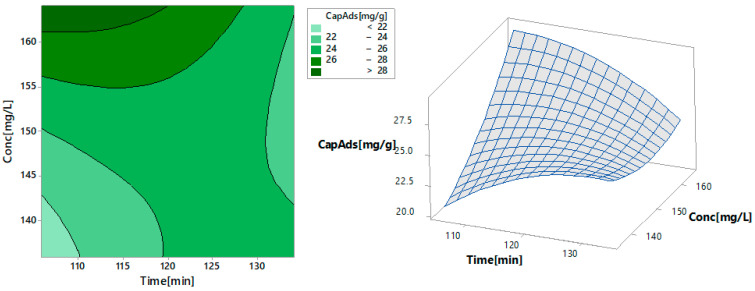
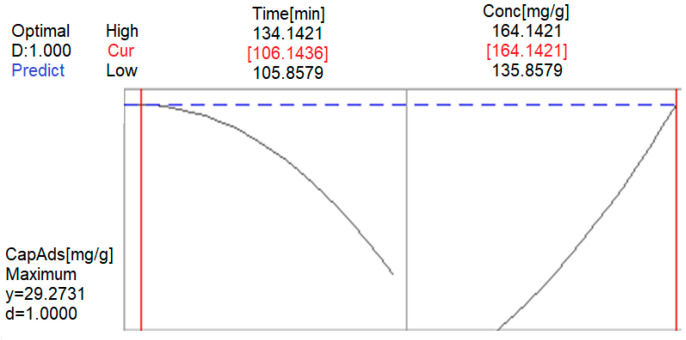
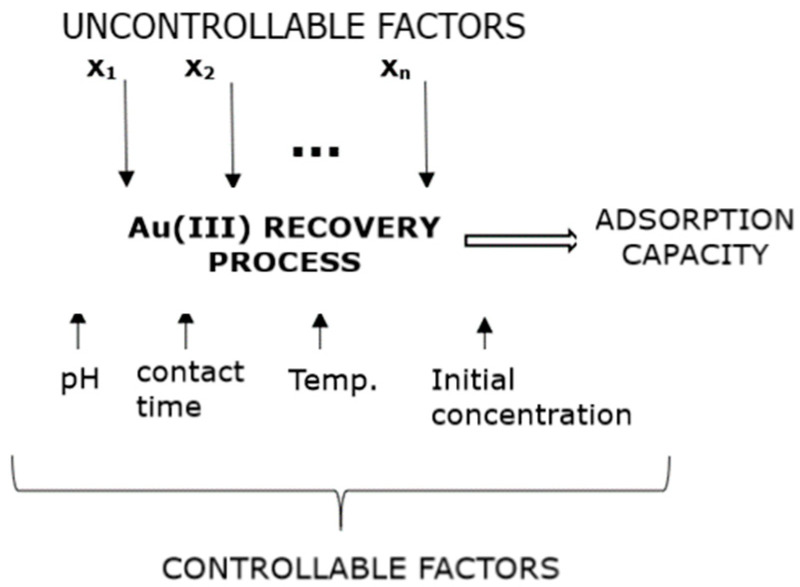
Gold is one of the precious metals with multiple uses, whose deposits are much smaller than the global production needs. Therefore, extracting maximum gold quantities from industrial diluted solutions is a must. Am-L-GA is a new material, obtained by an Amberlite XAD7-type commercial resin, functionalized through saturation with L-glutamic acid, whose adsorption capacity has been proved to be higher than those of other materials utilized for gold adsorption. In this context, this article presents the results of a factorial design experiment for optimizing the gold recovery from residual solutions resulting from the electronics industry using Am-L-GA. Firstly, the material was characterized using atomic force microscopy (AFM), to emphasize the material's characteristics, essential for the adsorption quality. Then, the study showed that among the parameters taken into account in the analysis (pH, temperature, initial gold concentration, and contact time), the initial gold concentration in the solution plays a determinant role in the removal process and the contact time has a slightly positive effect, whereas the pH and temperature do not influence the adsorption capacity. The maximum adsorption capacity of 29.27 mg/L was obtained by optimizing the adsorption process, with the control factors having the following values: contact time ~106 min, initial Au(III) concentration of ~164 mg/L, pH = 4, and temperature of 25 °C. It is highlighted that the factorial design method is an excellent instrument to determine the effects of different factors influencing the adsorption process. The method can be applied for any adsorption process if it is necessary to reduce the number of experiments, to diminish the resources or time consumption, or for expanding the investigation domain above the experimental limits.

摘要

黄金是用途广泛的贵金属之一,其储量远小于全球生产需求。因此,从工业稀释溶液中提取最大量的黄金势在必行。氨基-L-谷氨酸修饰的Amberlite XAD7型商业树脂(Am-L-GA)是一种新型材料,其吸附能力已被证明高于其他用于金吸附的材料。在此背景下,本文介绍了一项析因设计实验的结果,该实验旨在优化使用Am-L-GA从电子工业残留溶液中回收黄金的工艺。首先,使用原子力显微镜(AFM)对该材料进行表征,以突出对吸附质量至关重要的材料特性。然后,研究表明,在分析中考虑的参数(pH值、温度、初始金浓度和接触时间)中,溶液中的初始金浓度在去除过程中起决定性作用,接触时间有轻微的积极影响,而pH值和温度不影响吸附能力。通过优化吸附过程,得到了29.27 mg/L的最大吸附容量,控制因素的值如下:接触时间约106分钟,初始Au(III)浓度约164 mg/L,pH = 4,温度25°C。需要强调的是,析因设计方法是确定影响吸附过程的不同因素作用的极佳工具。如果需要减少实验次数、减少资源或时间消耗,或者扩大实验极限以上的研究范围,该方法可应用于任何吸附过程。
https://cdn.ncbi.nlm.nih.gov/pmc/blobs/19ac/8160989/9781bef1086d/toxics-09-00111-g015.jpg
https://cdn.ncbi.nlm.nih.gov/pmc/blobs/19ac/8160989/48ec6ba6174a/toxics-09-00111-g001.jpg
https://cdn.ncbi.nlm.nih.gov/pmc/blobs/19ac/8160989/c507bd130d09/toxics-09-00111-g002.jpg
https://cdn.ncbi.nlm.nih.gov/pmc/blobs/19ac/8160989/e3eb3c0b12ed/toxics-09-00111-g003.jpg
https://cdn.ncbi.nlm.nih.gov/pmc/blobs/19ac/8160989/21ec4a793667/toxics-09-00111-g004.jpg
https://cdn.ncbi.nlm.nih.gov/pmc/blobs/19ac/8160989/4637d3408e16/toxics-09-00111-g005.jpg
https://cdn.ncbi.nlm.nih.gov/pmc/blobs/19ac/8160989/738786dae9ab/toxics-09-00111-g006.jpg
https://cdn.ncbi.nlm.nih.gov/pmc/blobs/19ac/8160989/9e03ceba284a/toxics-09-00111-g007.jpg
https://cdn.ncbi.nlm.nih.gov/pmc/blobs/19ac/8160989/9cdb9e763fa3/toxics-09-00111-g008.jpg
https://cdn.ncbi.nlm.nih.gov/pmc/blobs/19ac/8160989/b7286328c356/toxics-09-00111-g009.jpg
https://cdn.ncbi.nlm.nih.gov/pmc/blobs/19ac/8160989/3d1d746ce76f/toxics-09-00111-g010.jpg
https://cdn.ncbi.nlm.nih.gov/pmc/blobs/19ac/8160989/8f792feaf938/toxics-09-00111-g011.jpg
https://cdn.ncbi.nlm.nih.gov/pmc/blobs/19ac/8160989/425d3f19fdc2/toxics-09-00111-g012.jpg
https://cdn.ncbi.nlm.nih.gov/pmc/blobs/19ac/8160989/4cf73eb0b220/toxics-09-00111-g013.jpg
https://cdn.ncbi.nlm.nih.gov/pmc/blobs/19ac/8160989/e585caf7e186/toxics-09-00111-g014.jpg
https://cdn.ncbi.nlm.nih.gov/pmc/blobs/19ac/8160989/9781bef1086d/toxics-09-00111-g015.jpg
https://cdn.ncbi.nlm.nih.gov/pmc/blobs/19ac/8160989/48ec6ba6174a/toxics-09-00111-g001.jpg
https://cdn.ncbi.nlm.nih.gov/pmc/blobs/19ac/8160989/c507bd130d09/toxics-09-00111-g002.jpg
https://cdn.ncbi.nlm.nih.gov/pmc/blobs/19ac/8160989/e3eb3c0b12ed/toxics-09-00111-g003.jpg
https://cdn.ncbi.nlm.nih.gov/pmc/blobs/19ac/8160989/21ec4a793667/toxics-09-00111-g004.jpg
https://cdn.ncbi.nlm.nih.gov/pmc/blobs/19ac/8160989/4637d3408e16/toxics-09-00111-g005.jpg
https://cdn.ncbi.nlm.nih.gov/pmc/blobs/19ac/8160989/738786dae9ab/toxics-09-00111-g006.jpg
https://cdn.ncbi.nlm.nih.gov/pmc/blobs/19ac/8160989/9e03ceba284a/toxics-09-00111-g007.jpg
https://cdn.ncbi.nlm.nih.gov/pmc/blobs/19ac/8160989/9cdb9e763fa3/toxics-09-00111-g008.jpg
https://cdn.ncbi.nlm.nih.gov/pmc/blobs/19ac/8160989/b7286328c356/toxics-09-00111-g009.jpg
https://cdn.ncbi.nlm.nih.gov/pmc/blobs/19ac/8160989/3d1d746ce76f/toxics-09-00111-g010.jpg
https://cdn.ncbi.nlm.nih.gov/pmc/blobs/19ac/8160989/8f792feaf938/toxics-09-00111-g011.jpg
https://cdn.ncbi.nlm.nih.gov/pmc/blobs/19ac/8160989/425d3f19fdc2/toxics-09-00111-g012.jpg
https://cdn.ncbi.nlm.nih.gov/pmc/blobs/19ac/8160989/4cf73eb0b220/toxics-09-00111-g013.jpg
https://cdn.ncbi.nlm.nih.gov/pmc/blobs/19ac/8160989/e585caf7e186/toxics-09-00111-g014.jpg
https://cdn.ncbi.nlm.nih.gov/pmc/blobs/19ac/8160989/9781bef1086d/toxics-09-00111-g015.jpg

相似文献

1
Full Factorial Design for Gold Recovery from Industrial Solutions.从工业溶液中回收金的全因子设计
Toxics. 2021 May 20;9(5):111. doi: 10.3390/toxics9050111.
2
Platinum (IV) Recovery from Waste Solutions by Adsorption onto Dibenzo-30-crown-10 Ether Immobilized on Amberlite XAD7 Resin-Factorial Design Analysis.用二苯并-30-冠-10 醚固载在 Amberlite XAD7 树脂上吸附从废溶液中回收铂(IV)-析因设计分析。
Molecules. 2020 Aug 13;25(16):3692. doi: 10.3390/molecules25163692.
3
Gold (III) adsorption from dilute waste solutions onto Amberlite XAD7 resin modified with L-glutamic acid.载镓 L-谷氨酸改性 Amberlite XAD7 树脂从稀溶液中吸附金(III)。
Sci Rep. 2019 Jun 19;9(1):8757. doi: 10.1038/s41598-019-45249-1.
4
Evaluation of Functionalized Amberlite Type XAD7 Polymeric Resin with L-Valine Amino Acid Performance for Gallium Recovery.评估用L-缬氨酸功能化的XAD7型大孔吸附树脂回收镓的性能
Polymers (Basel). 2024 Mar 18;16(6):837. doi: 10.3390/polym16060837.
5
Adsorbent Material Based on Carbon Black and Bismuth with Tunable Properties for Gold Recovery.基于炭黑和铋的具有可调性能的用于金回收的吸附材料。
Materials (Basel). 2023 Apr 2;16(7):2837. doi: 10.3390/ma16072837.
6
Optimizing the lanthanum adsorption process onto chemically modified biomaterials using factorial and response surface design.利用析因设计和响应面设计优化化学修饰生物材料上的镧吸附过程。
J Environ Manage. 2017 Dec 15;204(Pt 3):839-844. doi: 10.1016/j.jenvman.2017.01.046. Epub 2017 Jan 29.
7
Evaluation of Performance of Functionalized Amberlite XAD7 with Dibenzo-18-Crown Ether-6 for Palladium Recovery.用二苯并-18-冠醚-6功能化的Amberlite XAD7用于钯回收的性能评估。
Materials (Basel). 2021 Feb 20;14(4):1003. doi: 10.3390/ma14041003.
8
Adsorption of platinum (IV), palladium (II) and gold (III) from aqueous solutions onto L-lysine modified crosslinked chitosan resin.水溶液中铂(IV)、钯(II)和金(III)在L-赖氨酸修饰的交联壳聚糖树脂上的吸附
J Hazard Mater. 2007 Jul 19;146(1-2):39-50. doi: 10.1016/j.jhazmat.2006.11.049. Epub 2006 Nov 30.
9
Biosorption of heavy metal ions onto agricultural residues buckwheat hulls functionalized with 1-hydroxylethylidenediphosphonic acid.用 1-羟基亚乙基二膦酸对农业废弃物荞麦皮进行功能化处理,用于吸附重金属离子。
J Agric Food Chem. 2012 Nov 28;60(47):11664-74. doi: 10.1021/jf303565d. Epub 2012 Nov 15.
10
Selective adsorption and recovery of Au(III) from three kinds of acidic systems by persimmon residual based bio-sorbent: a method for gold recycling from e-wastes.从三种酸性体系中用柿渣生物吸附剂选择性吸附和回收 Au(III):从电子废物中回收金的一种方法。
Bioresour Technol. 2014 Jul;163:167-71. doi: 10.1016/j.biortech.2014.03.164. Epub 2014 Apr 24.

引用本文的文献

1
Flow regime transitions in flow blurring injection through a CFD parametric study.通过计算流体动力学参数研究实现流动模糊注射中的流型转变
Sci Rep. 2025 Aug 1;15(1):28178. doi: 10.1038/s41598-025-13047-7.
2
A Parametric study on the effects of winglet cant angle on wing aerodynamics and aeroacoustics.关于翼尖小翼倾斜角对机翼空气动力学和气动声学影响的参数研究。
Sci Rep. 2025 Jan 9;15(1):1417. doi: 10.1038/s41598-024-84453-6.
3
Assessing the Efficiency of a Drinking Water Treatment Plant Using Statistical Methods and Quality Indices.运用统计方法和质量指标评估饮用水处理厂的效率

本文引用的文献

1
Mechanistic understanding of the adsorption and thermodynamic aspects of cationic methylene blue dye onto cellulosic olive stones biomass from wastewater.从废水中对纤维素橄榄石生物质吸附阳离子亚甲基蓝染料的机制理解和热力学方面。
Sci Rep. 2020 Sep 28;10(1):15928. doi: 10.1038/s41598-020-72996-3.
2
Estimation on Fixed-Bed Column Parameters of Breakthrough Behaviors for Gold Recovery by Adsorption onto Modified/Functionalized Amberlite XAD7.改性/功能化 Amberlite XAD7 吸附回收金的穿透行为固定床柱参数估算。
Int J Environ Res Public Health. 2020 Sep 20;17(18):6868. doi: 10.3390/ijerph17186868.
3
GOLD: human exposure and update on toxic risks.
Toxics. 2023 Dec 5;11(12):988. doi: 10.3390/toxics11120988.
4
Statistical Assessment, Modeling, and Mitigation of Water and Soil Pollution.水和土壤污染的统计评估、建模与缓解
Toxics. 2022 May 18;10(5):261. doi: 10.3390/toxics10050261.
5
Assessing the Water Pollution of the Brahmaputra River Using Water Quality Indexes.利用水质指标评估雅鲁藏布江的水污染情况。
Toxics. 2021 Nov 6;9(11):297. doi: 10.3390/toxics9110297.
6
Kinetics, Thermodynamics and Equilibrium Studies for Gold Recovery from Diluted Waste Solution.从稀废溶液中回收金的动力学、热力学及平衡研究
Materials (Basel). 2021 Sep 15;14(18):5325. doi: 10.3390/ma14185325.
金:人类接触和有毒风险的最新信息。
Crit Rev Toxicol. 2018 Aug;48(7):596-614. doi: 10.1080/10408444.2018.1513991.
4
A Design of Experiments (DoE) Approach Accelerates the Optimization of Copper-Mediated F-Fluorination Reactions of Arylstannanes.实验设计(DoE)方法加速了芳基锡烷的铜介导 F-F 氟化反应的优化。
Sci Rep. 2019 Aug 6;9(1):11370. doi: 10.1038/s41598-019-47846-6.
5
Gold (III) adsorption from dilute waste solutions onto Amberlite XAD7 resin modified with L-glutamic acid.载镓 L-谷氨酸改性 Amberlite XAD7 树脂从稀溶液中吸附金(III)。
Sci Rep. 2019 Jun 19;9(1):8757. doi: 10.1038/s41598-019-45249-1.
6
Zinc oxide templating of porous alginate beads for the recovery of gold ions.氧化锌模板化多孔海藻酸钙珠用于回收金离子。
Carbohydr Polym. 2018 Nov 15;200:297-304. doi: 10.1016/j.carbpol.2018.07.097. Epub 2018 Aug 4.
7
Optimizing the lanthanum adsorption process onto chemically modified biomaterials using factorial and response surface design.利用析因设计和响应面设计优化化学修饰生物材料上的镧吸附过程。
J Environ Manage. 2017 Dec 15;204(Pt 3):839-844. doi: 10.1016/j.jenvman.2017.01.046. Epub 2017 Jan 29.
8
Biosorption and reduction of Au (III) to gold nanoparticles by thiourea modified alginate.壳聚糖改性海藻酸钠对 Au(III)的吸附还原及金纳米粒子的制备
Carbohydr Polym. 2017 Mar 1;159:108-115. doi: 10.1016/j.carbpol.2016.11.095. Epub 2016 Dec 8.
9
Full factorial design for optimization, development and validation of HPLC method to determine valsartan in nanoparticles.用于优化、开发和验证测定纳米颗粒中缬沙坦的高效液相色谱法的全因子设计。
Saudi Pharm J. 2015 Oct;23(5):549-55. doi: 10.1016/j.jsps.2015.02.001. Epub 2015 Mar 3.
10
A preliminary study of the effect of ingestion of gold on blood chemistry.摄入黄金对血液化学影响的初步研究。
Indian J Clin Biochem. 2013 Jul;28(3):303-4. doi: 10.1007/s12291-013-0302-7. Epub 2013 Feb 5.