Zhao Lan, Zhang Rui, Su Feng, Dai Libing, Wang Jiahong, Cui Jin, Huang Weiguang, Zhang Shaoheng
Department of Cardiology, GuangZhou Red Cross Hospital Medical College of Ji-Nan University, 396 Tongfuzhong Road, Haizhu District, Guangzhou 510220, China.
Department of Cardiology, Dahua Hospital, 901 Laohumin Road, Xuhui District, Shanghai 200237, China.
Oxid Med Cell Longev. 2020 Jul 4;2020:7865395. doi: 10.1155/2020/7865395. eCollection 2020.
Forkhead box C1 (FoxC1) is essential for maintaining the hair follicle stem cell niche. The role of FoxC1 in maintaining mesenchymal stem cell (MSC) niches after myocardial infarction (MI) has not been directly determined to date. In this study, we determined to explore the possible roles and mechanisms of FoxC1 on MSC survival and function in the ischemic niche.
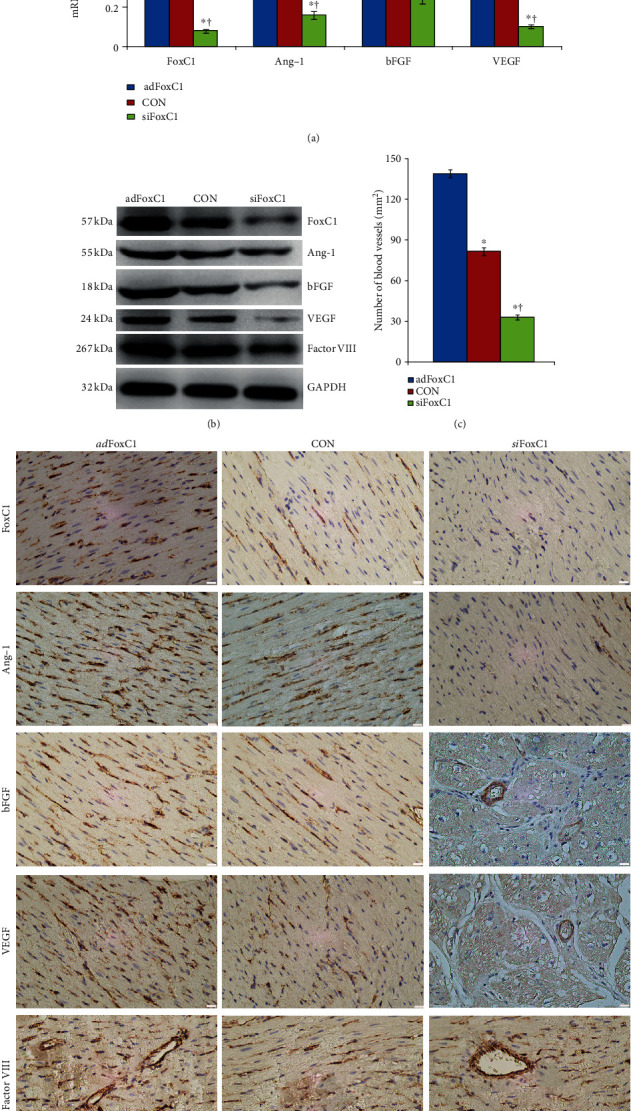
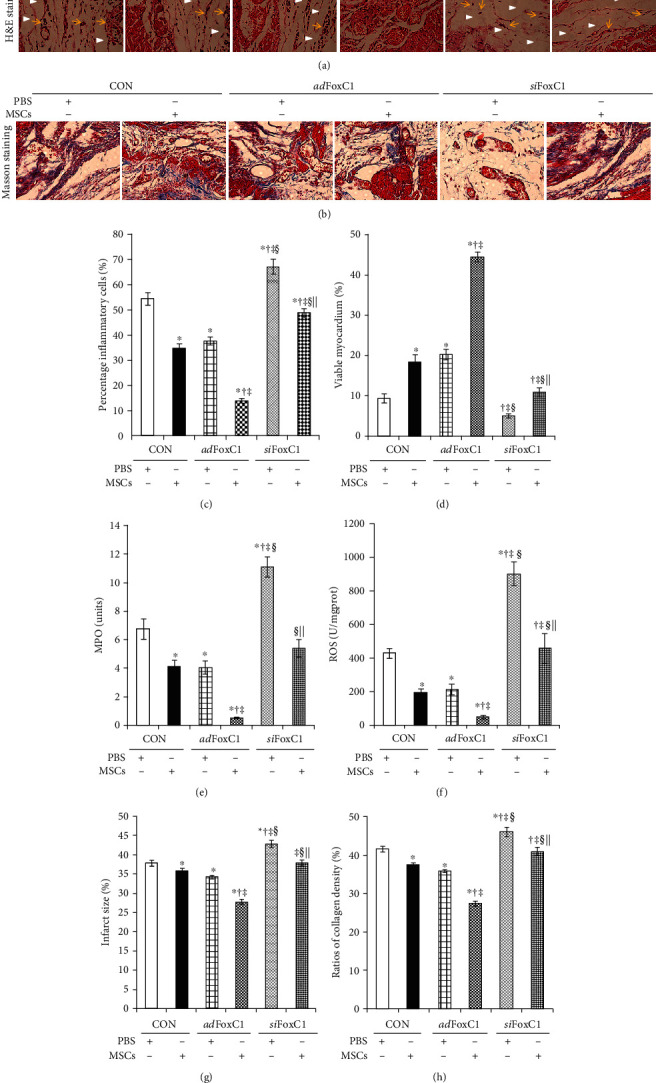
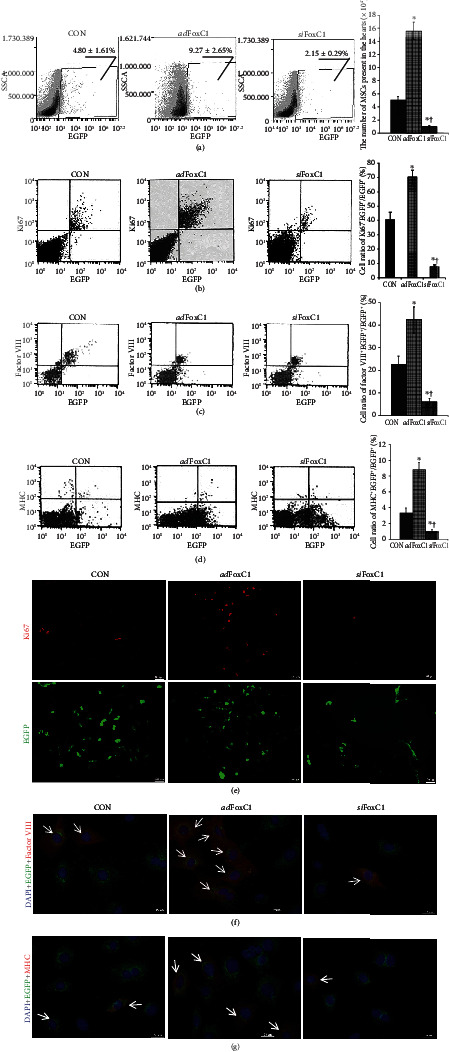
MI model was established in this study, and expression level of FoxC1 was overexpressed or knocked down through efficient delivery of FoxC1 transfection or FoxC1. Fifteen days later, the animals were allocated randomly to receive phosphate-buffered saline (PBS) injection or MSC transplantation. We identified FoxC1 as a key regulator of maintaining the vascular niche in the infarcted hearts (IHs) by driving proangiogenic and anti-inflammatory cytokines while repressing inflammatory and fibrotic factor expression. This vascular niche improved MSC survival and capacity in the IHs. Importantly, FoxC1 interacted with MSCs and was required for vessel specification and differentiation of engrafted MSCs in the ischemic niches, promoting myocardial repair. Inhibiting FoxC1 abolished these effects.
These results definitively implicate FoxC1 signaling in maintaining ischemic vascular niche, which may be helpful in myocardial repair induced by MSC therapy.
叉头框C1(FoxC1)对于维持毛囊干细胞生态位至关重要。迄今为止,FoxC1在心肌梗死(MI)后维持间充质干细胞(MSC)生态位中的作用尚未得到直接确定。在本研究中,我们决定探索FoxC1在缺血性微环境中对MSC存活和功能的可能作用及机制。
本研究建立了MI模型,并通过高效递送FoxC1转染或FoxC1来上调或下调FoxC1的表达水平。15天后,将动物随机分组,分别接受磷酸盐缓冲盐水(PBS)注射或MSC移植。我们发现FoxC1通过驱动促血管生成和抗炎细胞因子,同时抑制炎症和纤维化因子表达,是维持梗死心脏(IH)血管微环境的关键调节因子。这种血管微环境改善了IH中MSC的存活和能力。重要的是,FoxC1与MSC相互作用,是缺血性微环境中移植的MSC血管特化和分化所必需的,促进心肌修复。抑制FoxC1可消除这些作用。
这些结果明确表明FoxC1信号传导在维持缺血性血管微环境中起作用,这可能有助于MSC治疗诱导的心肌修复。