Department of Cell Biology and Oncode Institute, Center for Molecular Medicine, University Medical Center Utrecht, Utrecht, The Netherlands.
Department of Experimental Biology, Faculty of Science, Masaryk University, Brno, Czech Republic.
EMBO J. 2020 Sep 15;39(18):e103932. doi: 10.15252/embj.2019103932. Epub 2020 Aug 10.
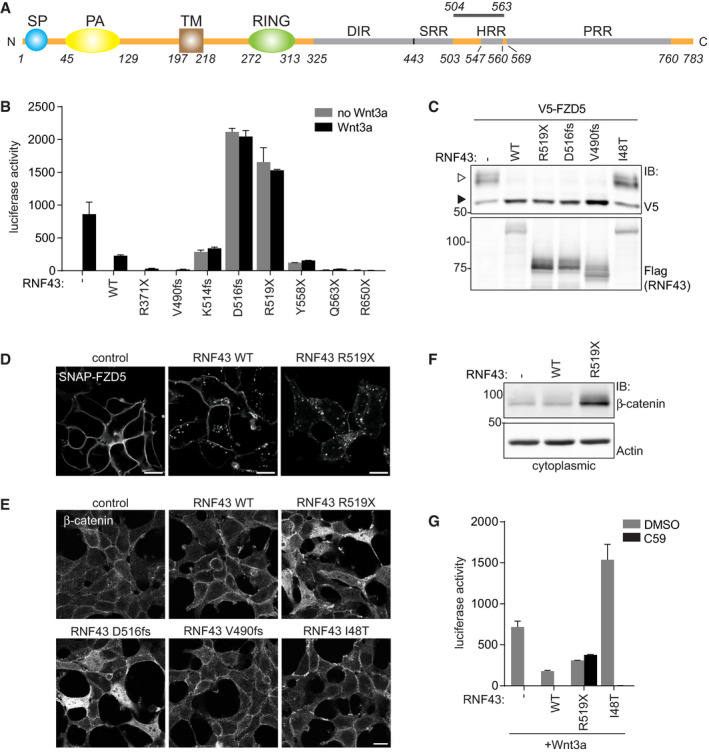
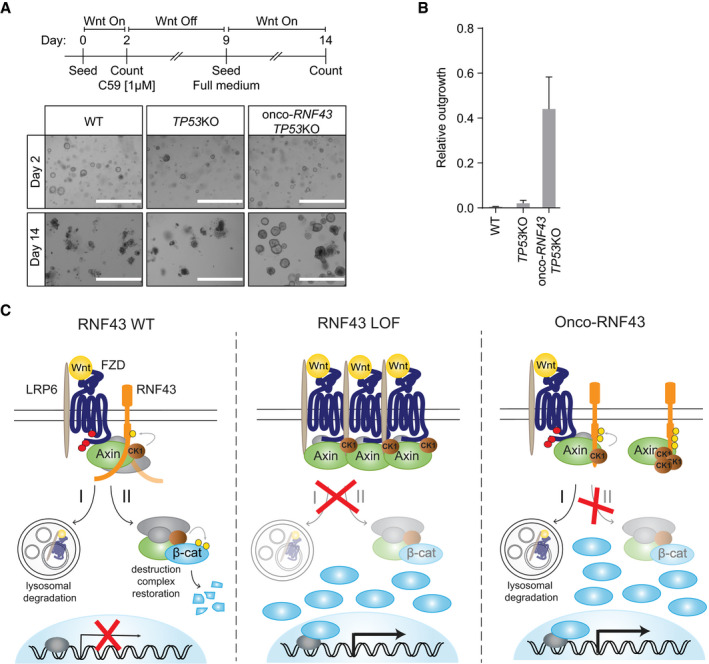
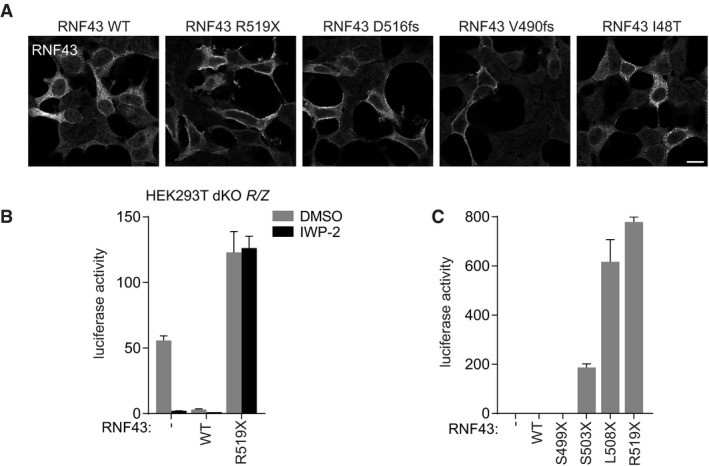
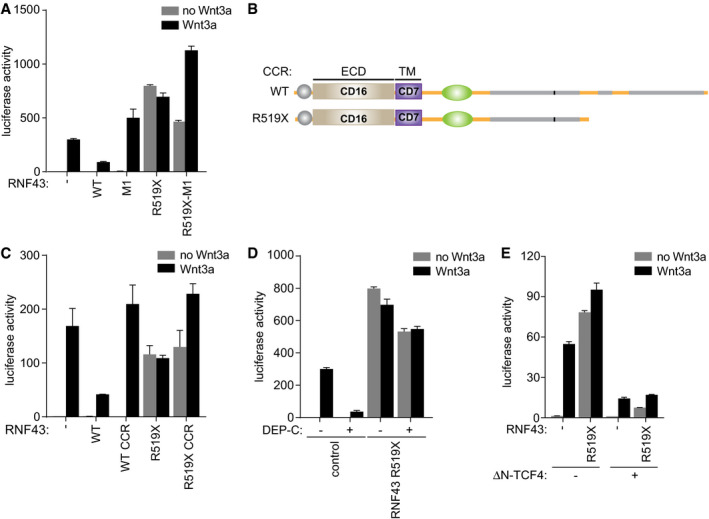
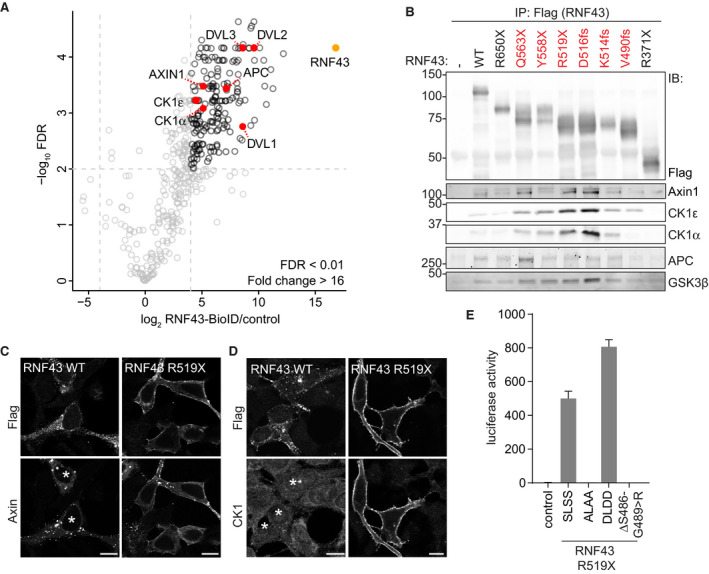
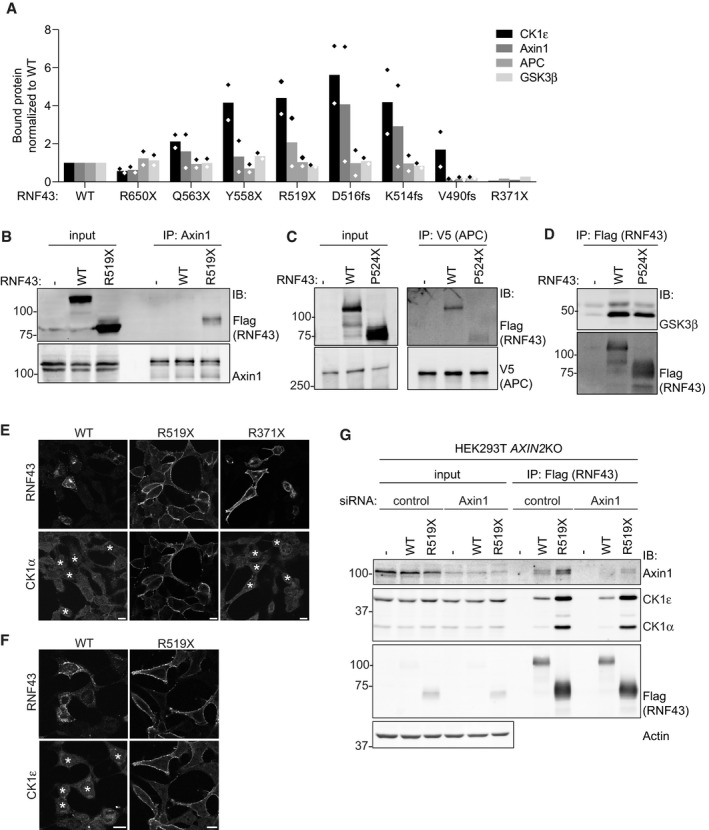
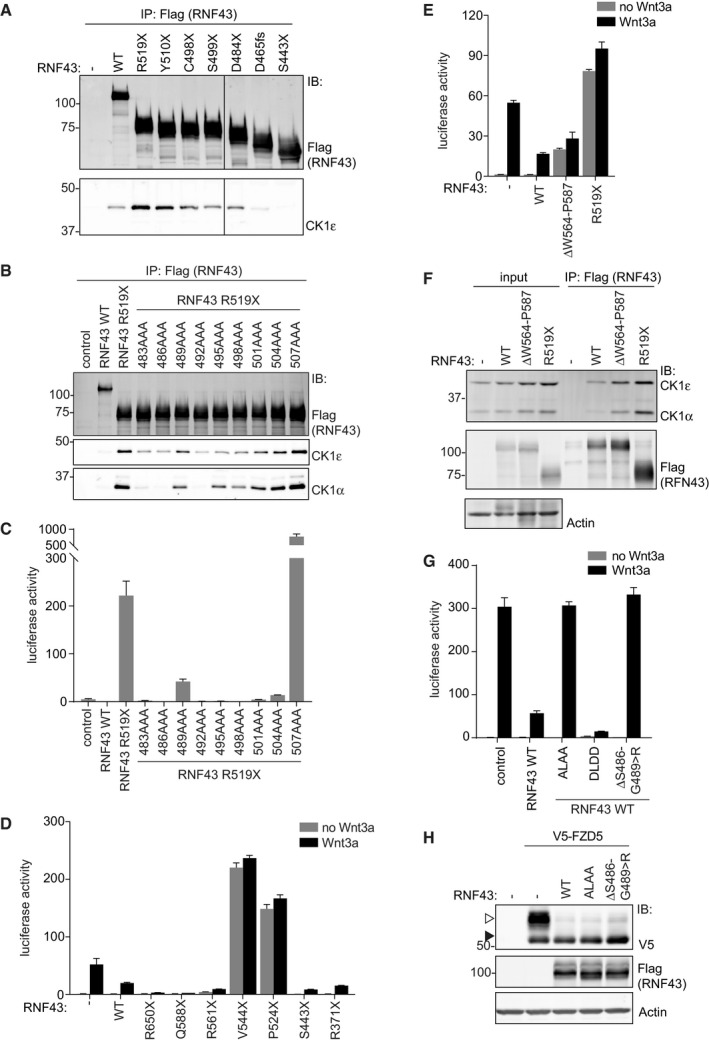
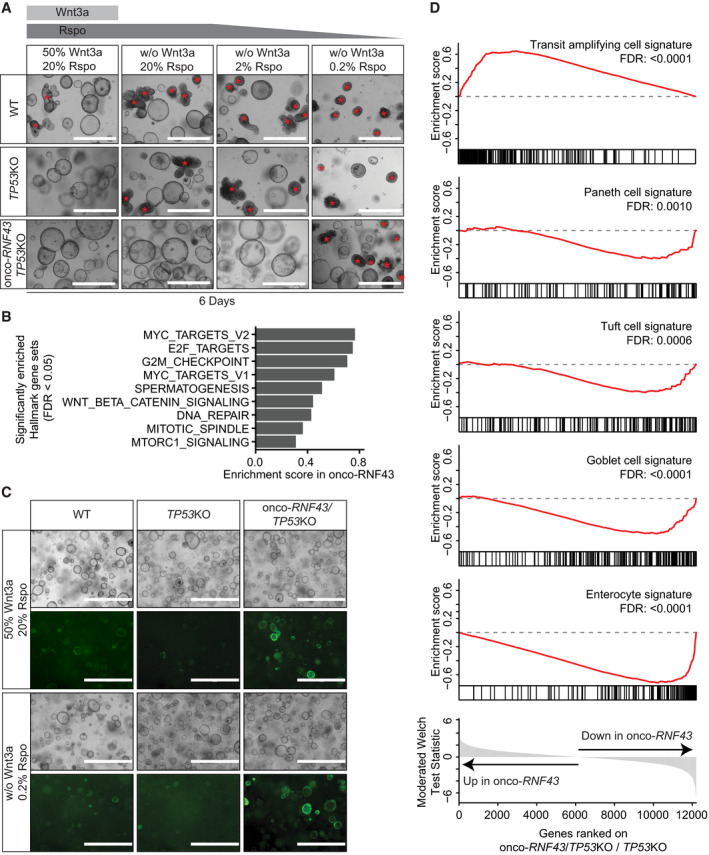
Wnt/β-catenin signaling is a primary pathway for stem cell maintenance during tissue renewal and a frequent target for mutations in cancer. Impaired Wnt receptor endocytosis due to loss of the ubiquitin ligase RNF43 gives rise to Wnt-hypersensitive tumors that are susceptible to anti-Wnt-based therapy. Contrary to this paradigm, we identify a class of RNF43 truncating cancer mutations that induce β-catenin-mediated transcription, despite exhibiting retained Wnt receptor downregulation. These mutations interfere with a ubiquitin-independent suppressor role of the RNF43 cytosolic tail that involves Casein kinase 1 (CK1) binding and phosphorylation. Mechanistically, truncated RNF43 variants trap CK1 at the plasma membrane, thereby preventing β-catenin turnover and propelling ligand-independent target gene transcription. Gene editing of human colon stem cells shows that RNF43 truncations cooperate with p53 loss to drive a niche-independent program for self-renewal and proliferation. Moreover, these RNF43 variants confer decreased sensitivity to anti-Wnt-based therapy. Our data demonstrate the relevance of studying patient-derived mutations for understanding disease mechanisms and improved applications of precision medicine.
Wnt/β-catenin 信号通路是组织更新过程中干细胞维持的主要途径,也是癌症中突变的常见靶点。由于泛素连接酶 RNF43 的缺失导致 Wnt 受体内吞作用受损,会产生对 Wnt 为基础的治疗敏感的 Wnt 超敏肿瘤。与这一范例相反,我们发现了一类 RNF43 截断的癌症突变,尽管它们表现出保留的 Wnt 受体下调,但仍会诱导 β-catenin 介导的转录。这些突变干扰了 RNF43 细胞质尾部的一种非泛素依赖性抑制作用,该作用涉及酪蛋白激酶 1(CK1)结合和磷酸化。从机制上讲,截断的 RNF43 变体将 CK1 困在质膜上,从而阻止 β-catenin 周转并推动配体非依赖性靶基因转录。对人类结肠干细胞的基因编辑表明,RNF43 截断与 p53 缺失协同作用,驱动一种独立于龛位的自我更新和增殖程序。此外,这些 RNF43 变体降低了对 Wnt 为基础的治疗的敏感性。我们的数据表明,研究患者来源的突变对于理解疾病机制和提高精准医学的应用具有重要意义。