RECOVER Injury Research Centre, The University of Queensland, Herston, Qld., Australia.
Department of Occupational Therapy, The Royal Brisbane and Women's Hospital, Herston, Qld., Australia.
Eur J Pain. 2021 Jan;25(1):225-242. doi: 10.1002/ejp.1664. Epub 2020 Oct 7.
Overactivity in the context of chronic pain (i.e. activity engagement that significantly exacerbates pain) is an important clinical issue that has gained empirical attention in the last decade. Current assessment concepts of overactivity tend to focus on frequency to quantify the severity of the pain behaviour. This study aimed to develop and validate a more comprehensive self-assessment, the Overactivity in Persistent Pain Assessment (OPPA).
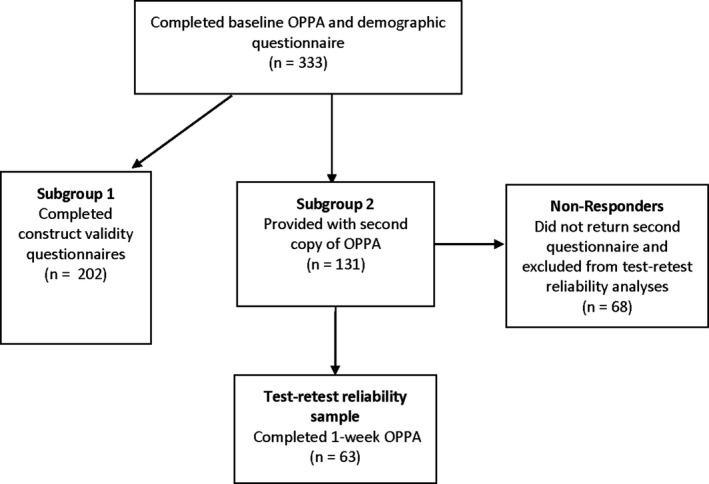
A sample of 333 individuals with chronic pain completed the OPPA. A subset of 202 individuals also completed a set of existing measures of pain-related outcomes and activity patterns. The remaining 131 participants were provided with a second copy of the OPPA to fill in one week following their initial assessment.
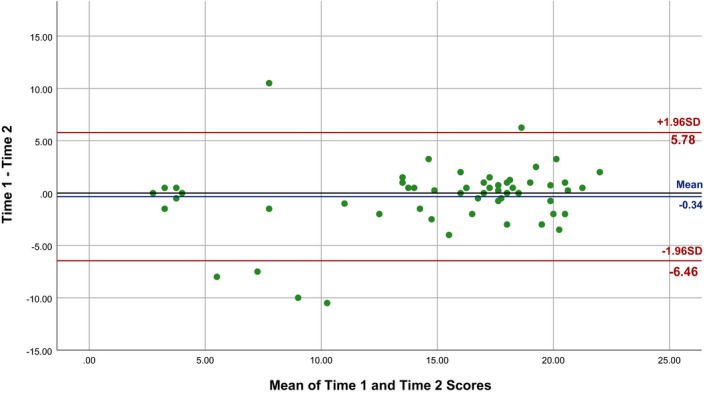
A principal component analysis confirmed that the OPPA items were best represented by a single construct. The OPPA was found to correlate with pain-related measures in an expected way that is supported by both theory and qualitative data. When compared to existing overactivity measures, the OPPA was the only measure to contribute significantly to the regression models predicting higher levels of pain severity, more pain interference and lower levels of activity participation after controlling for age, gender and activity avoidance. In addition, the OPPA scale exhibited acceptable internal consistency and good test-retest reliability.
The results of this study reinforce the potentially important role of overactivity in the maintenance of pain-related suffering and supports a corresponding assessment tool with preliminary psychometric evidence for clinical and research applications.
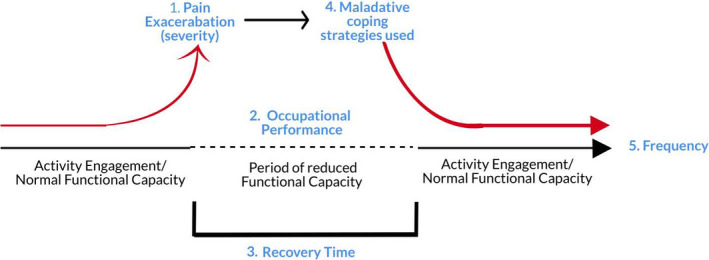
This study deconstructs the overactivity concept and develop a corresponding assessment based on five quantifiable severity features: severity of pain exacerbation, maladaptive coping strategies used, impact on occupational performance, recovery time and frequency. Results of the psychometric evaluation indicate that this comprehensive assessment of overactivity severity features may be necessary to understand the impact of overactivity on pain severity and physical functioning from both a clinical and research perspective.
慢性疼痛背景下的过度活动(即显著加重疼痛的活动参与)是一个重要的临床问题,在过去十年中引起了实证关注。目前过度活动的评估概念往往侧重于频率,以量化疼痛行为的严重程度。本研究旨在开发和验证一种更全面的自我评估方法,即持续性疼痛过度活动评估(OPPA)。
333 名慢性疼痛患者完成了 OPPA。202 名患者还完成了一系列现有的疼痛相关结果和活动模式的测量。其余 131 名参与者在初次评估后一周内提供了 OPPA 的第二份副本。
主成分分析证实,OPPA 项目最好由一个单一的结构来表示。OPPA 与疼痛相关测量结果的相关性以理论和定性数据为依据,符合预期。与现有的过度活动测量相比,OPPA 是唯一一项在控制年龄、性别和活动回避后,对预测更高水平疼痛严重程度、更多疼痛干扰和更低活动参与度的回归模型有显著贡献的测量。此外,OPPA 量表表现出可接受的内部一致性和良好的重测信度。
本研究的结果强化了过度活动在维持疼痛相关痛苦中的潜在重要作用,并支持了一种具有初步心理测量证据的相应评估工具,用于临床和研究应用。
本研究对过度活动的概念进行了解构,并根据五个可量化的严重程度特征开发了相应的评估:疼痛加剧的严重程度、使用的适应性应对策略、对职业表现的影响、恢复时间和频率。心理测量评估的结果表明,这种对过度活动严重程度特征的全面评估可能对于从临床和研究的角度理解过度活动对疼痛严重程度和身体功能的影响是必要的。