Pet Nutrology Research Center, Nutrition and Production Department, School of Veterinary Medicine and Animal Science, University of Sao Paulo-USP, Pirassununga, São Paulo, Brazil.
Veterinary Nutrology Service, Teaching Veterinary Hospital, School of Veterinary Medicine and Animal Science, University of Sao Paulo-USP, São Paulo, São Paulo, Brazil.
PLoS One. 2020 Sep 23;15(9):e0238638. doi: 10.1371/journal.pone.0238638. eCollection 2020.
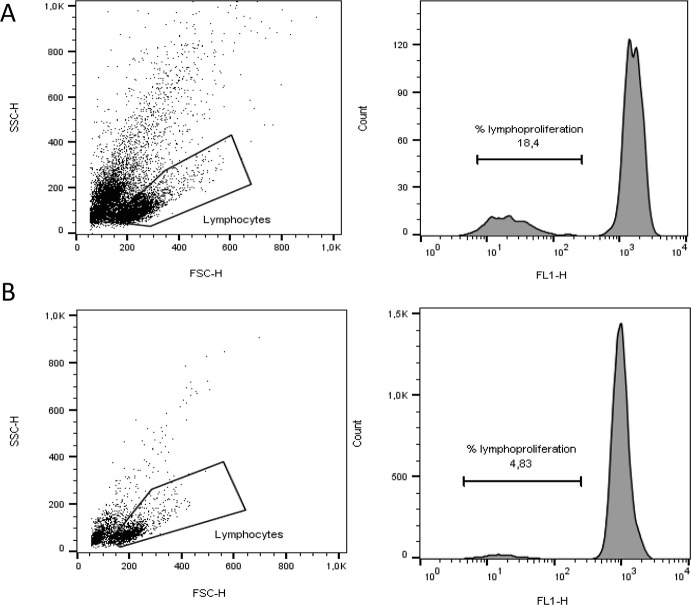
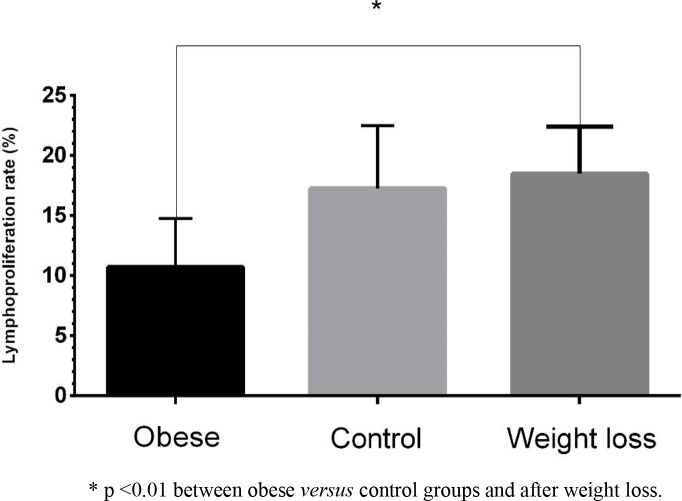
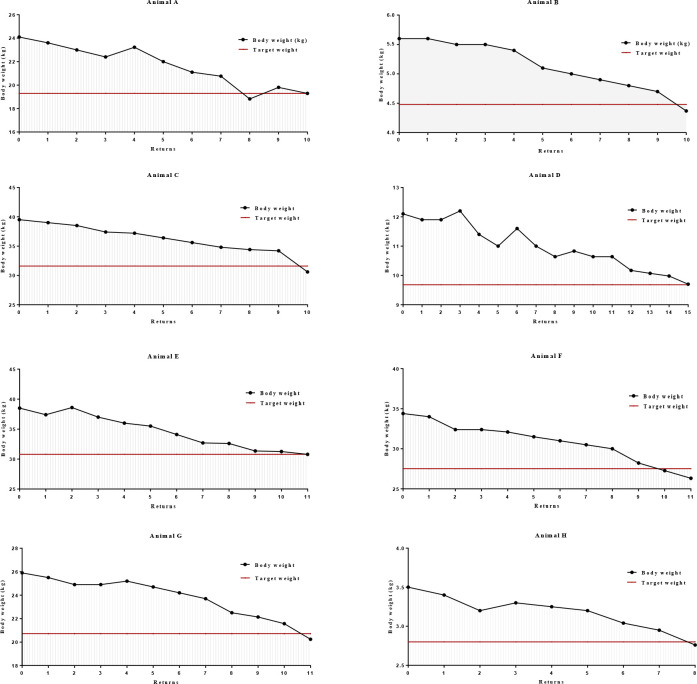
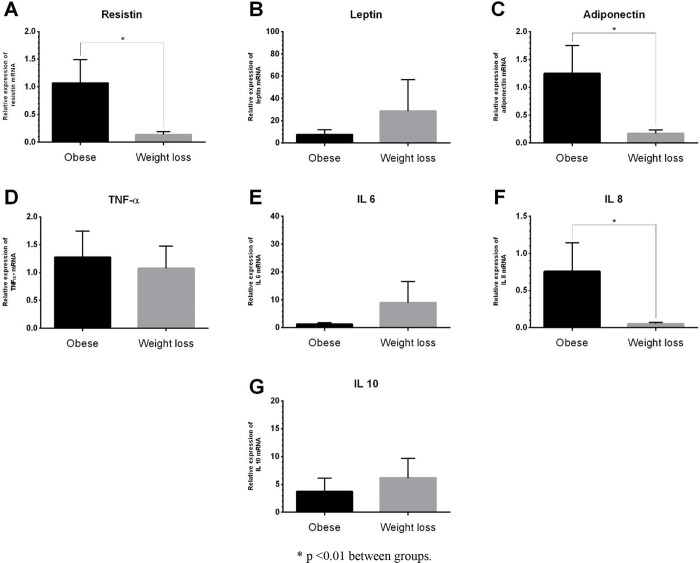
Obesity is characterized by a low degree of chronic inflammation state that, along with metabolic modifications, promotes important changes in the animal's organism. Adipose tissue actively participates in inflammation and immunity, and several defense cells of the organism may, therefore, be involved in the diversity found between obese and ideal weight individuals. Studies regarding this subject have shown immune cell changes in humans and rats, however, the literature is scarce in relation to dogs. Thus, the present study aimed to evaluate the gene expression profile of immunoinflammatory response and the lymphoproliferation of obese dogs before and after weight loss. Eight female dogs, neutered, of different breeds, aged between 1 and 8 years (4.74±3.19), obese, with body condition score (BCS) of 9 out of a 9-point scale and body composition determined by the deuterium isotope dilution method were included. The obese dogs were enrolled in a weight loss program and after losing 20% of their initial weight became a second experimental group. A third experimental group consisted of eight female dogs, neutered, aged between 1 and 8 years (3.11±0.78) and with ideal BCS (5 out of a 9-point scale). Gene expression of immunoinflammatory cytokines (resistin, leptin, adiponectin, TNF-α, IL-6, IL-8, and IL-10) was assessed by qRT-PCR and immunity was assessed by lymphoproliferative response using the flow cytometry technique. The data that presented normal distribution was evaluated by analysis of variance by the PROC MIXED of the SAS and when differences were detected, these were compared by the Tukey test. Regarding the gene expression data, the procedure PROC GLIMMIX was adopted and the methodology of generalized linear model was used, in which the Gama distribution proved to be adequate. Values of p<0.05 were considered significant. The mean weight loss period of the animals included in the study was 194.25 ± 28.31 days and the mean weekly weight loss rate was 1.02 ± 0.82%. The average fat mass, both in percentage (P<0.001) and in kilograms (P = 0.012), was higher in the obese group (40.88%; 8.91kg), returning to normal and without difference between the control group (19.16%; 3.01kg) and after weight loss (22.10%; 4.11kg). The weight loss program resulted in an increase in percentage of lean body mass (P = 0.001), 55.50% in obese animals vs 77.90% in obese dogs after weight loss, the latter with no difference when compared to the control group (80.84%). The obese group presented increased gene expression of resistin and IL-8 in relation to the weight loss group (P = 0.002). In adiponectin, the obese group presented increased mRNA gene expression when compared to the weight loss group (P = 0.003). The evaluation of lymphocyte proliferation showed differences between the group of obese animals before and after weight loss (P = 0.004). Weight loss resulted in an increase in the lymphoproliferation rate (18.48%) compared to obese dogs at the beginning of the study (10.71%). These results indicate that weight loss modulates the immunoinflammatory response of obese dogs and may present important benefits to health and longevity of dogs.
肥胖的特点是低度慢性炎症状态,这种状态与代谢改变一起,使动物机体发生重要变化。脂肪组织积极参与炎症和免疫,因此,机体的几种防御细胞可能参与肥胖和理想体重个体之间的差异。关于这个主题的研究已经在人类和大鼠中显示出免疫细胞的变化,然而,关于狗的文献却很少。因此,本研究旨在评估肥胖犬在减肥前后的免疫炎症反应和淋巴增殖的基因表达谱。
8 只不同品种的雌性犬,已绝育,年龄在 1 至 8 岁之间(4.74±3.19),肥胖,体况评分(BCS)为 9 分制的 9 分,身体成分通过氘同位素稀释法确定。肥胖犬被纳入减肥计划,在体重减轻 20%后成为第二个实验组。第三个实验组由 8 只雌性犬组成,已绝育,年龄在 1 至 8 岁之间(3.11±0.78),BCS 理想(5 分制的 5 分)。通过 qRT-PCR 评估免疫炎症细胞因子(抵抗素、瘦素、脂联素、TNF-α、IL-6、IL-8 和 IL-10)的基因表达,并通过流式细胞术技术评估免疫反应的淋巴增殖反应。
分析了呈现正态分布的数据,采用 SAS 的 PROC MIXED 程序进行方差分析,当检测到差异时,通过 Tukey 检验进行比较。关于基因表达数据,采用 PROC GLIMMIX 程序,并采用广义线性模型方法,伽马分布被证明是合适的。认为 p<0.05 的值具有统计学意义。
纳入研究的动物的平均减肥期为 194.25±28.31 天,平均每周减肥率为 1.02±0.82%。肥胖组的脂肪质量百分比(P<0.001)和公斤数(P=0.012)均较高(40.88%;8.91kg),恢复正常,与对照组(19.16%;3.01kg)和减肥后(22.10%;4.11kg)无差异。减肥计划导致瘦体重百分比增加(P=0.001),肥胖动物增加 55.50%,减肥后肥胖犬增加 55.50%,后者与对照组(80.84%)无差异。与减肥组相比,肥胖组抵抗素和 IL-8 的基因表达增加(P=0.002)。在脂联素方面,肥胖组的 mRNA 基因表达高于减肥组(P=0.003)。淋巴细胞增殖评估显示,肥胖动物减肥前后存在差异(P=0.004)。与研究开始时的肥胖犬(10.71%)相比,减肥导致淋巴增殖率增加(18.48%)。
这些结果表明,减肥可调节肥胖犬的免疫炎症反应,并可能对犬的健康和长寿产生重要影响。