Xiang Shengyuan, Wu Songguo, Zhang Haiyan, Mou Minghui, Chen Yanli, Li Daibo, Wang Houping, Chen Ligang, Yu Diqiu
CAS Key Laboratory of Tropical Plant Resources and Sustainable Use, Xishuangbanna Tropical Botanical Garden, Chinese Academy of Sciences, Menglun, Mengla 666303, China.
University of Chinese Academy of Sciences, Beijing 100049, China.
Plants (Basel). 2020 Sep 21;9(9):1246. doi: 10.3390/plants9091246.
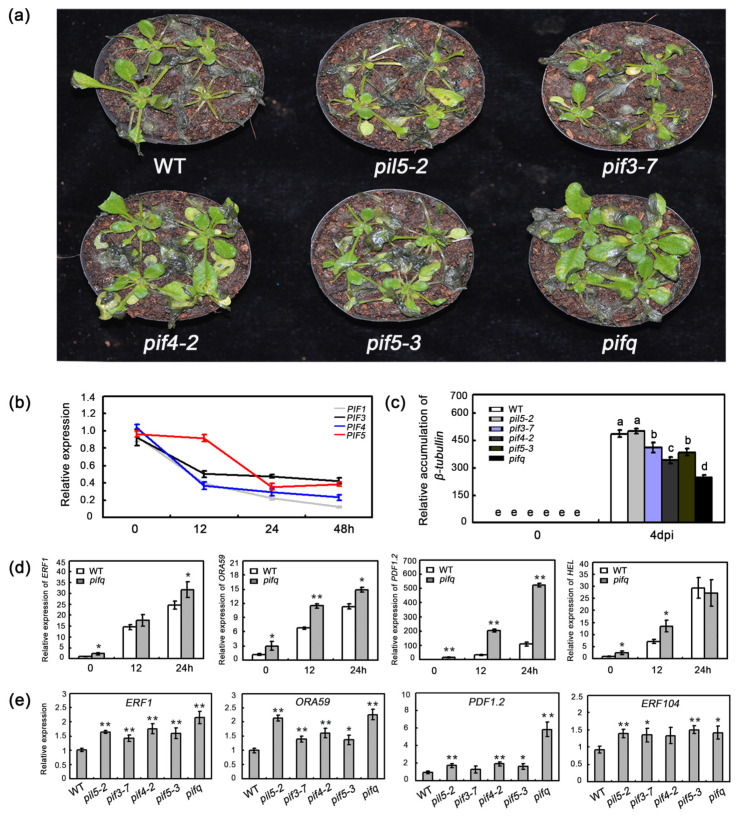
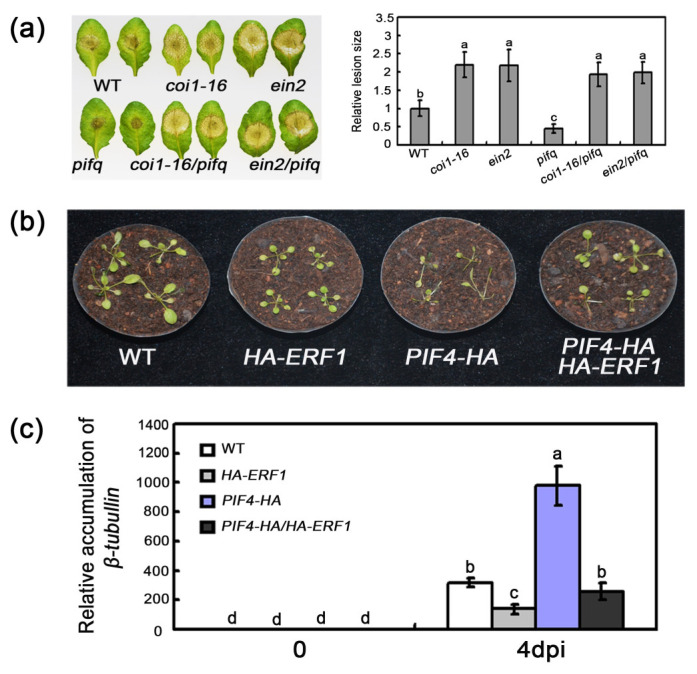
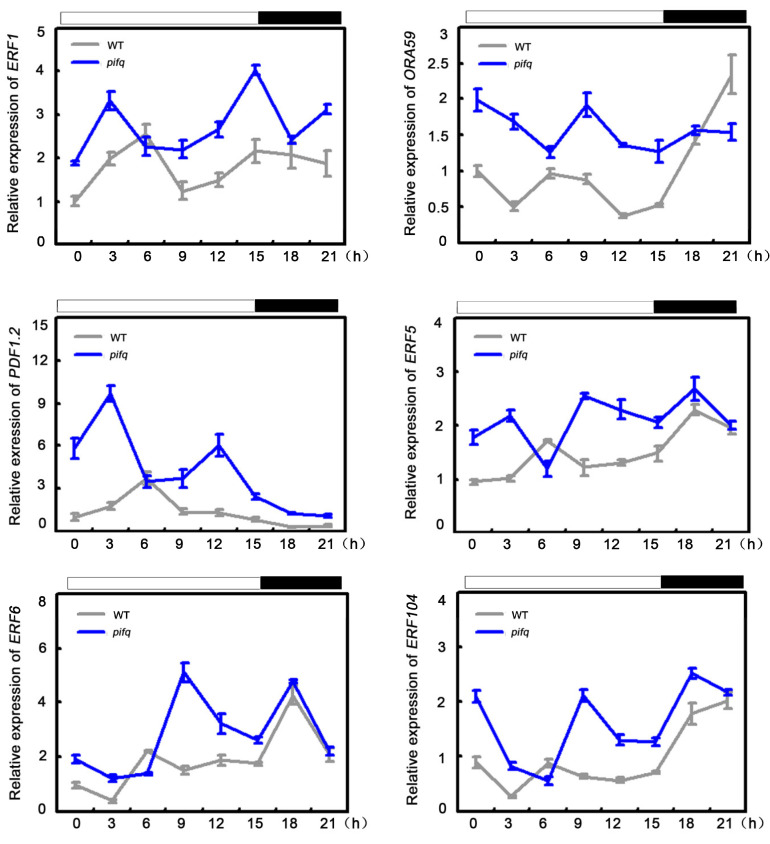
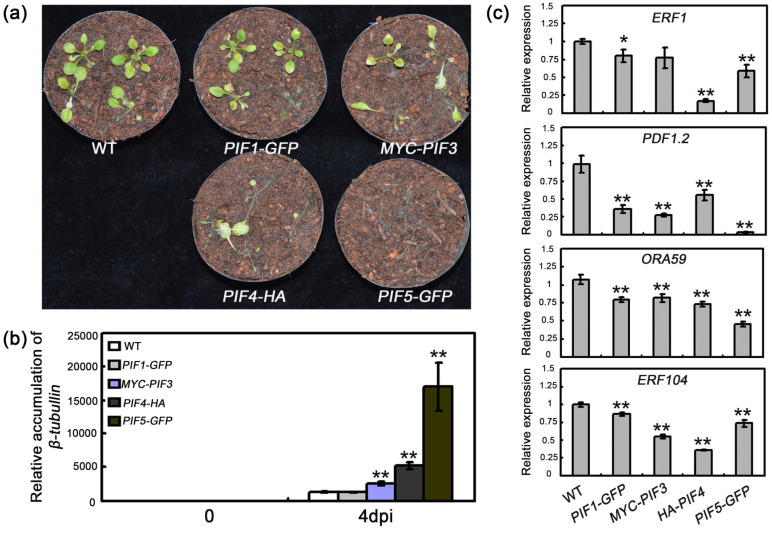
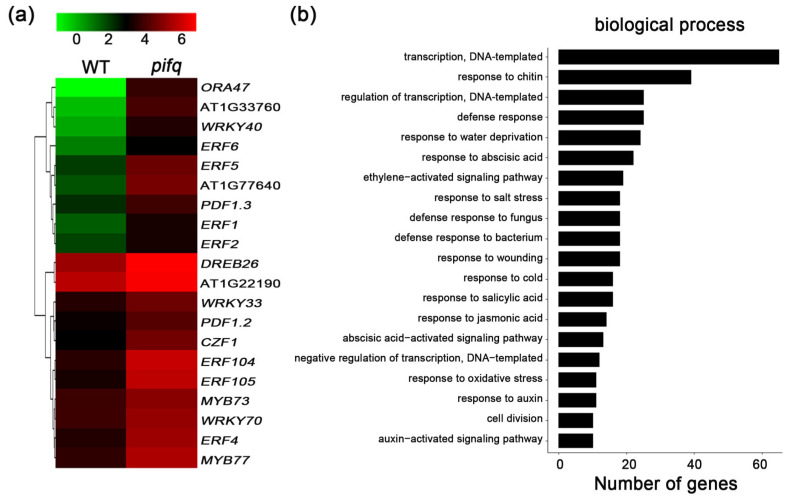
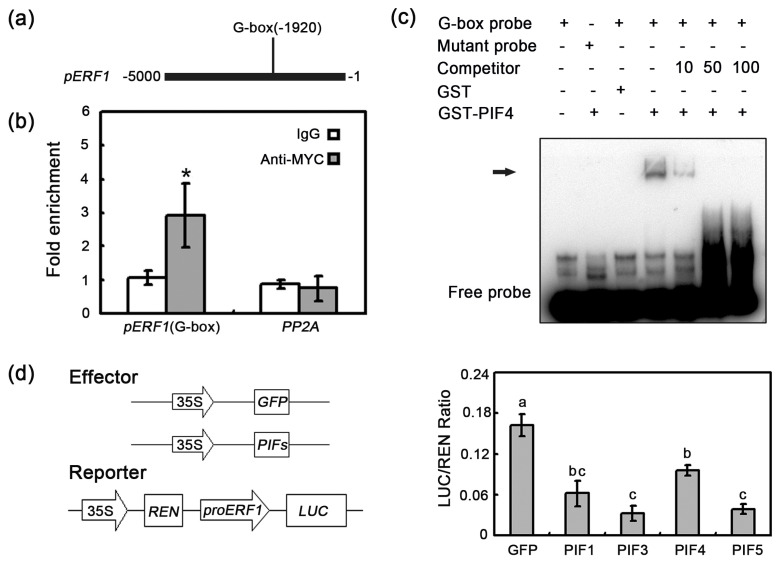
Endogenous and exogenous signals are perceived and integrated by plants to precisely control defense responses. As a crucial environmental cue, light reportedly plays vital roles in plant defenses against necrotrophic pathogens. Phytochrome-interacting factor (PIF) is one of the important transcription factors which plays essential roles in photoreceptor-mediated light response. In this study, we revealed that PIFs negatively regulate plant defenses against . Gene expression analyses showed that the expression level of a subset of defense-response genes was higher in () mutants than in the wild-type control, but was lower in -overexpressing plants. Chromatin immunoprecipitation assays proved that PIF4/5 binds directly to the () promoter. Moreover, genetic analyses indicated that the overexpression of dramatically rescues the susceptibility of and transgenic plants, and that PIF controls the resistance to in a COI1- and EIN2-dependent manner. Our results provide compelling evidence that PIF, together with the jasmonate/ethylene pathway, is important for plant resistance to .
植物感知并整合内源性和外源性信号,以精确控制防御反应。作为一个关键的环境信号,据报道光在植物抵御坏死营养型病原体的防御过程中发挥着重要作用。光敏色素相互作用因子(PIF)是在光受体介导的光反应中发挥重要作用的重要转录因子之一。在本研究中,我们揭示了PIF对植物抵御[病原体名称未给出]具有负调控作用。基因表达分析表明,一组防御反应基因在[突变体名称未给出]突变体中的表达水平高于野生型对照,但在[过表达植株名称未给出]过表达植株中较低。染色质免疫沉淀分析证明PIF4/5直接结合到[启动子名称未给出]启动子上。此外,遗传分析表明,[基因名称未给出]的过表达显著挽救了[转基因植株名称未给出]和[转基因植株名称未给出]转基因植株的易感性,并且PIF以依赖COI1和EIN2的方式控制对[病原体名称未给出]的抗性。我们的结果提供了令人信服的证据,表明PIF与茉莉酸/乙烯途径一起,对植物抵抗[病原体名称未给出]很重要。