Cell and Developmental Biology Department, John Innes Centre, Norwich NR4 7UH, UK.
Cell and Developmental Biology Department, John Innes Centre, Norwich NR4 7UH, UK.
Curr Biol. 2017 Jan 23;27(2):243-249. doi: 10.1016/j.cub.2016.11.012. Epub 2016 Dec 29.
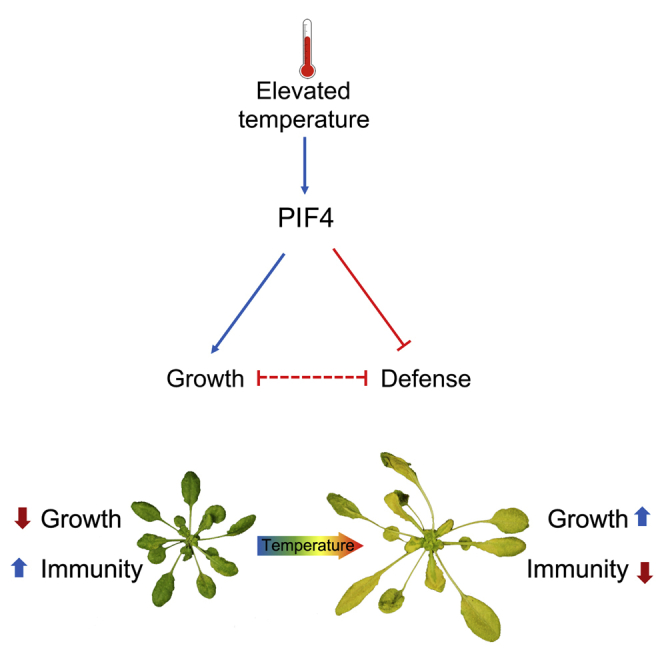
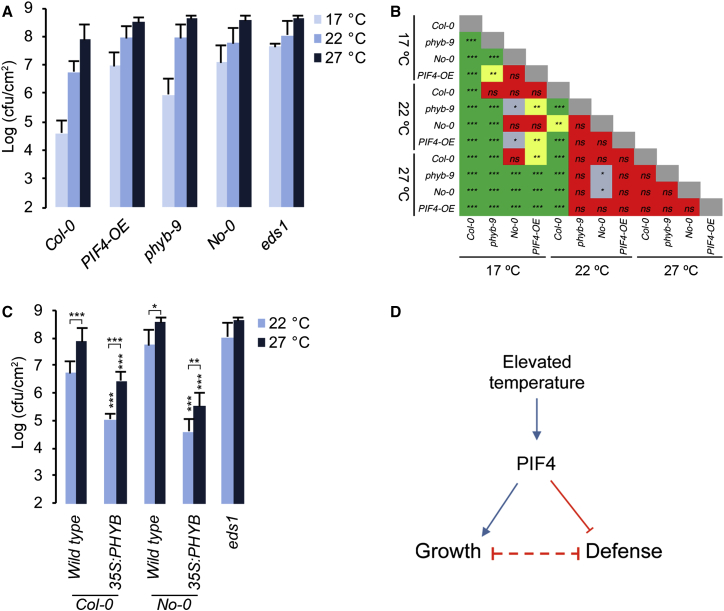
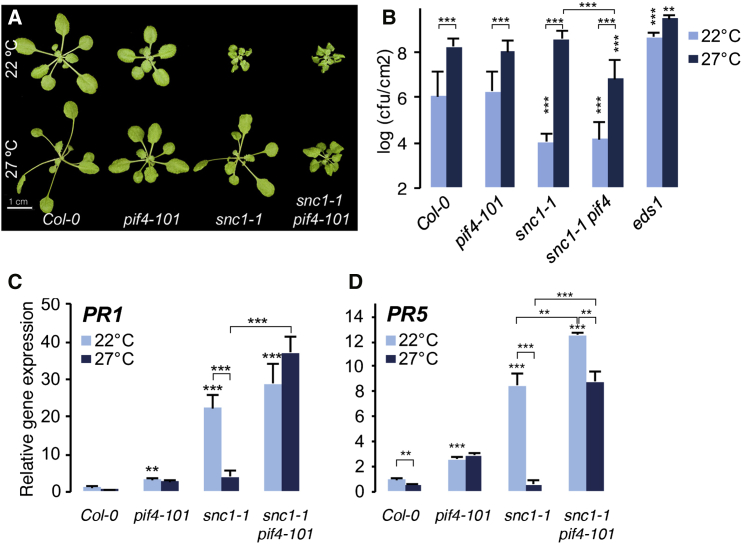
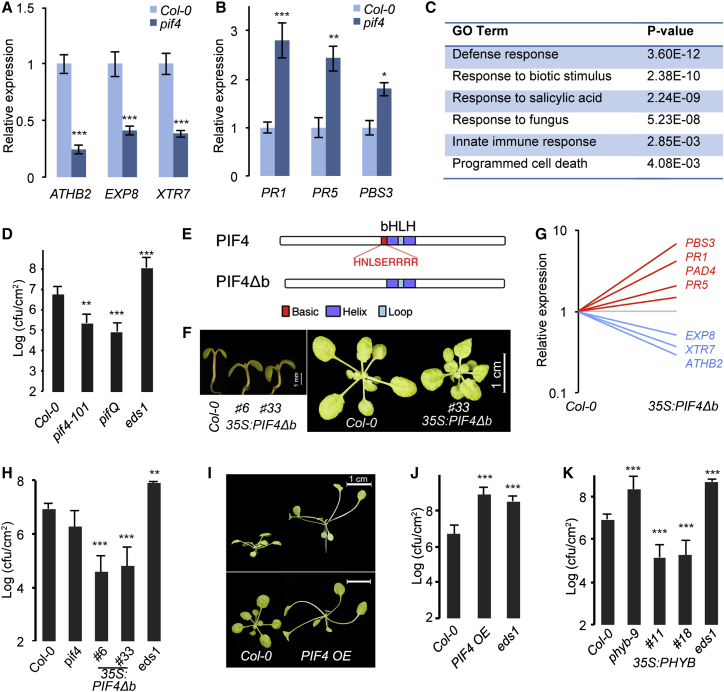
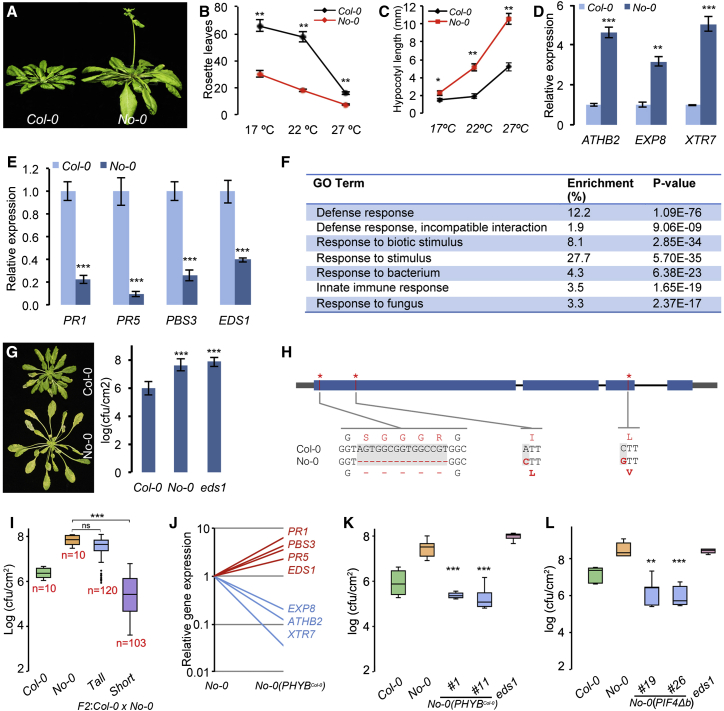
Temperature is a key seasonal signal that shapes plant growth. Elevated ambient temperature accelerates growth and developmental transitions [1] while compromising plant defenses, leading to increased susceptibility [2, 3]. Suppression of immunity at elevated temperature is at the interface of trade-off between growth and defense [2, 4]. Climate change and the increase in average growth-season temperatures threaten biodiversity and food security [5, 6]. Despite its significance, the molecular mechanisms that link thermosensory growth and defense responses are not known. Here we show that PHYTOCHROME INTERACTING FACTOR 4 (PIF4)-mediated thermosensory growth and architecture adaptations are directly linked to suppression of immunity at elevated temperature. PIF4 positively regulates growth and development and negatively regulates immunity. We also show that natural variation of PIF4-mediated temperature response underlies variation in the balance between growth and defense among Arabidopsis natural strains. Importantly, we find that modulation of PIF4 function alters temperature sensitivity of defense. Perturbation of PIF4-mediated growth has resulted in temperature-resilient disease resistance. This study reveals a molecular link between thermosensory growth and immunity in plants. Elucidation of the molecular mechanisms that define environmental signal integration is key to the development of novel strategies for breeding temperature-resilient disease resistance in crops.
温度是塑造植物生长的关键季节性信号。环境温度升高会加速生长和发育转变[1],同时削弱植物的防御能力,导致植物易感性增加[2,3]。在高温下抑制免疫反应是生长和防御之间权衡的交点[2,4]。气候变化和平均生长季节温度的升高威胁着生物多样性和粮食安全[5,6]。尽管其意义重大,但将热感觉生长和防御反应联系起来的分子机制尚不清楚。在这里,我们表明 PHYTOCHROME INTERACTING FACTOR 4(PIF4)介导的热感觉生长和结构适应与高温下免疫抑制直接相关。PIF4 正向调节生长和发育,负向调节免疫。我们还表明,PIF4 介导的温度响应的自然变异是拟南芥自然品系中生长和防御之间平衡变化的基础。重要的是,我们发现 PIF4 功能的调节改变了防御的温度敏感性。PIF4 介导的生长的扰动导致了对疾病的温度抗性。本研究揭示了植物中热感觉生长和免疫之间的分子联系。阐明定义环境信号整合的分子机制是开发在作物中培育对温度具有抗性的疾病的新型策略的关键。