Ryu Ji-Yeon, Choi Yoonseong, Hong Kun-Hwa, Chung Yong Suk, Cho Somi Kim
School of Biomaterials Sciences and Technology, College of Applied Life Sciences, SARI, Jeju National University, Jeju 63243, Korea.
Lucy Cavendish College, University of Cambridge, Cambridge CB3 0BU, UK.
Foods. 2020 Sep 21;9(9):1331. doi: 10.3390/foods9091331.
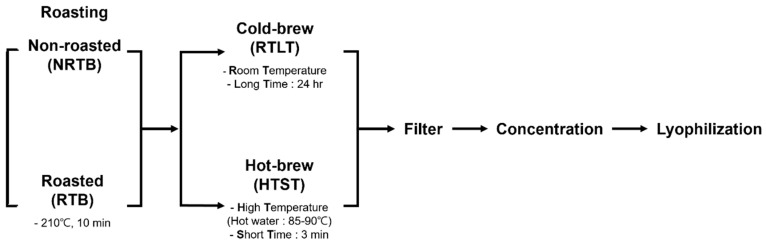
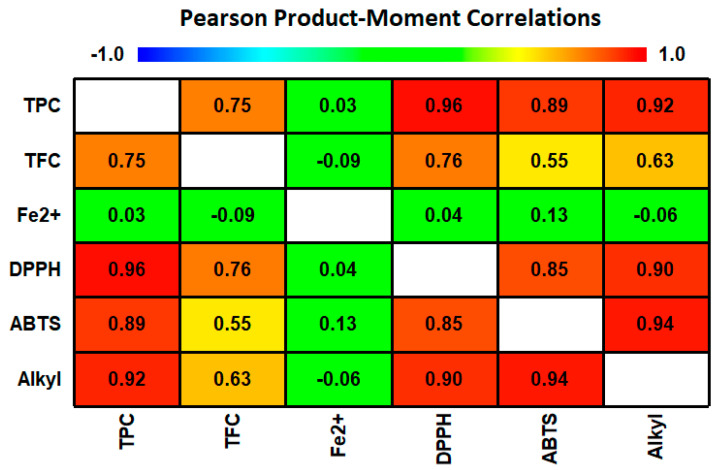
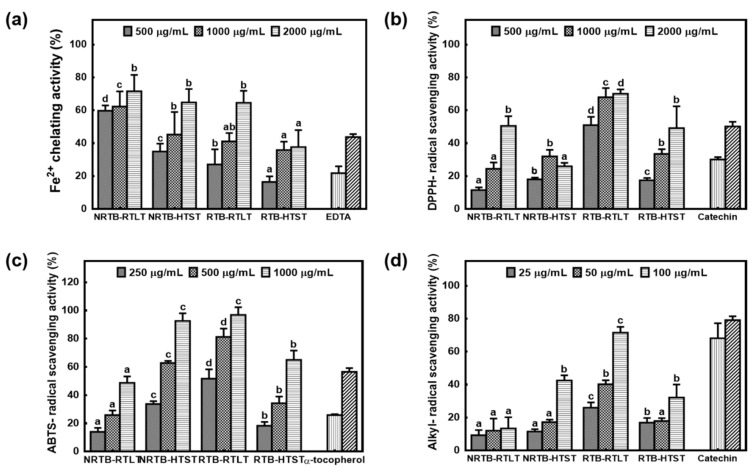
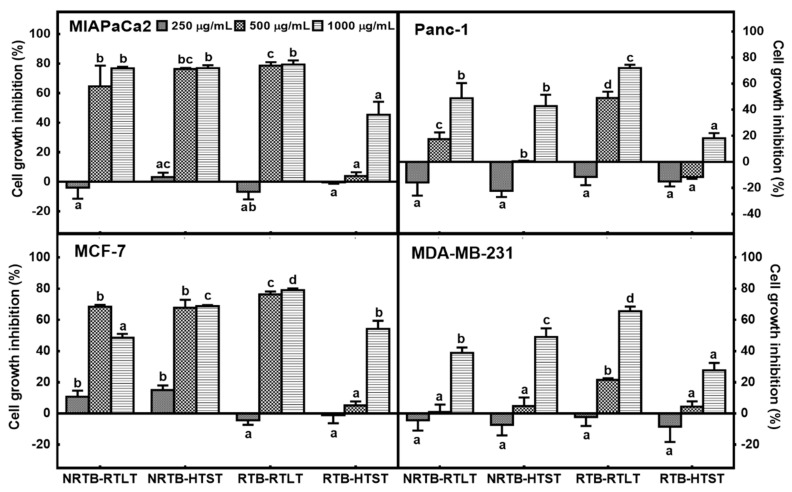
We evaluated the effect of the roasting and brewing conditions of Tartary buckwheat (TB), which is widely used in infusion teas, on its antioxidant and antiproliferative activities in vitro. TB was roasted at 210 °C for 10 min and brewed at a high temperature for a short time (HTST; 85-90 °C, 3 min) or at room temperature for a long time (RTLT; 25-30 °C, 24 h). Roasted TB (RTB) tea brewed at RTLT had the highest total polyphenol content (TPC) and total flavonoid content (TFC) among the four TB teas for different roasting and brewing conditions. Moreover, RTB brewed at RTLT showed the greatest 2,2-diphenyl-1-picrylhydrazyl-, 2,2'-azino-bis(3-ethylbenzothiazoline-6-sulphonic acid)-, and alkyl-scavenging activities. The TB tea brewed at RTLT had higher Fe-chelating activity than that brewed at HTST, irrespective of roasting. Moreover, RTB tea brewed at RTLT inhibited the proliferation of human pancreatic and breast cancer cells. Overall, RTB-RTLT displayed the largest effect on antioxidant and antiproliferative effects. Finally, rutin was found to possess the most pronounced effect on the antioxidant and antiproliferative activities of the TB teas. These results indicate that the antioxidant and antiproliferative activities of RTB are enhanced by RTLT brewing.
我们评估了在冲泡茶中广泛使用的苦荞的烘焙和冲泡条件对其体外抗氧化和抗增殖活性的影响。苦荞在210℃下烘焙10分钟,并在高温下短时间冲泡(高温短时间冲泡;85-90℃,3分钟)或在室温下长时间冲泡(室温长时间冲泡;25-30℃,24小时)。在不同烘焙和冲泡条件的四种苦荞茶中,室温长时间冲泡的烘焙苦荞茶总多酚含量(TPC)和总黄酮含量(TFC)最高。此外,室温长时间冲泡的烘焙苦荞茶表现出最大的2,2-二苯基-1-苦基肼基、2,2'-联氮-双(3-乙基苯并噻唑啉-6-磺酸)和烷基清除活性。无论烘焙与否,室温长时间冲泡的苦荞茶比高温短时间冲泡的苦荞茶具有更高的铁螯合活性。此外,室温长时间冲泡的烘焙苦荞茶抑制人胰腺和乳腺癌细胞的增殖。总体而言,室温长时间冲泡的烘焙苦荞茶对抗氧化和抗增殖作用的影响最大。最后,发现芦丁对苦荞茶的抗氧化和抗增殖活性具有最显著的影响。这些结果表明,室温长时间冲泡可增强烘焙苦荞茶的抗氧化和抗增殖活性。