Cuénoud H F, Joris I, Langer R S, Majno G
Am J Pathol. 1987 Jun;127(3):592-604.
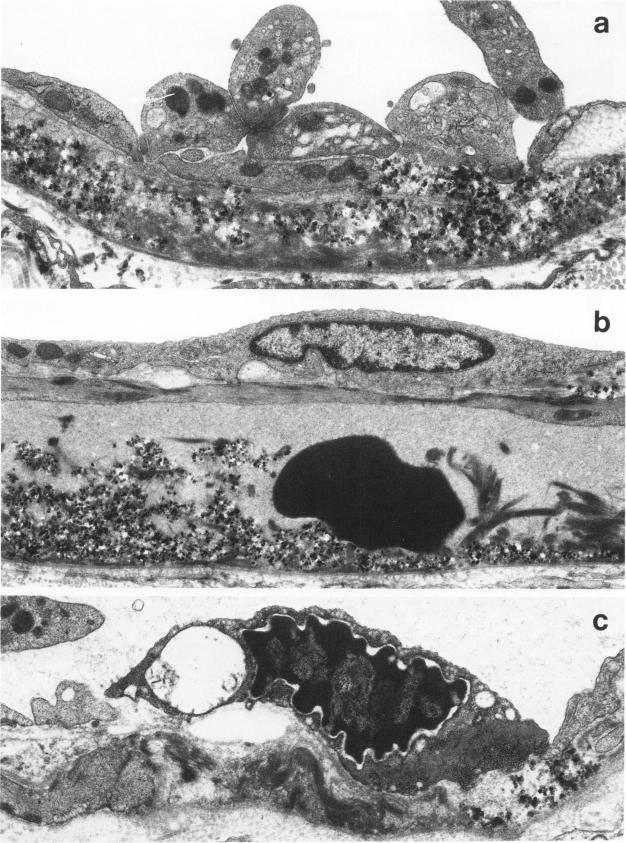
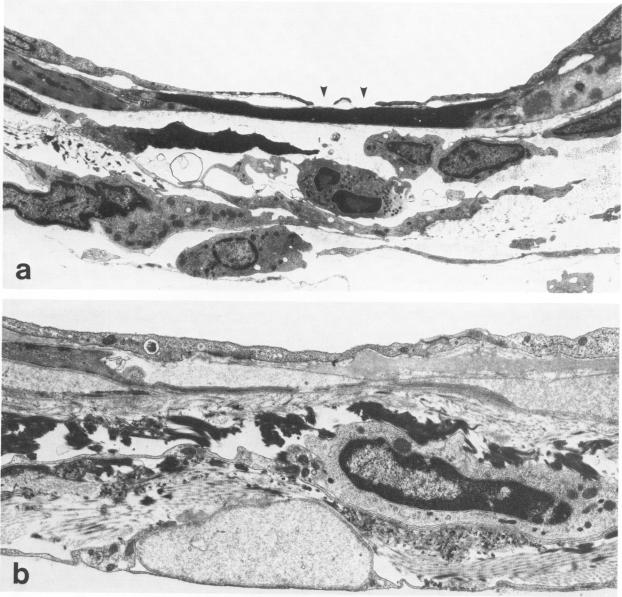
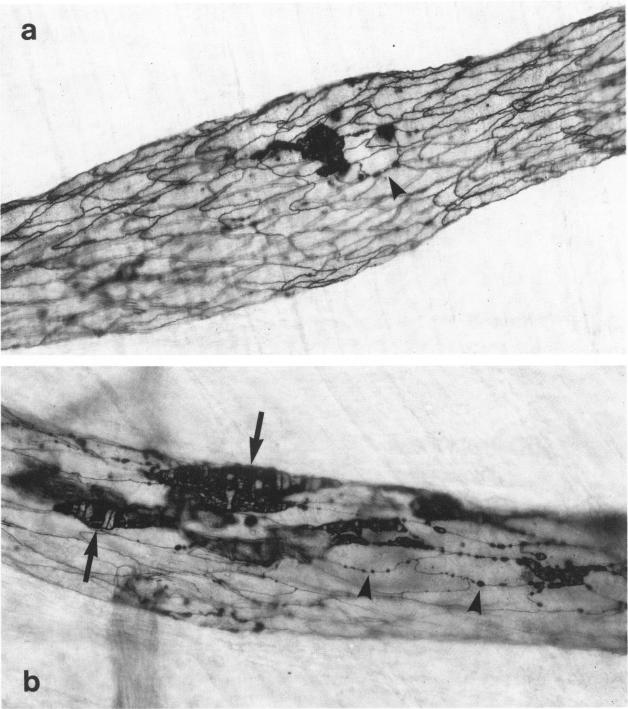
The subcutaneous insertion of sterile, inert plastic pellets over the cremaster muscles of rats induces characteristic focal lesions of the arterioles at a distance from the pellets. These lesions appear with a delay of about 6 hours; by light microscopy they are characterized by a focal dilatation accompanied by endothelial damage and increased permeability. They are more severe if the pellets are loaded with histamine and are inhibited if the pellets are loaded with serotonin. Electron microscopy shows interendothelial gaps; the media is massively infiltrated with blood components and fibrin. The medial smooth muscle cells are stretched and at times necrotic; inflammatory cells are scarce. On the basis of these features the lesion was named focal arteriolar insudation (FAI). Although its pathogenesis is not yet clear, the data at hand suggest that it is caused by endogenous mediators affecting the smooth muscle cells and/or the endothelium. FAI appears to be a specific arteriolar response to chronic nonspecific irritation.
在大鼠提睾肌上皮下插入无菌、惰性塑料小球,会在距小球一定距离处诱发小动脉特征性的局灶性病变。这些病变约6小时后出现;光镜下其特征为局灶性扩张,伴有内皮损伤和通透性增加。如果小球中含有组胺,病变会更严重;如果小球中含有血清素,病变则会受到抑制。电子显微镜显示内皮细胞间隙;中膜大量被血液成分和纤维蛋白浸润。中膜平滑肌细胞被拉伸,有时坏死;炎症细胞稀少。基于这些特征,该病变被命名为局灶性小动脉渗漏(FAI)。尽管其发病机制尚不清楚,但现有数据表明它是由影响平滑肌细胞和/或内皮的内源性介质引起的。FAI似乎是对慢性非特异性刺激的一种特异性小动脉反应。